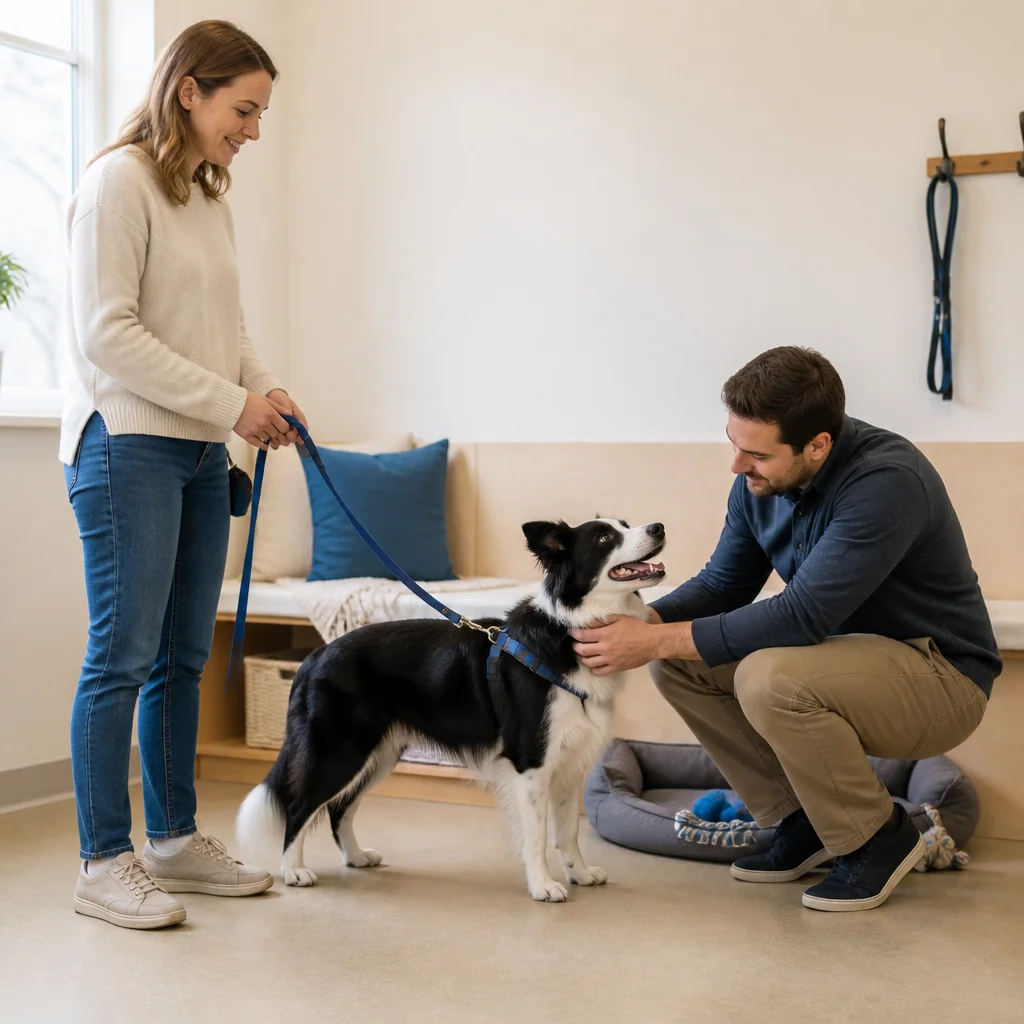
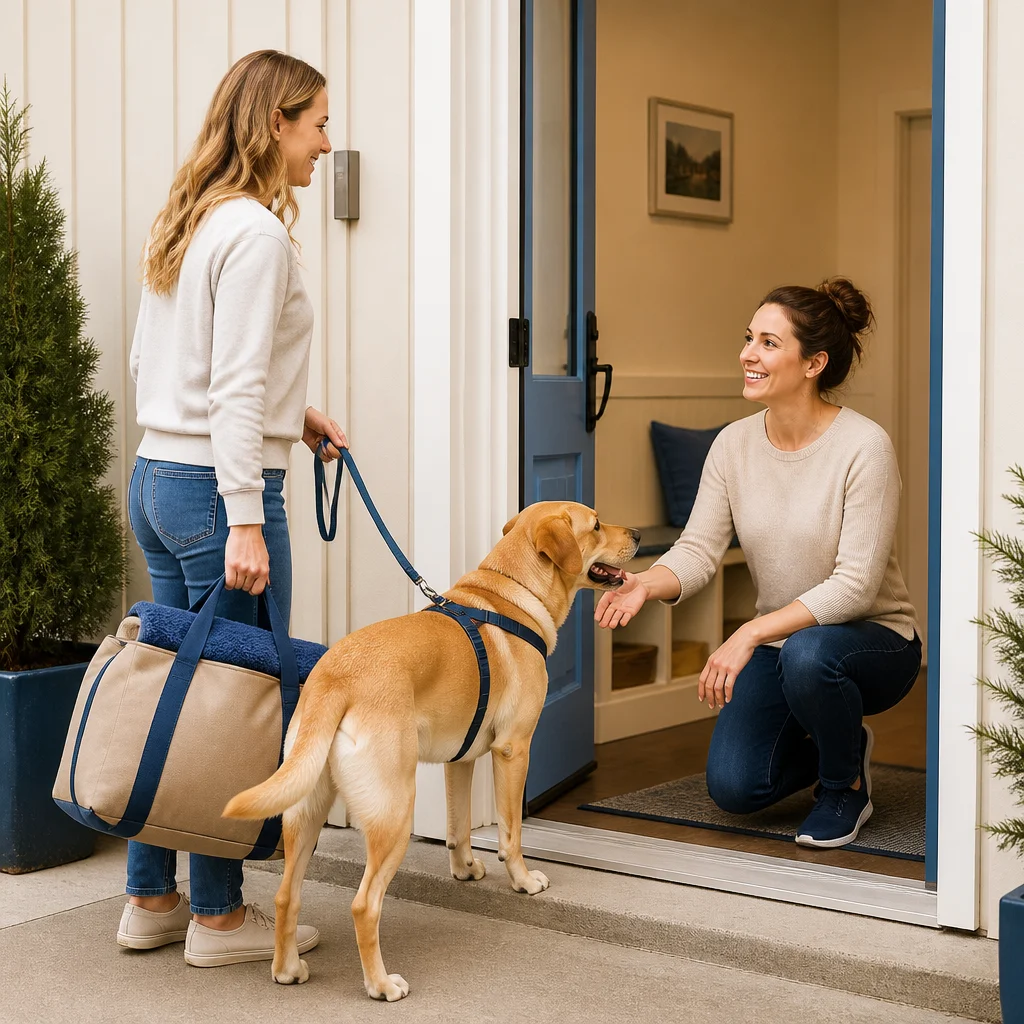
Start with where your dog will sleep. If they struggle alone at night or avoid unfamiliar dogs, those details will rule out more places than the photo gallery will.

Three settings can mean three different stays
A dedicated boarding facility may use private kennels or rooms, staff shifts and scheduled activity. Home-based boarding may include resident pets, household visitors and a caregiver who sometimes leaves. A sitter staying in your home preserves the dog’s surroundings but may divide time among other clients. The category is not a quality score; it tells you which details need checking.
For each option, map one full day: arrival, food, toileting, exercise, quiet time, bedtime, overnight checks and morning care. Note who is responsible and where the dog is during every long gap. If group activity is included, find out whether the dog can decline and rest elsewhere.
Put the weakest points beside each other
A facility might have more backup staff but a noisy entrance. A home boarder might offer a calm room but no one on site for part of the day. In-home care might avoid transport while leaving unclear overnight hours. Compare those real limitations instead of scoring decorative extras.
Use the AnimalKind pet-care guidance for voluntary prompts about caregiver load, sleeping space, daily care, stress response and monitoring.
Compare offers on one page
Create a short record for each candidate using the same headings: sleep, daytime activity, quiet space, overnight presence, handoff, updates, emergency transport, price, and change terms. Copy the provider’s concrete answer, not your impression. “Staff member sleeps in the adjoining house and checks at stated times” is more informative than “great supervision.”
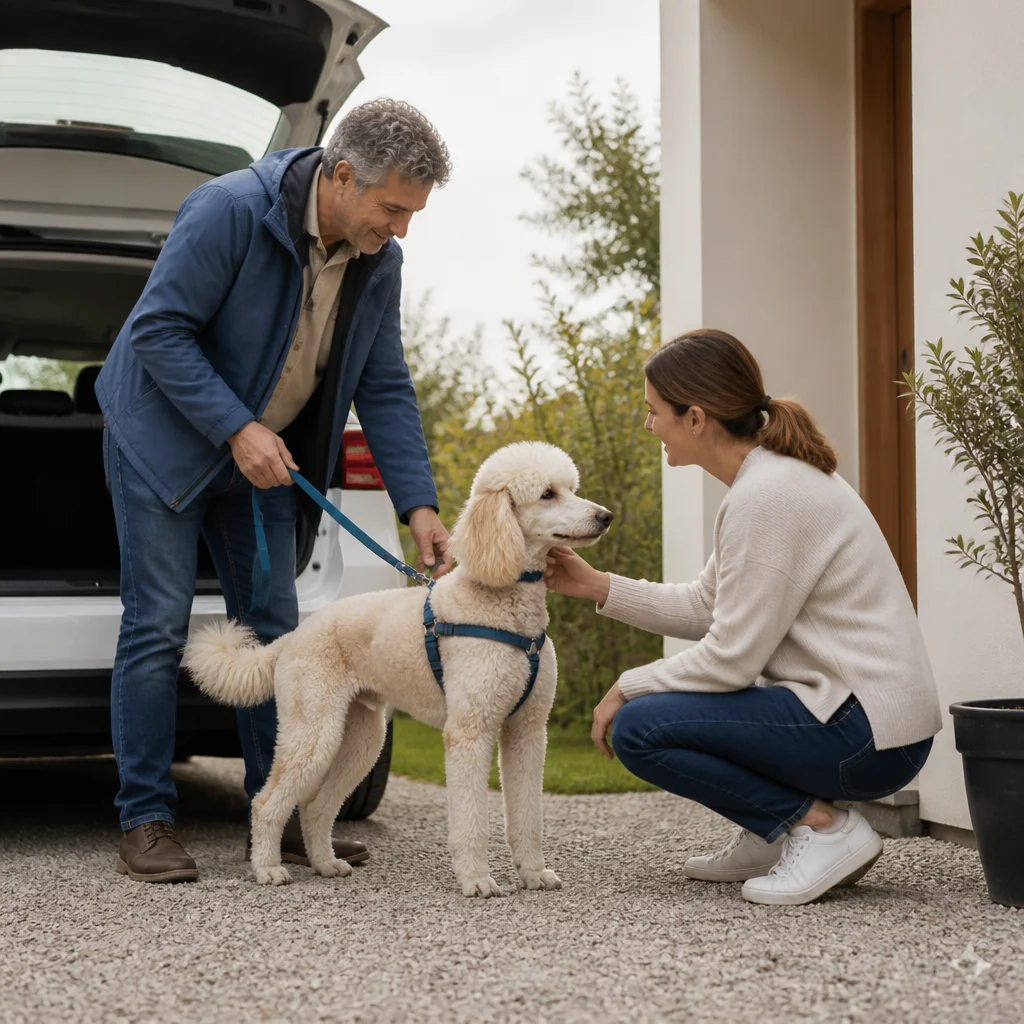
Next, test a disruption. Ask what happens if your dog cannot join the planned group, your return is delayed six hours, or the assigned caregiver becomes unavailable. Facility boarding may have more staff and defined spaces but also more dogs and shift handoffs. Care in a provider’s home may offer a domestic rhythm but can involve resident pets, household visitors or periods when the caregiver leaves. Neither label supplies the missing details.
For two offers that still look close, compare the weakest part of each plan. One may require a difficult Friday bridge crossing; another may have a rigid pickup window. One may include several group sessions that your dog is unlikely to enjoy; another may charge separately for the individual time your dog needs. The best value is the complete arrangement you can actually use.
Before paying, send a brief recap of any nonstandard agreement and ask the provider to confirm it. That catches misunderstandings while another option may still be available.
A concrete tie-breaker
Imagine the return flight lands three hours late. At the facility, an authorized friend may collect before closing. The home boarder may be able to add an evening but has another dog arriving. The in-home sitter may already have left for the next client. The best option depends on the written contingency, not which setting looked warmest during the tour. Run one likely disruption through every finalist before deciding.