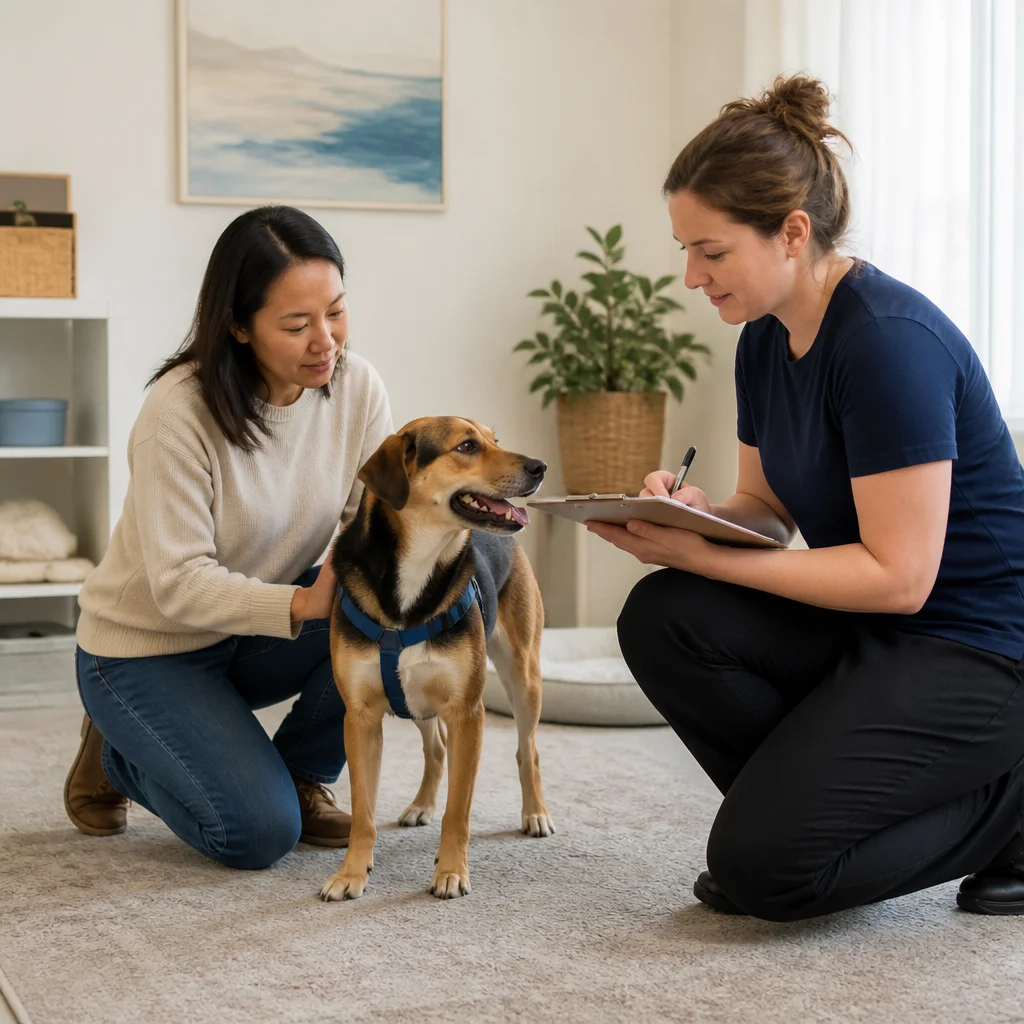
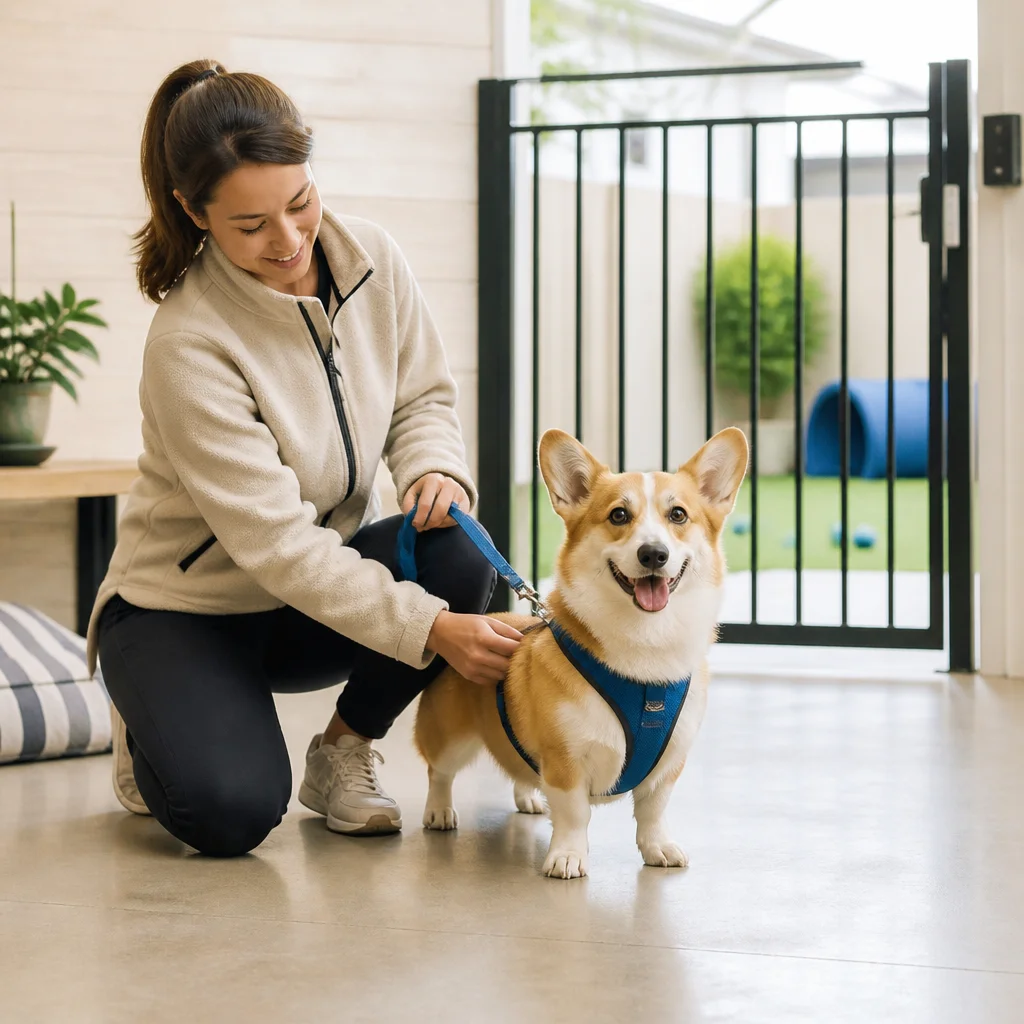
Daycare access has to work twice a day, week after week. Check the rainy-morning version: the owner has a leash, bag and mobility aid; the lobby is noisy; another dog arrives behind them. Where can everyone wait safely?
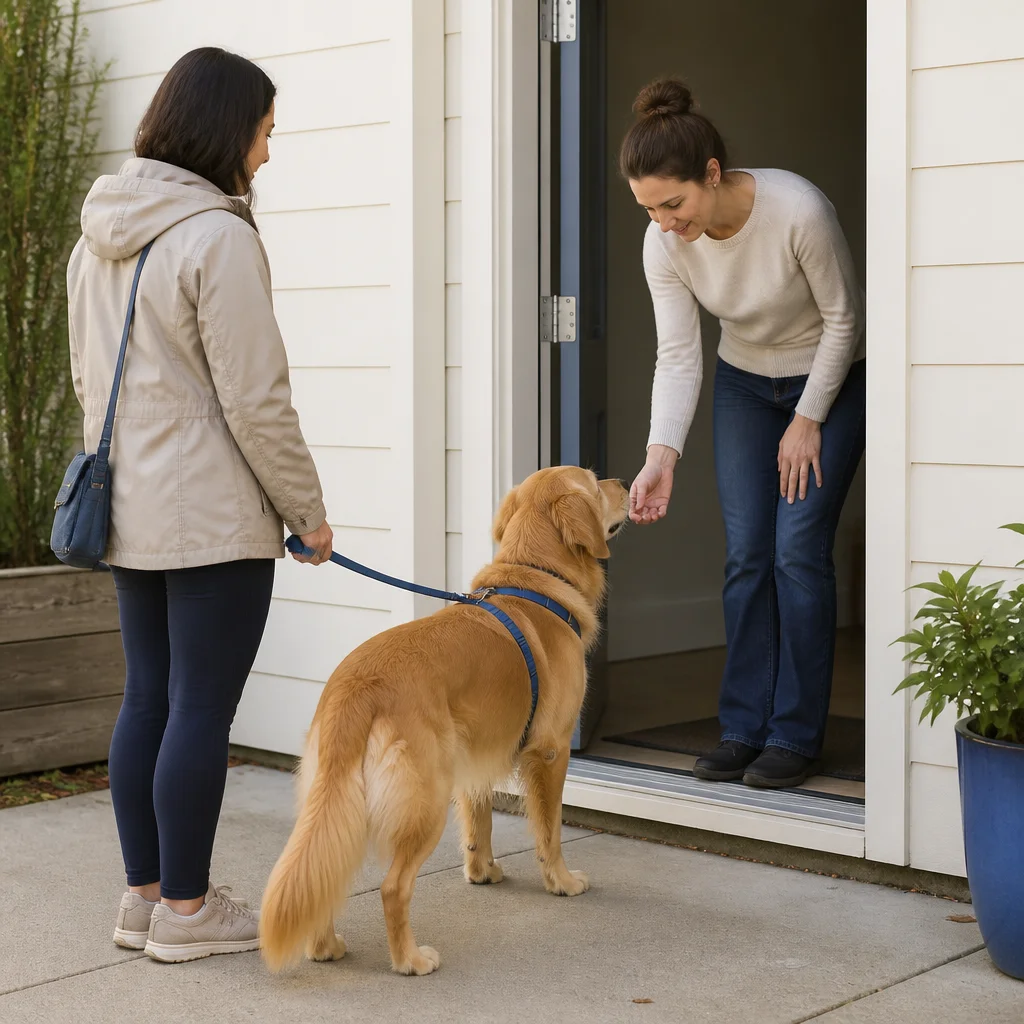
Trace the complete visit
Start at parking or transit. Check door weight, thresholds, stairs, floor grip, turning room and the transfer to staff. Then follow the dog’s route to play, quiet rest, water and toileting. “Step-free entrance” does not describe the rest of the day.
Name sensory and communication needs too. Written pickup reports, a quieter arrival slot or text on arrival can be as important as physical access. Ask whether the arrangement is recorded for every shift.
The AnimalKind daycare questions recommend asking about caregiver numbers, group size and grouping, places to hide and rest, and crate compatibility. These are voluntary standards and useful access questions for a dog that cannot manage a busy group.
Test a short repeatable day
Use the actual entrance, equipment and likely arrival time. Agree on a shorter first visit and an early-pickup trigger. A successful one-off accommodation is only useful if the provider can repeat it on booked days.
Match support to a recurring weekday
Daycare access has to work repeatedly. Trace the route while carrying the normal leash, food or equipment, and imagine a wet winter pickup when the lobby is crowded. Ask whether staff can meet at the curb or another entrance, whether that help is available every booked day, and how you should signal arrival. An accommodation that depends on one employee may fail on their day off.
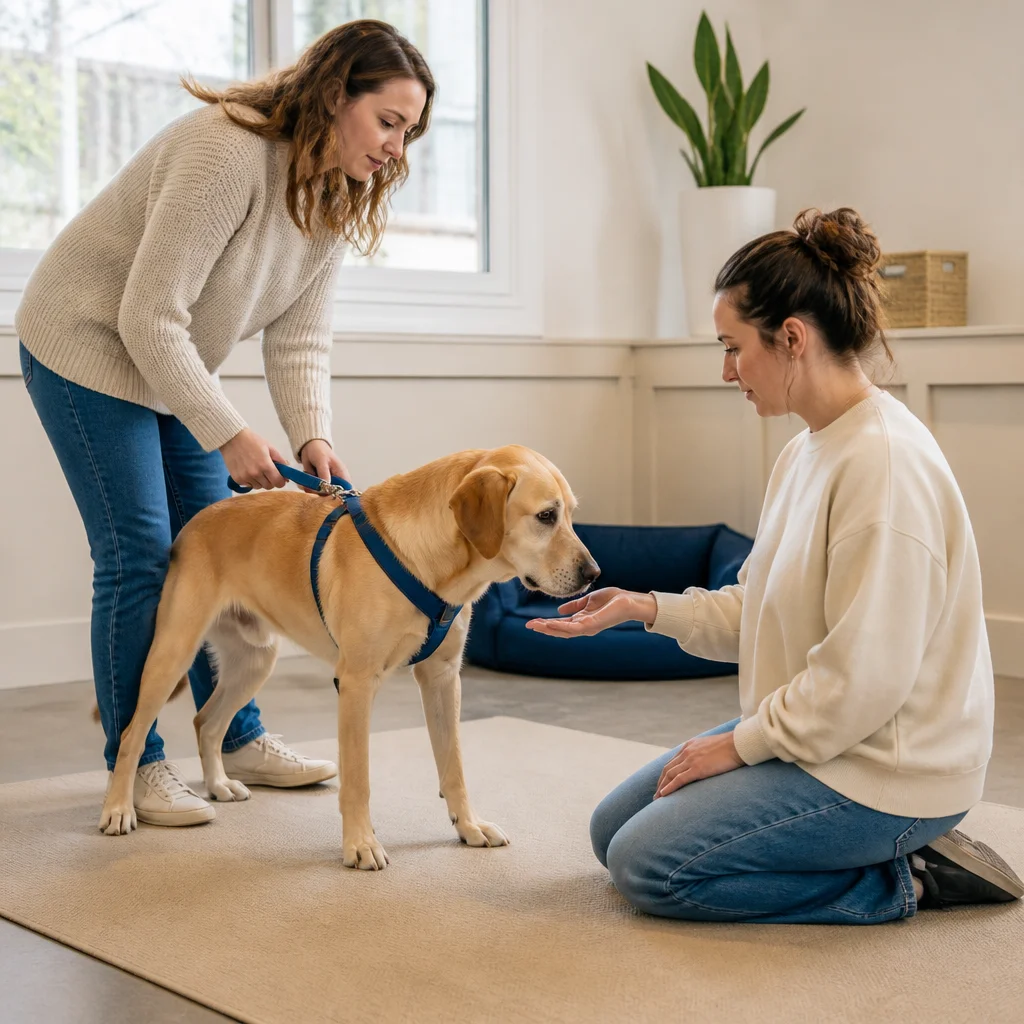
Describe the dog’s practical needs precisely: slower turns, difficulty on slick floors, sensitivity to sudden noise, need for visual separation, or inability to rest in a crate. Ask where the dog will move, drink, rest and toilet, and whether staff can offer a lower-intensity space without isolating the dog for most of the day.
Sample request: “I need written pickup reports because I cannot reliably hear a busy-lobby conversation. Please include rest, food, toileting and any change from the agreed group. Can that be added to the daily record?”
A first visit should test the whole chain: booking, arrival, transfer, care, communication and pickup. Afterward, identify what required improvisation. If every visit would require a last-minute exception, the service may not be reliably accessible even if the trial succeeded.
Check communication access too
An accessible doorway does not solve a rushed verbal intake or an app the owner cannot use. Ask whether forms, invoices and daily reports are available in a workable format and how urgent messages will arrive. If another person will handle some days, make sure the same access notes follow the account rather than living only in one employee’s memory.
Reassess the arrangement
After the first visit, identify what staff had to improvise. Was the side door locked? Did the quiet handoff disappear at pickup? Could the dog reach the rest area without crossing the active group? A successful day can still reveal that the support is too fragile for weekly use. Record the adjustment and test it on the next visit before buying a large package.