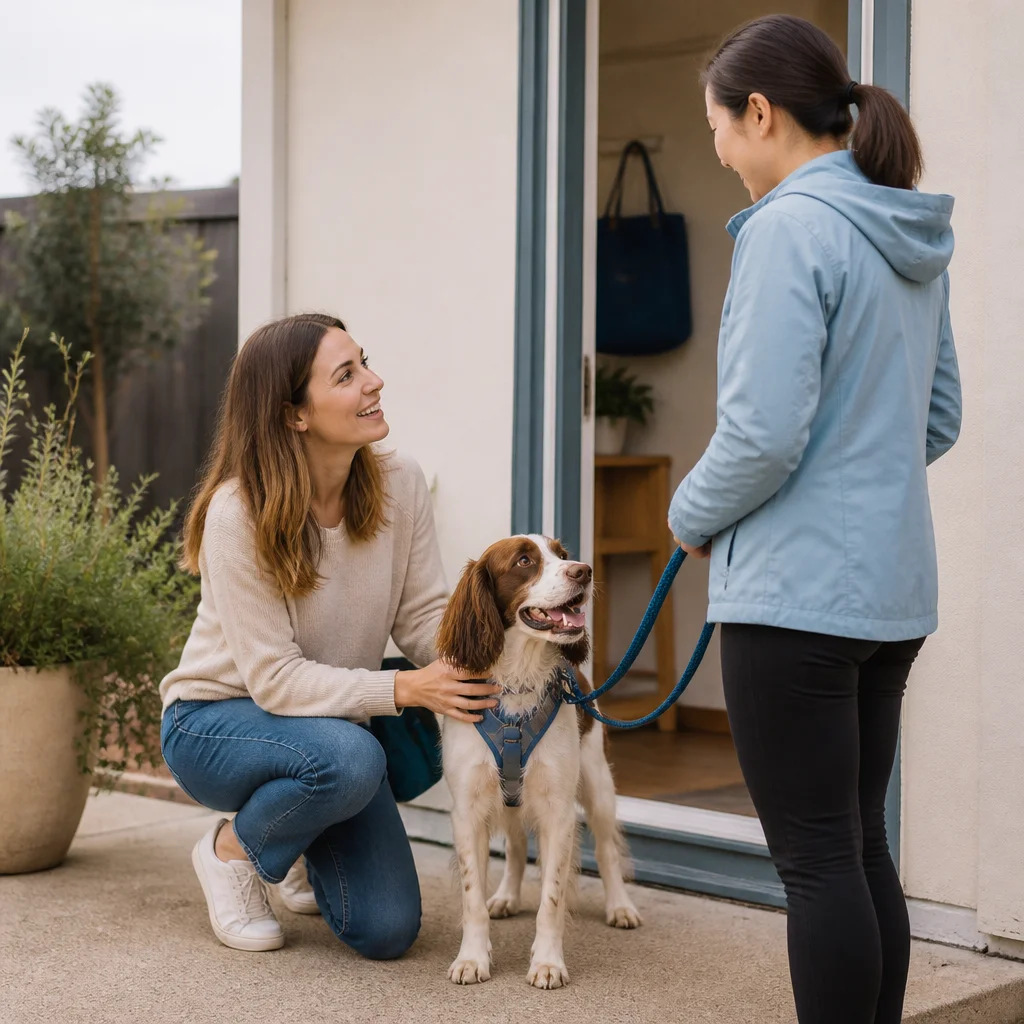
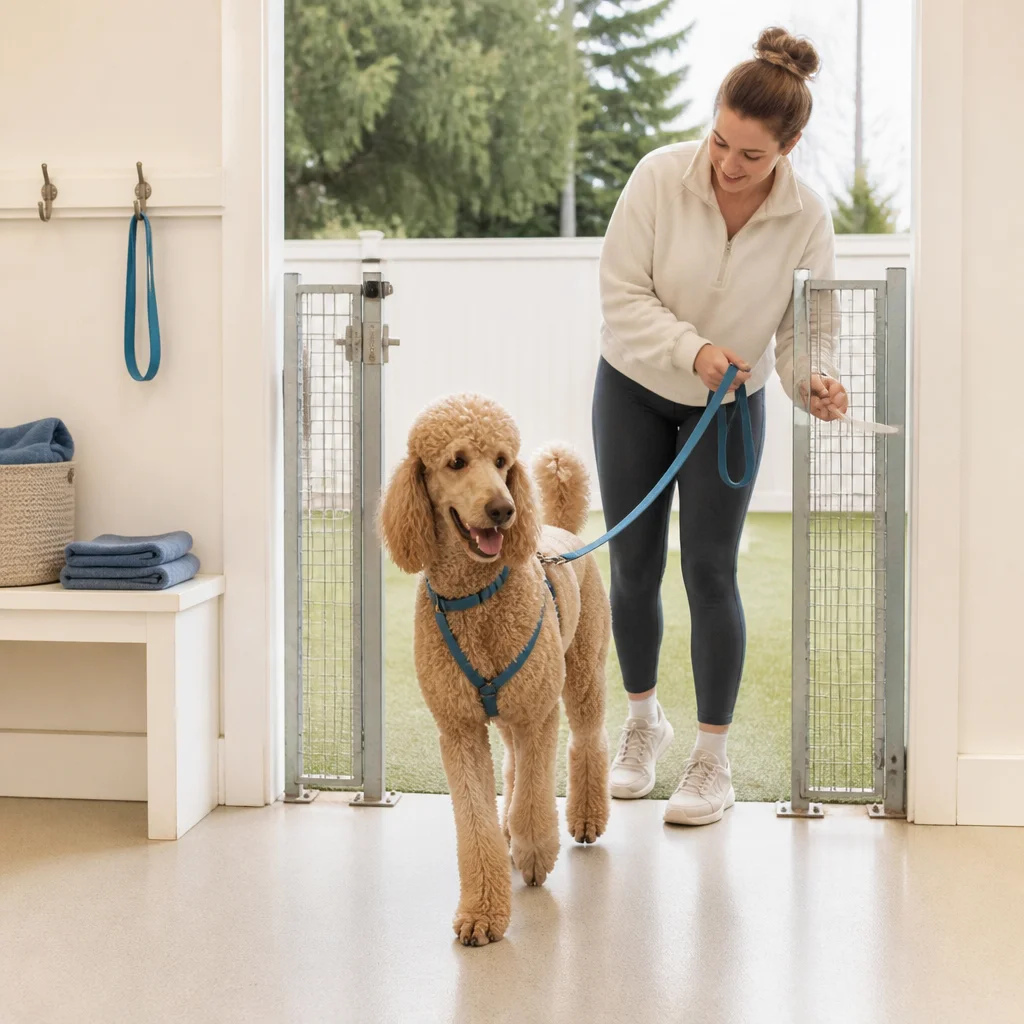
A first daycare day usually begins with assessment, not immediate all-day play. Staff may introduce the dog gradually, observe body language and move them to a quieter space. Acceptance can come with limits such as a shorter day or different group.
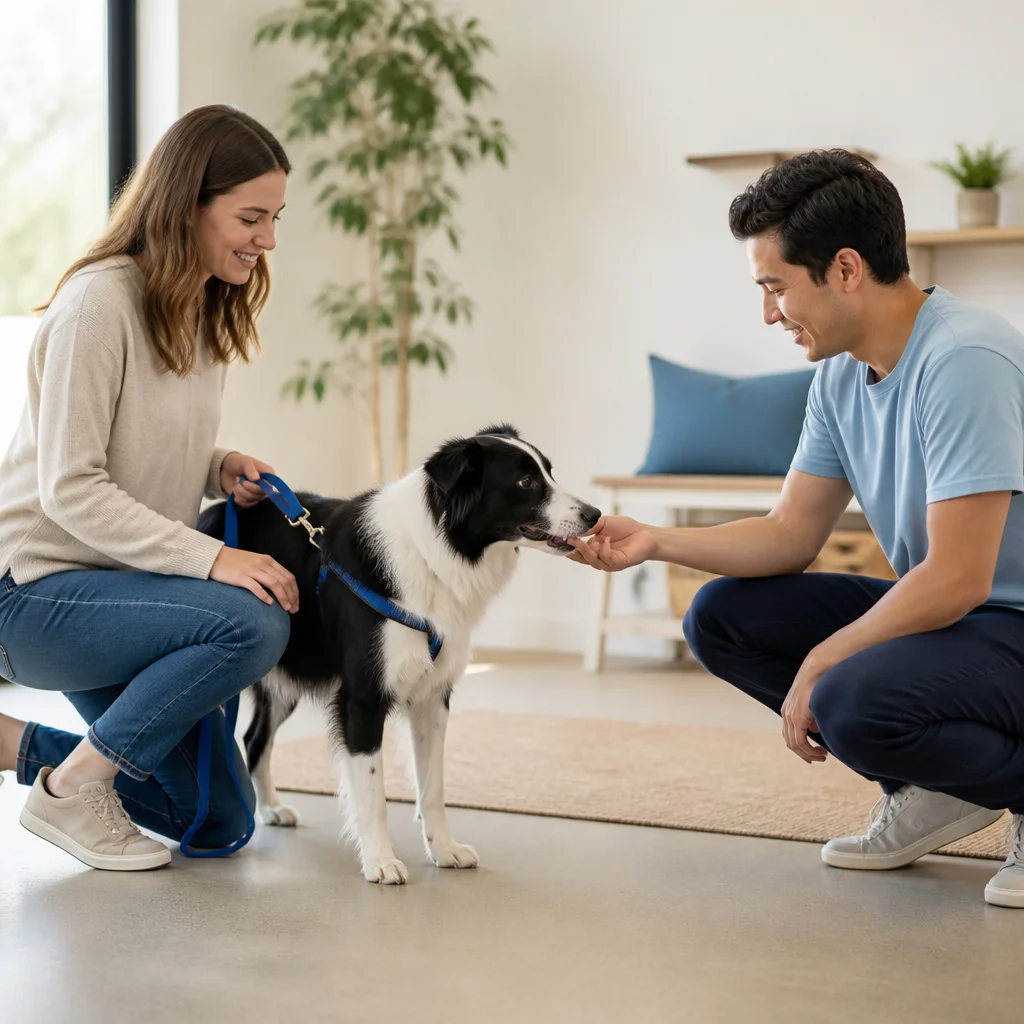
Arrival and introduction
Staff should receive current information and know who can collect early. Ask how the dog enters, whether introductions happen one at a time, and what makes staff stop. A dog that avoids play should have another option.
The AnimalKind daycare guidance gives voluntary prompts about caregiver numbers, group size and matching, rest areas and crate compatibility.
Activity and rest
Daycare should include more than constant play. Learn when dogs drink, toilet and rest and whether quiet space is genuinely away from the group. If crates are used, the provider should know whether the dog is comfortable in one and have an alternative.
Read the pickup report as a care record
“Had fun” is pleasant but incomplete. Ask whether the dog joined play voluntarily, took breaks, drank, toileted, ate if applicable and needed help leaving an interaction. If staff changed the planned group or rest arrangement, learn why and whether the next visit should differ.
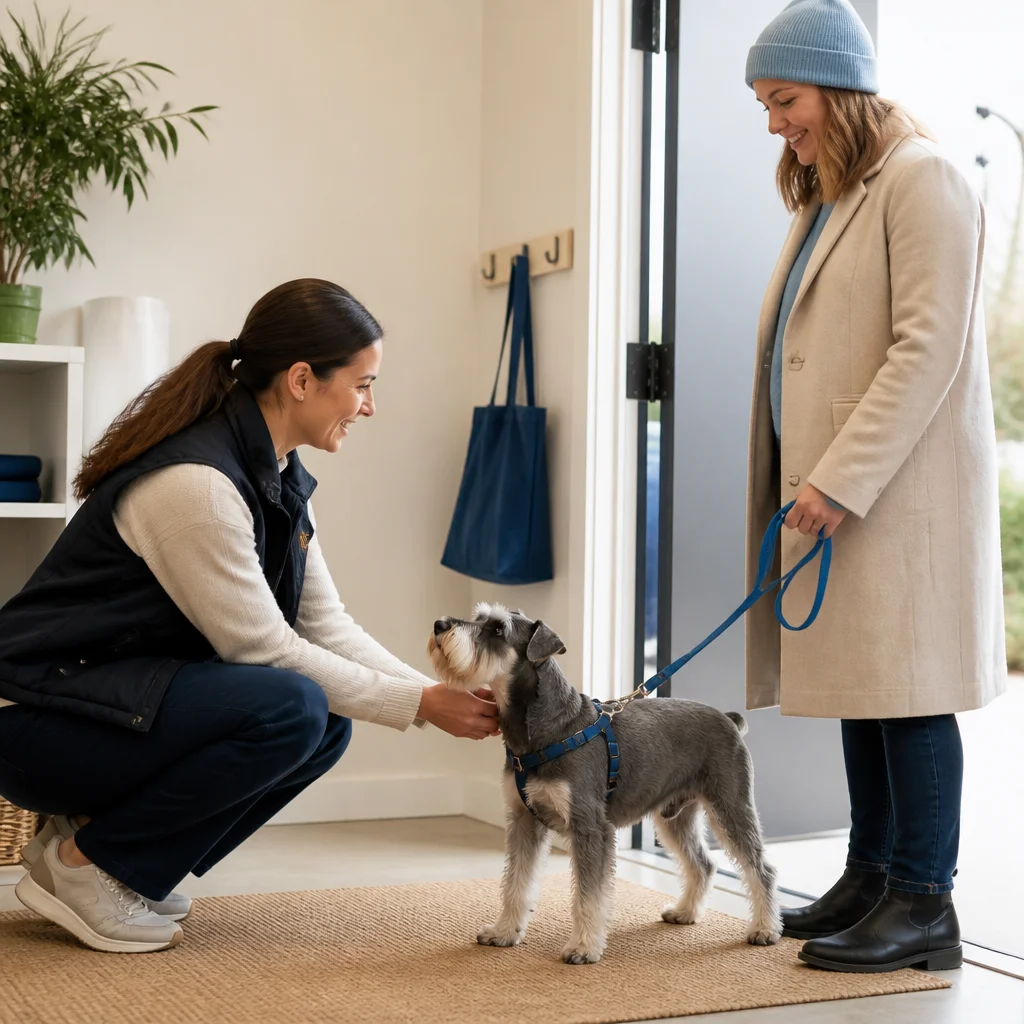
During the day, activity should not be the only option. AnimalKind’s voluntary guidance specifically prompts owners to ask how dogs are grouped and whether enclosures include places to hide and rest away from play. Ask the provider to show how those ideas work in its actual space. If crates are used for rest, find out how compatibility was assessed and what alternative exists.
Expect staff to have limits. They may shorten a first day, decline a group placement or ask for pickup if the dog cannot settle safely. Agree in advance on who can collect the dog and how quickly. A limit explained early is more useful than pressure to keep a dog in a plan that is not working.
At home, allow for decompression and observe without turning a single change into a diagnosis. Record appetite, rest and any concern, and contact the appropriate veterinarian when health advice is needed. Share relevant observations before the next visit so the provider can adjust or reassess.
Expect reassessment
Group fit can change with age, health, confidence, staffing or the dogs present that day. A responsible provider may alter placement after acceptance. Ask how it documents that decision and what alternatives it can offer. Treat reassessment as part of ongoing care, provided changes are explained and the owner remains informed.