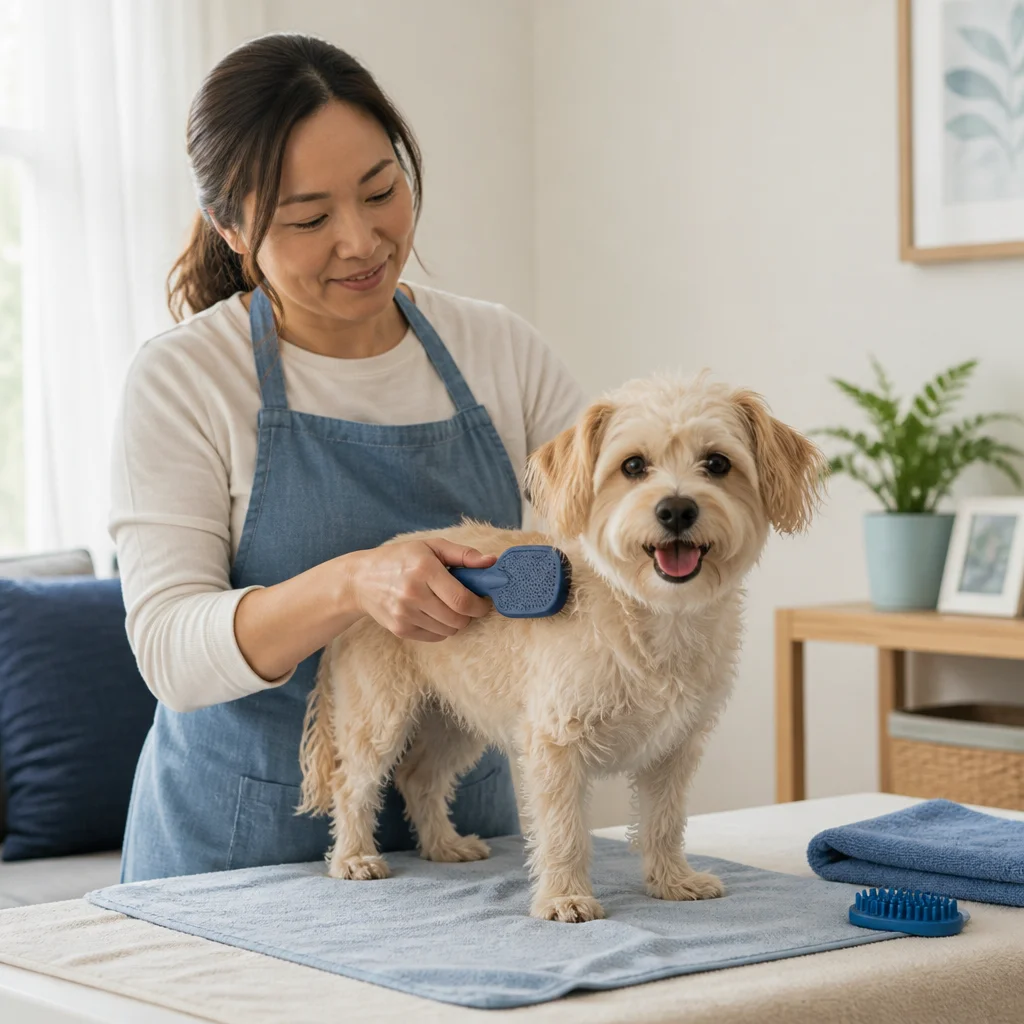
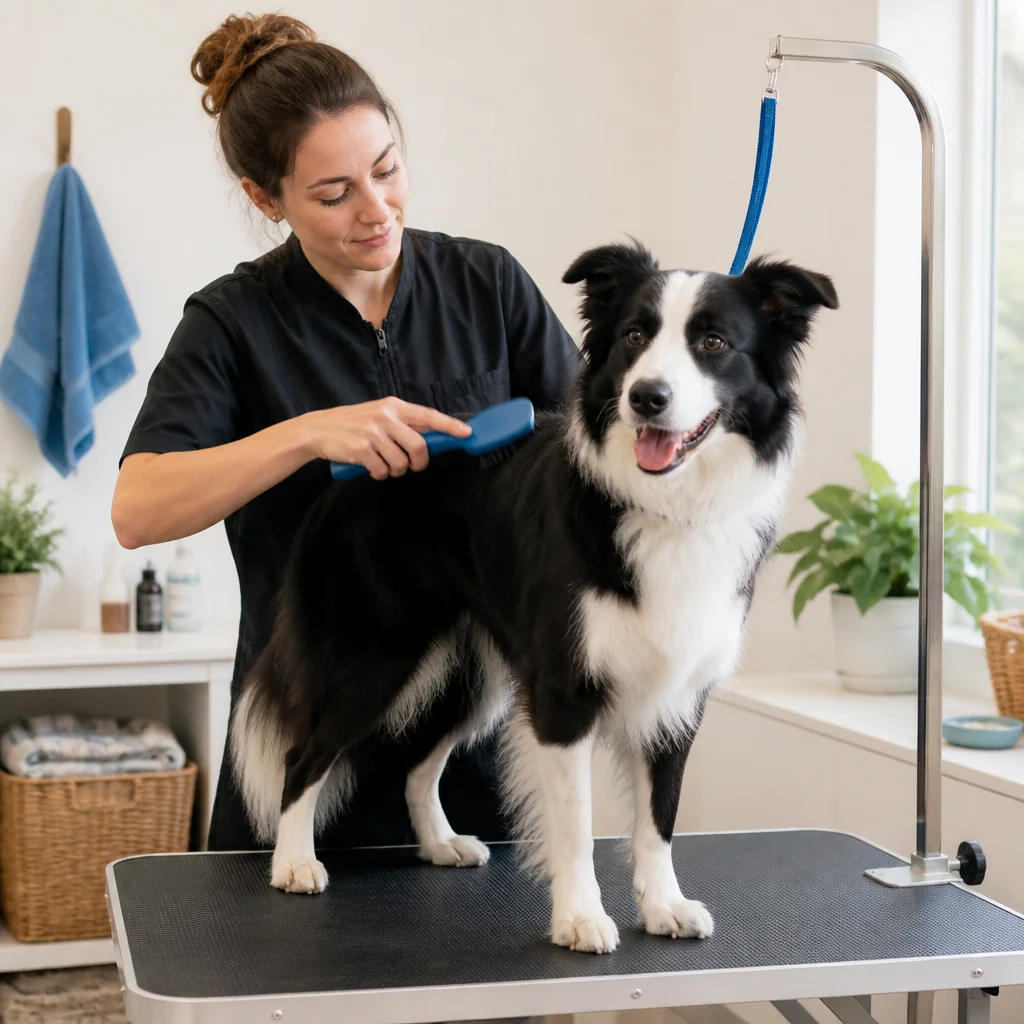
A grooming gift should reduce the owner’s cost without choosing a salon, handling plan or appointment for someone else’s dog. The owner needs to describe the coat, answer health and behaviour questions and approve changes during the service. Give flexible value first; let the recipient make the care decision.
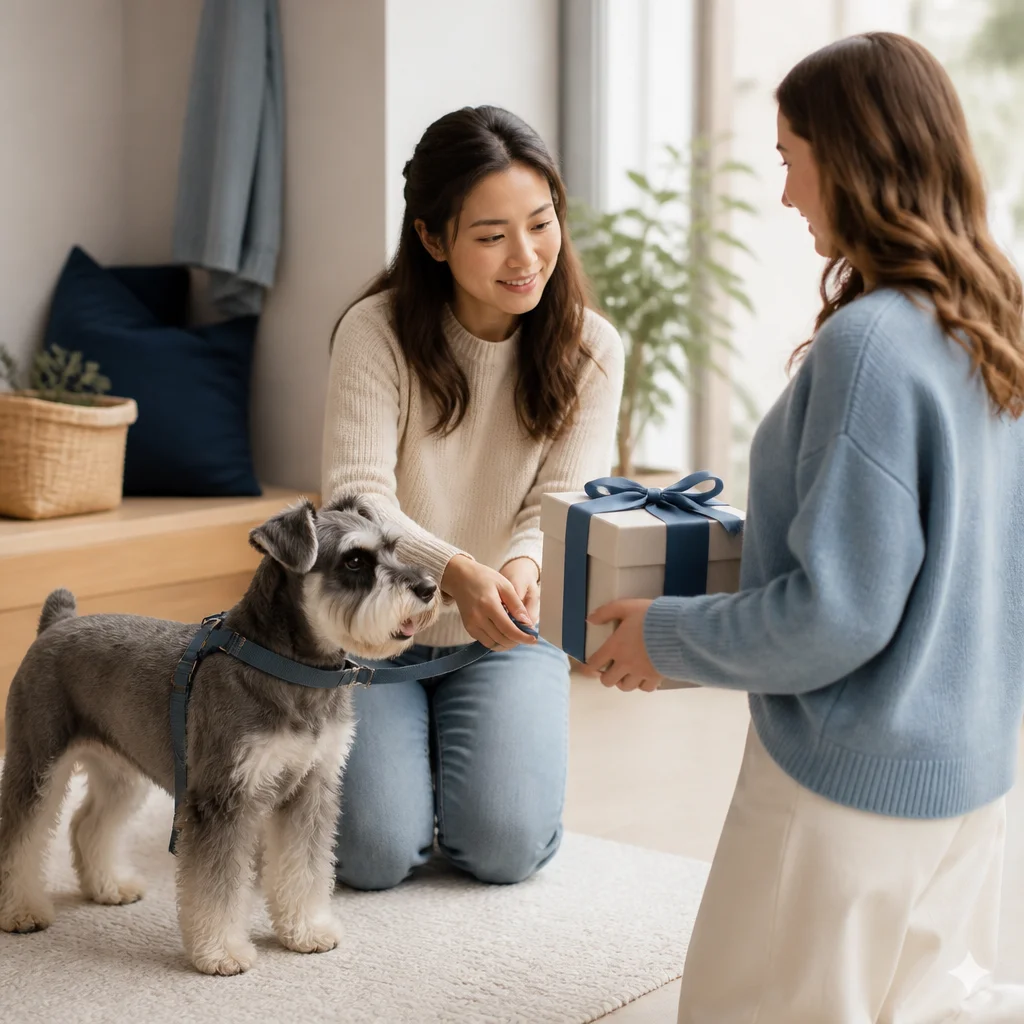
Choose the form of the gift
A cash contribution or reimbursement promise works when the recipient has not chosen a groomer. State the maximum and what it can cover: “I’ll contribute up to $150 toward Scout’s grooming, including a consultation or coat assessment.” Say whether you will transfer the money now, reimburse an invoice or pay the chosen business directly.
A salon gift card makes sense when the recipient already uses that salon or has asked for it. Before buying, check whether it expires, can be transferred, can be split over visits and can cover deposits, tax and added coat work. Find out what happens if the salon assesses the dog and declines the service. Credit at one business is less flexible than the same amount the owner can use elsewhere.
Leave the appointment unbooked
Do not choose a surprise date. The recipient should choose the date because grooming requires drop-off, pickup and a reachable owner during the service.
Use a note that removes ambiguity: “No appointment has been booked. Choose the groomer, service and date that work for you and Pepper. This gift covers up to $150.” Avoid describing the gift as a “full groom” unless the selected provider has quoted that exact dog; package names and coat requirements vary.
Keep private details with the owner
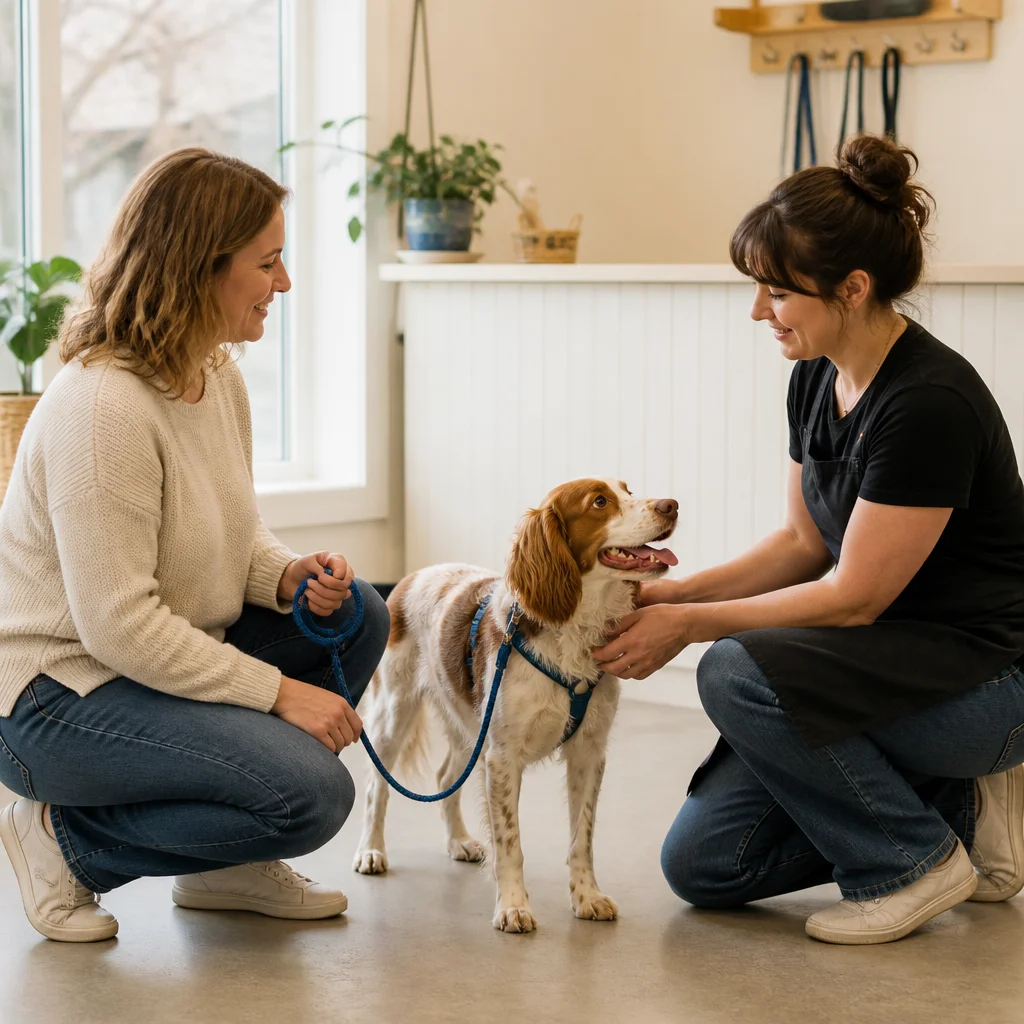
Do not send the salon guesses about fear, health, medication or previous incidents. Tell the recipient that the business may need those details, then let them provide accurate information. If transport is part of the gift, ask the owner to authorize you for handoff and pickup and give you the current written instructions.
Consider a recipient whose older dog now struggles to stand. A prepaid haircut at a familiar salon may appear thoughtful, but the owner may be discussing a shorter service or different setting. A flexible contribution can cover the assessment, a limited groom or another owner-approved need without wasting the gift.
Define the fallback
Write down what happens if professional grooming is not suitable or the bill is lower than the gift. The unused amount might remain with the recipient, stay on a transferable card or move to another dog-care expense they choose. This is also useful when a first appointment stops early. The gift still succeeds because it helps with a real decision instead of forcing the original plan.