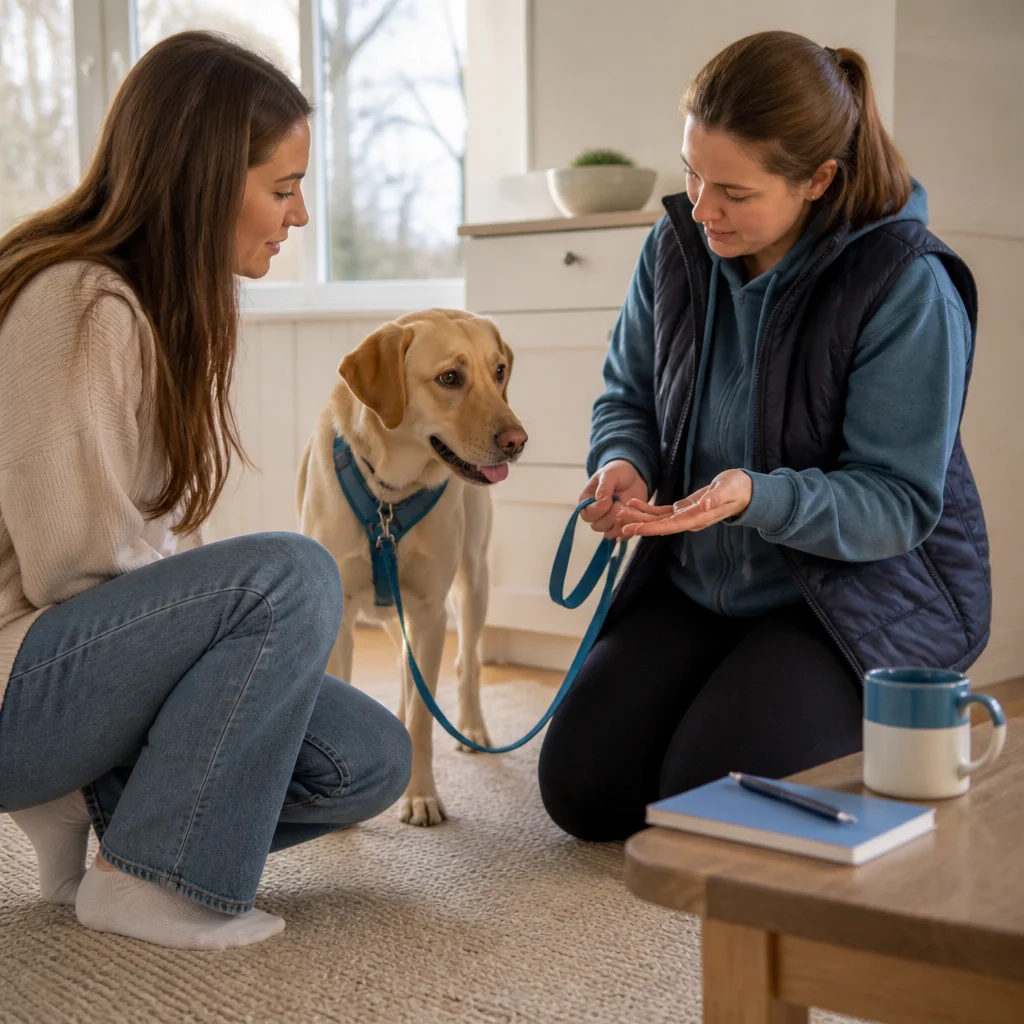
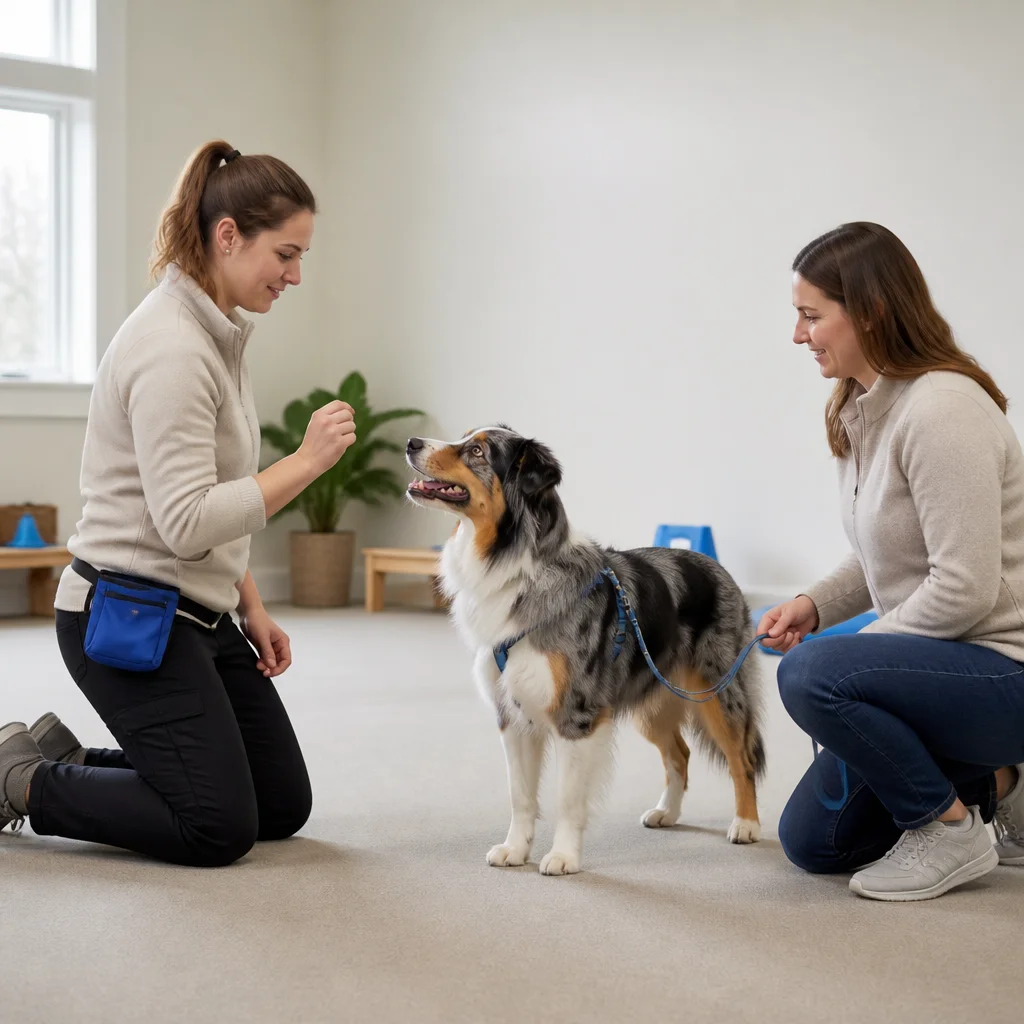
Accessible dog training is training you can actually take part in and repeat at home. Start with the barrier, not a broad label. One person may need step-free entry and a chair; another may need written instructions, a quieter room or time to process each exercise. A dog may need distance from other dogs, a nonslip surface or a place to settle between turns.
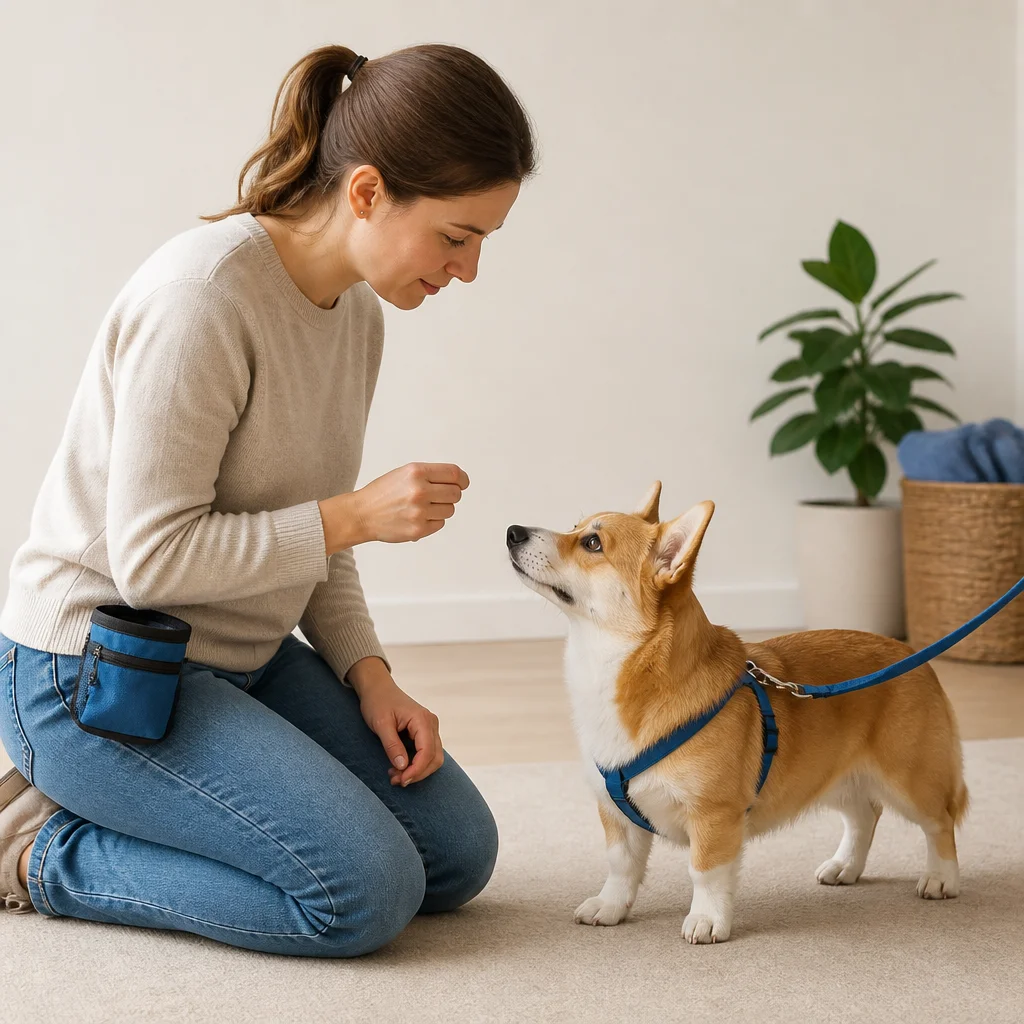
Describe what would make participation possible
Give the trainer a short, practical picture before booking. For example: “I use a walker and can’t stand for a full hour. Can the exercise be taught from a chair?” or “Spoken instructions are hard for me to retain. Can you send the steps afterward?” Ask whether a support person can attend and whether that changes the fee.
For the dog, describe what you can observe: barking when another dog comes within five metres, reluctance on shiny floors, or difficulty taking food in a busy room. That gives the trainer something useful to plan around. It is more informative than calling the dog stubborn or unsocial.
Inspect the whole route into the lesson
A venue described as “in Langley” could still be an awkward trip from your part of the community. Get the exact address and class time, then check the drive or transit trip at that hour. Ask about the path from parking to the working area, doors, stairs, washroom access, seating and the surface where you will handle the dog.
For an outdoor lesson, confirm the meeting point rather than relying on a park name. Ask what happens if the chosen area is crowded, muddy or too noisy. For a home visit, explain gates, elevators and any access instructions before the trainer arrives.
Ask how teaching will be adapted
The BC SPCA’s trainer guidance recommends humane, reward-based teaching and trainers who encourage guardians to participate. A useful trainer can change the setup without changing that principle. They might demonstrate from several angles, break an exercise into smaller steps, use a visual barrier or shorten active turns.
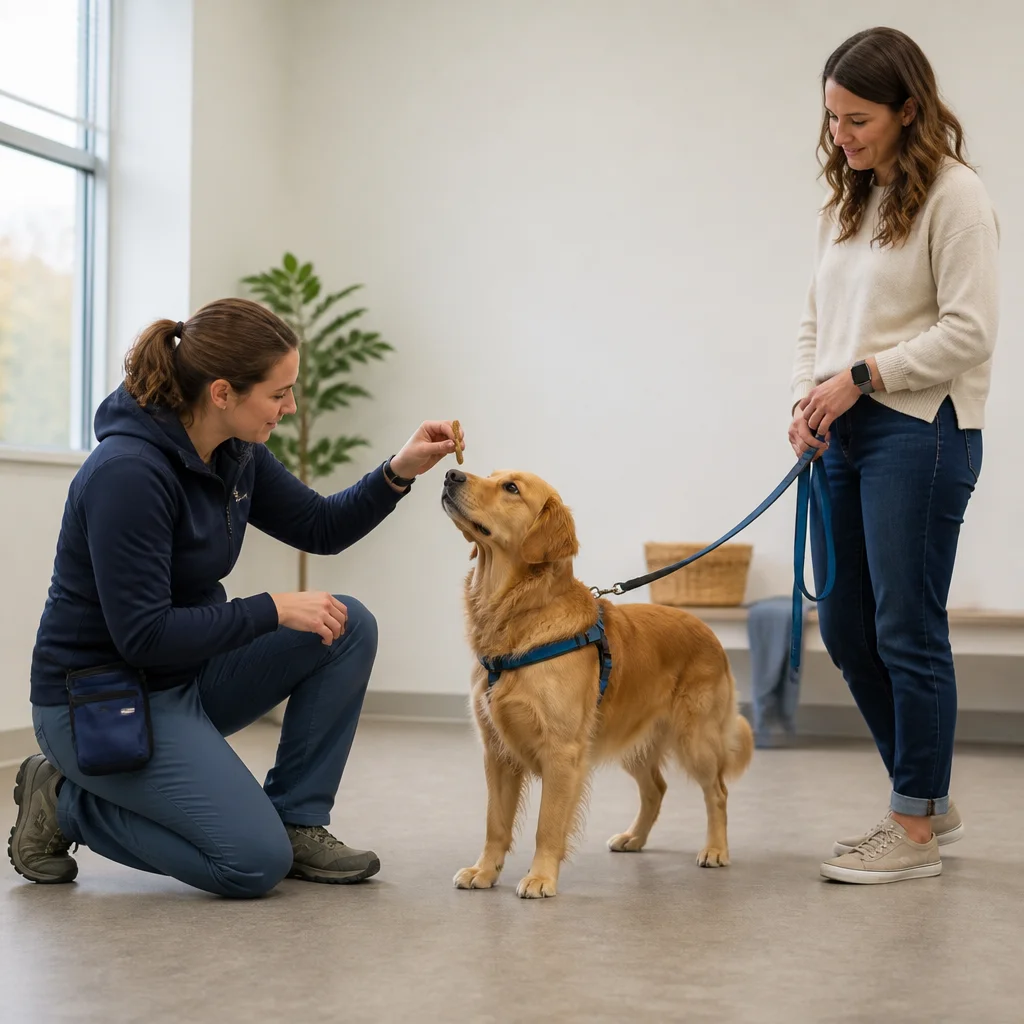
Listen for a plan that teaches you, rather than a promise that the trainer will “fix” the dog. Avoid anyone who treats an access need as a lack of commitment or proposes pain, fear or physical correction as the shortcut.
Use one session as a real-world test
Book the smallest useful commitment first. Choose one observable goal, such as getting the dog onto a mat while you remain seated. After the lesson, ask:
- Could I follow the explanation without rushing?
- Did the dog have enough space to eat, look away or rest?
- Can I reproduce the exercise with my equipment and home layout?
- Did the trainer make adjustments respectfully?
If the answer is no, the solution may be a private or remote lesson, a different venue or another trainer. Browse Langley providers and training services, then ask about the specific adjustment you need before paying for a package.