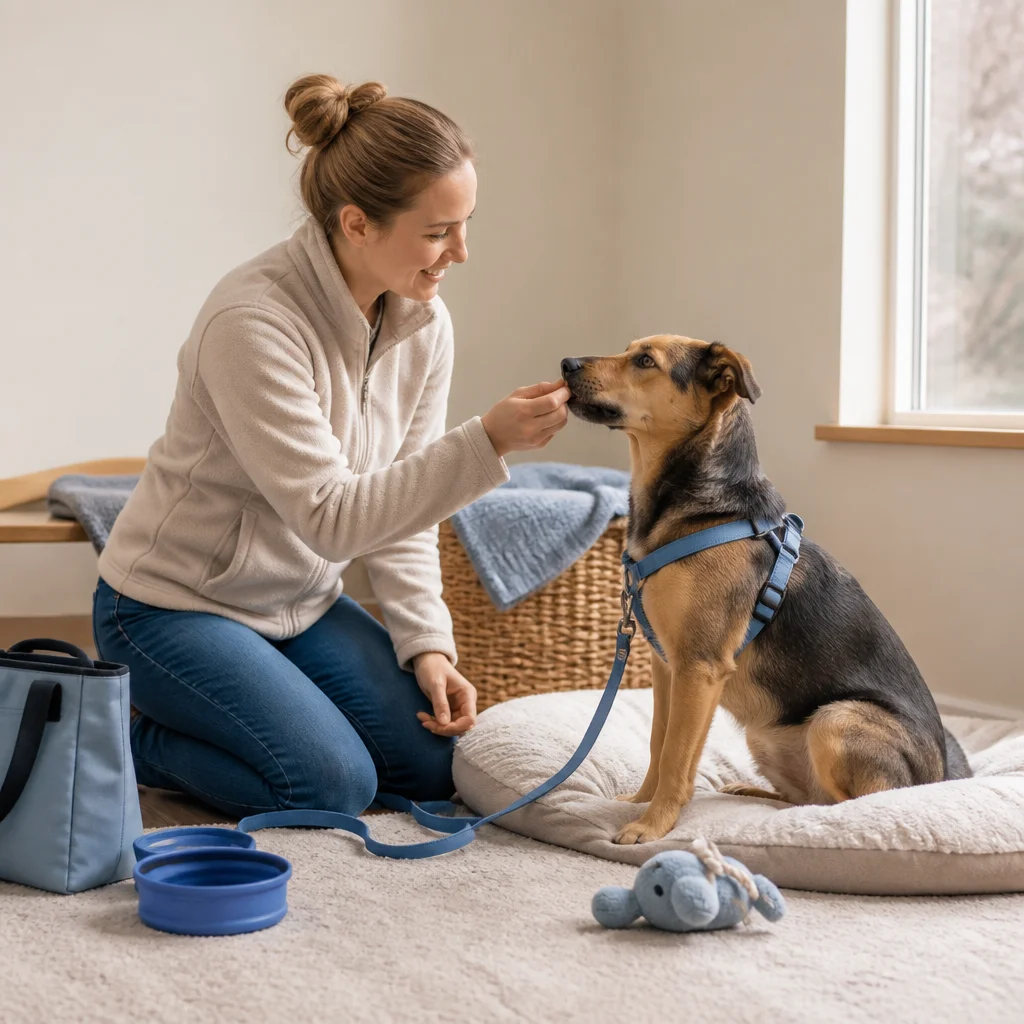
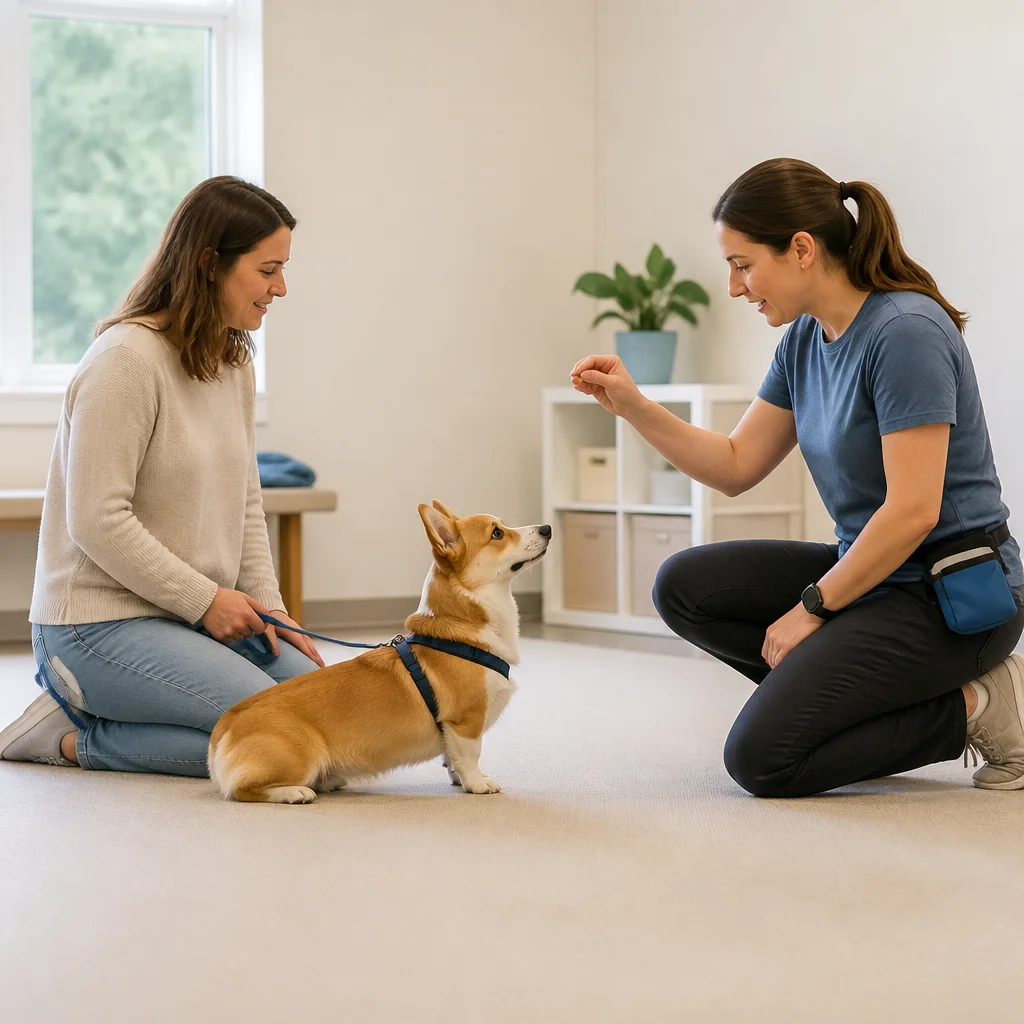
A good first training session starts before you arrive. The trainer needs a truthful picture of the behaviour, and you need to know where to go, what to bring and what success for that single lesson would look like.
Two or three days before
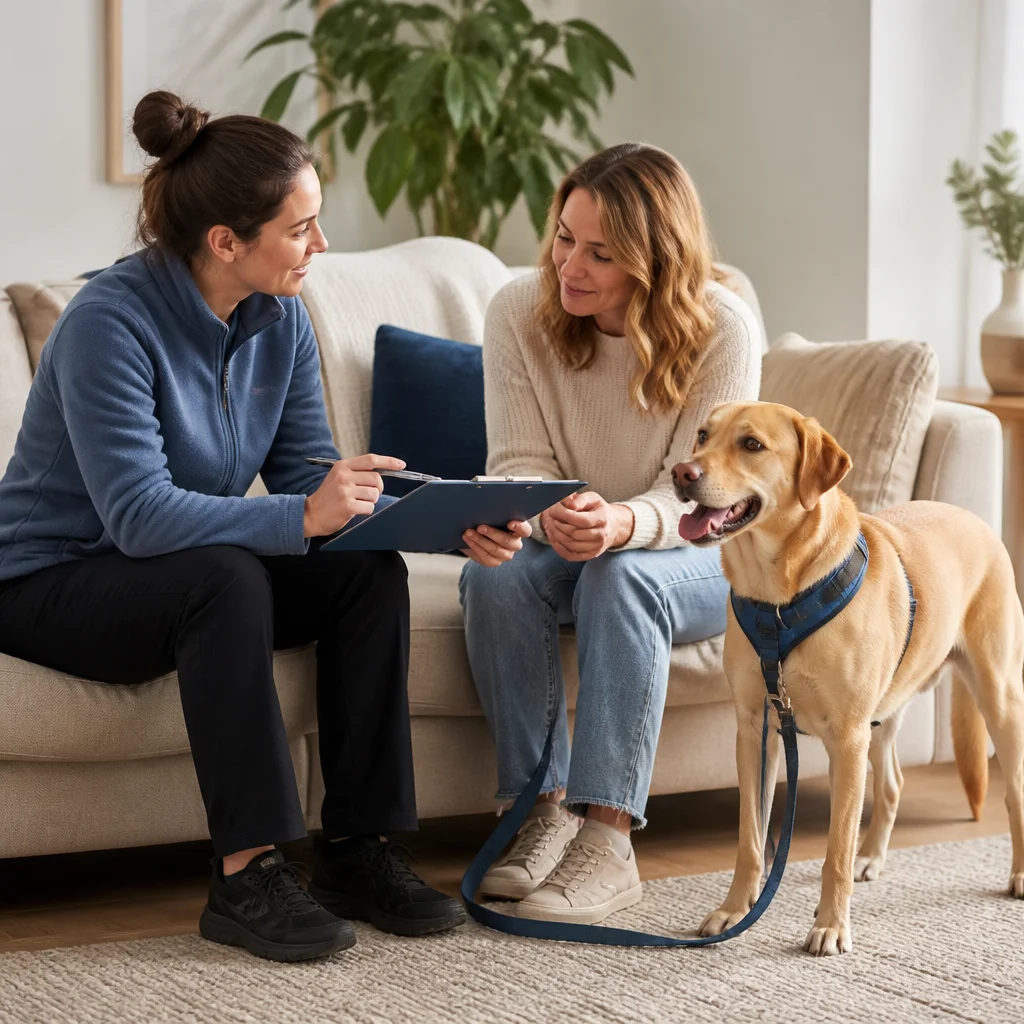
Write down what happens before, during and after the behaviour you want help with. “Pulls on walks” is a start; “pulls toward dogs across the street, stops taking food and needs distance to recover” is much more useful. Note any recent change, who handles the dog, and where the problem occurs.
Send the trainer relevant handling or safety information in advance. Mention bite history, escape attempts, guarding, fear around people or dogs, and any veterinary restrictions. The trainer can then decide whether the planned format and venue are suitable. A trainer should not diagnose a medical cause; raise health concerns with your veterinarian.
Choose one first-session goal. It might be learning how to reward a loose leash for ten steps, setting up a calm place near the front door or recognizing when the dog needs more distance. “Perfect obedience” cannot guide a useful hour.
The day before
Confirm the exact Langley address, entrance, parking instructions and start time. Ask whether the lesson is indoors, outdoors or likely to move between both. Save the trainer’s phone number in case the entrance is hard to find.
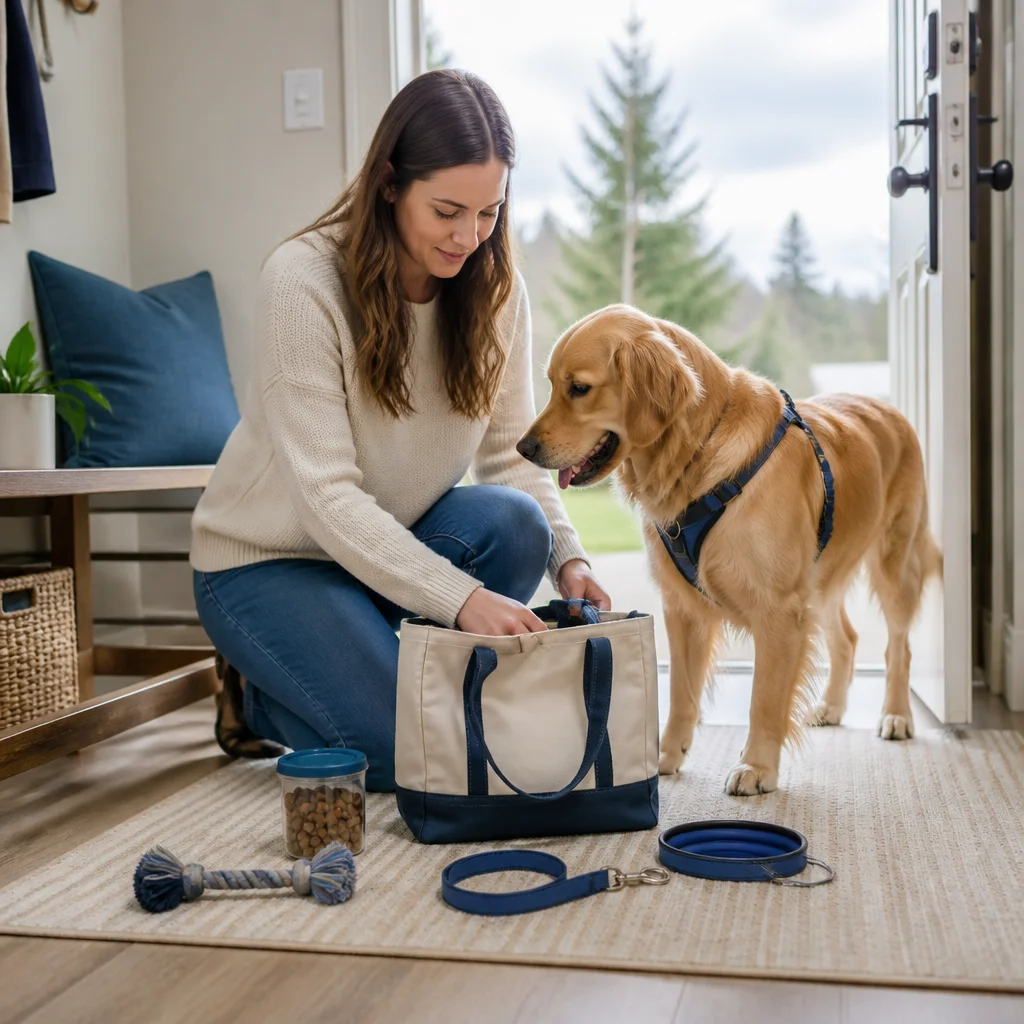
Pack only what the trainer has asked for. A typical list may include:
- the dog’s usual harness or flat collar and regular leash;
- small rewards the dog can eat comfortably;
- water, waste bags and a mat if requested;
- notes about the behaviour and any relevant records; and
- weather gear for both handler and dog when the lesson is outside.
Do not buy a special collar or tool simply because it appears in marketing. The BC SPCA recommends reward-based training and warns against shock, prong and choke collars.
On arrival
Leave enough time for a calm toilet break, but do not turn the entrance into an unplanned dog greeting. Wait at the distance your dog can manage and follow the trainer’s arrival instructions. Tell the trainer if the trip changed the dog’s behaviour.
During the session, ask what you should notice, when to reward and when to stop. Record the steps in your own words. If filming is useful, obtain permission and frame only your own dog and trainer.
Before you leave
You should be able to state the homework without guessing:
- the exercise and its purpose;
- where to practise it;
- how long or how many repetitions to try;
- the sign that means make it easier or stop; and
- how to report progress before the next lesson.
Also save the cancellation, makeup and package terms. The checklist is complete when you can repeat a small humane exercise at home, not when you have purchased every possible session. Compare options through Langley listings or the training category.