Choose a dog trainer by asking how they will teach, not by counting dramatic before-and-after videos. The right fit uses humane methods, can explain the plan plainly and helps you practise in the setting where the skill matters.
Screen the method first
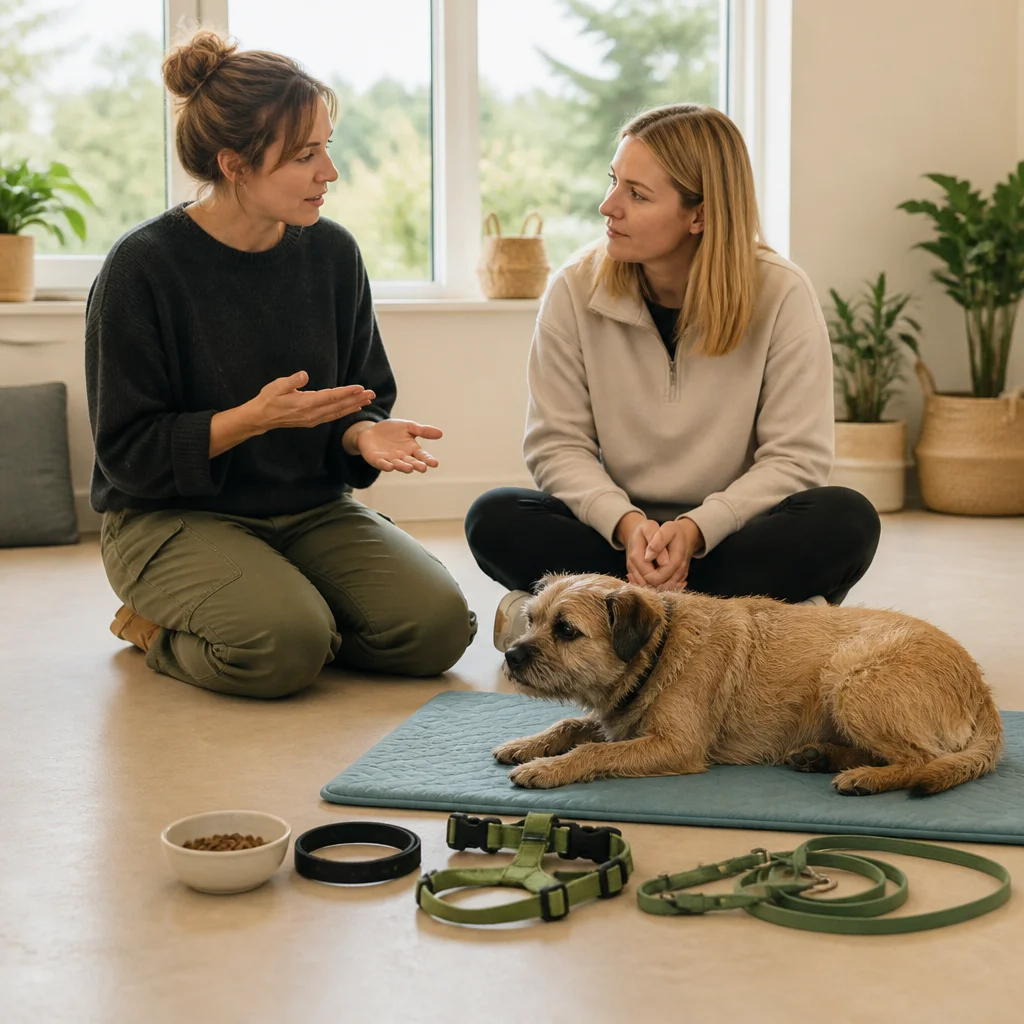
Ask, “What happens when my dog gets it wrong?” A reassuring answer changes the distance or difficulty, prevents rehearsal of the unwanted behaviour and rewards a more useful response. A vague answer such as “we use whatever works” needs follow-up: which tools, consequences and handling would your dog actually experience?
The BC SPCA advises choosing trainers who use rewards, explain dog behaviour and invite guardians to observe or participate. It flags pain, fear, leash corrections, aversive collars, dominance language and guaranteed results as warning signs. AnimalKind accreditation is one voluntary way to identify a business audited against BC SPCA standards; lack of accreditation is not proof of poor work, so still ask detailed questions.
Match the format to the work
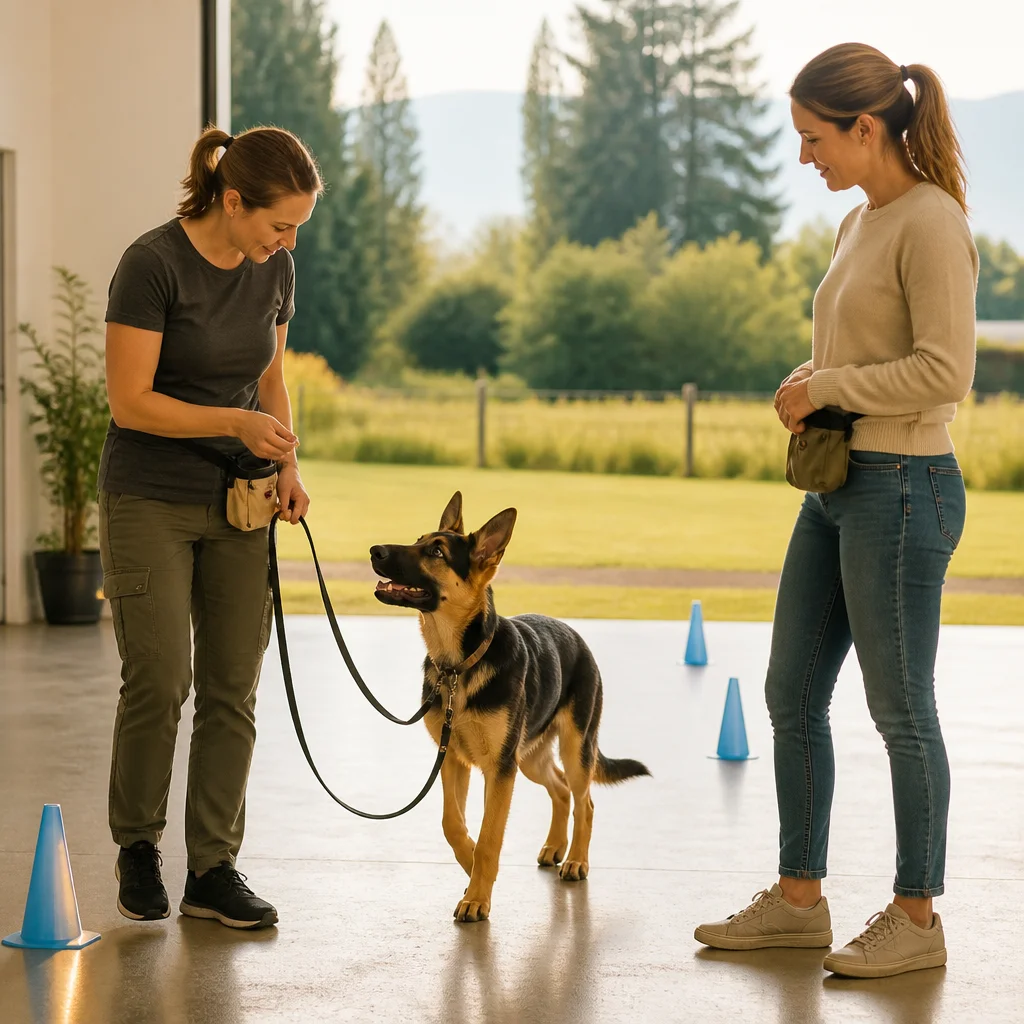
A group class can be efficient for foundation skills when your dog can learn near others. Private coaching gives more time for a specific household problem. A home visit lets the trainer see the doorway, yard or neighbourhood where the behaviour happens. Remote coaching can work well when the trainer mainly needs to watch video, adjust your timing and change the home setup.
Ask what would make the trainer move your dog out of the advertised format. Someone who offers only group classes should be willing to say when a private plan or veterinary referral is more appropriate.
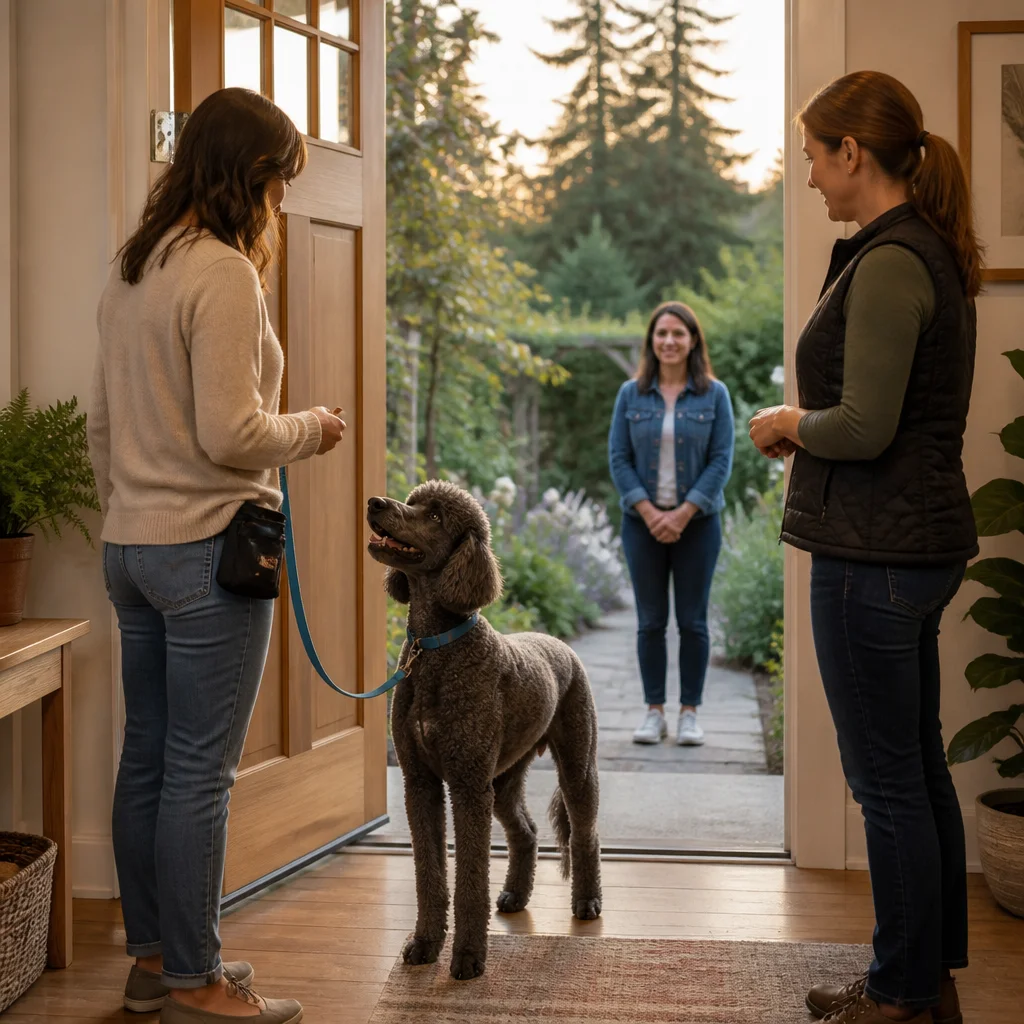
Here is the practical difference between a slogan and teaching. Suppose your dog jumps when visitors enter. “We establish leadership” does not tell you what to do at 6 p.m. when the doorbell rings. A useful explanation might have you place a mat away from the doorway, practise moving to it before anyone arrives, reward the dog there, and use a gate while the skill is new. The trainer should then watch you run that setup and adjust your timing. You leave with a procedure, not just a dog who behaved for the trainer.
Check teaching, scope and communication
Credentials matter only if you understand what they cover. Ask who issued them, what continuing education is required and who will teach your class. Then test the skill that matters most: can this person explain an exercise so you can repeat it?
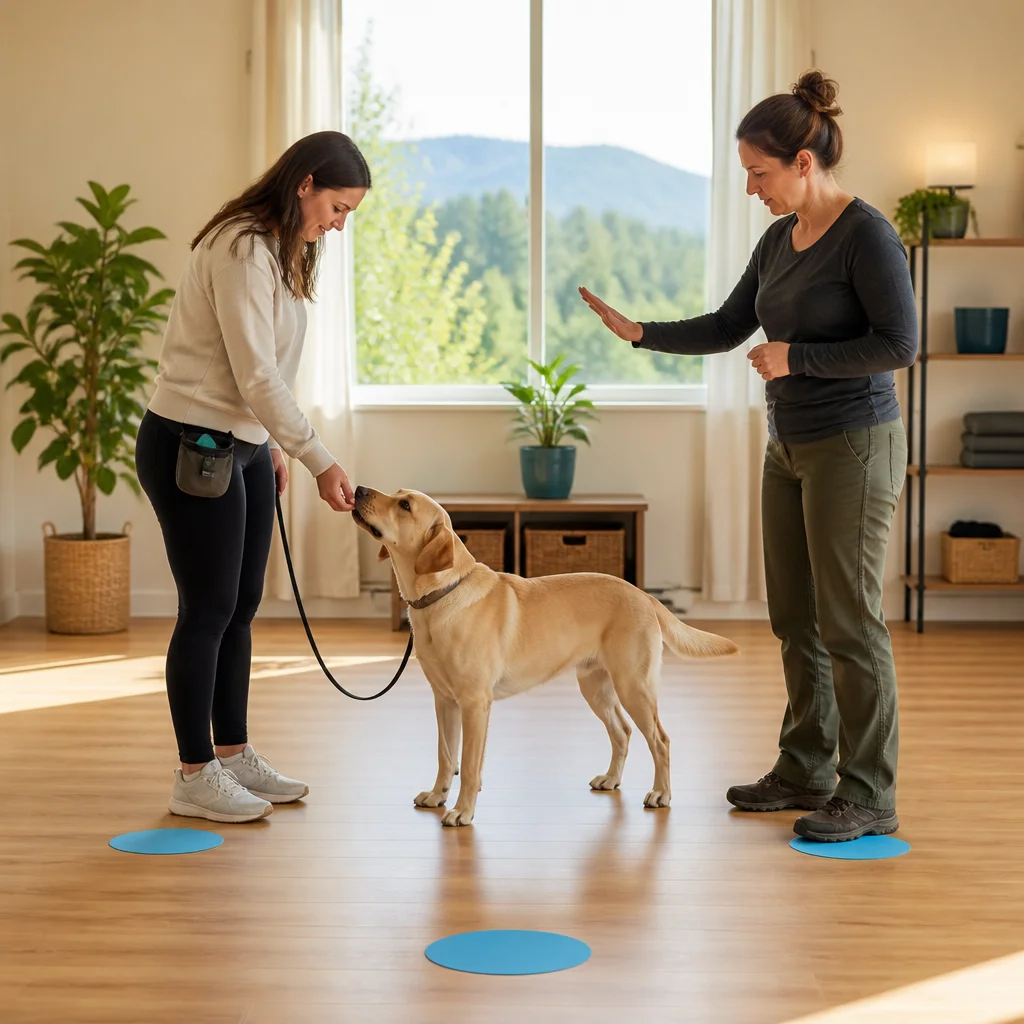
Look for professional boundaries. Trainers can teach and manage behaviour; they should not diagnose illness or change veterinary treatment. For sudden behaviour change, pain concerns or medication questions, involve your veterinarian.
Make Langley logistics part of the choice
Get the exact venue and calculate the door-to-door trip at the lesson time. A slightly more distant trainer on your normal route may be easier to attend than a closer address that adds a difficult cross-town trip. Confirm whether classes stay at one location and whether outdoor sessions have a backup.
Compare realistic competitors, not idealized formats. A nearby five-week class may offer planned distraction practice but only brief individual coaching. A trainer who travels to your home may charge more while directly addressing the doorway setup and saving five return trips. A remote coach may be the strongest choice if video clearly captures the problem and travel is the barrier. Compare which option teaches the household to perform the needed routine.
Start with a small commitment. Ask for the lesson length, class size, instructor, homework support, cancellation terms and what happens if the original format proves unsuitable. Avoid paying for a large package before you have seen the trainer teach.
Browse Langley dog-care providers and training listings. Shortlist two or three, ask the same questions, and choose the trainer whose answers describe observable practice rather than slogans.