
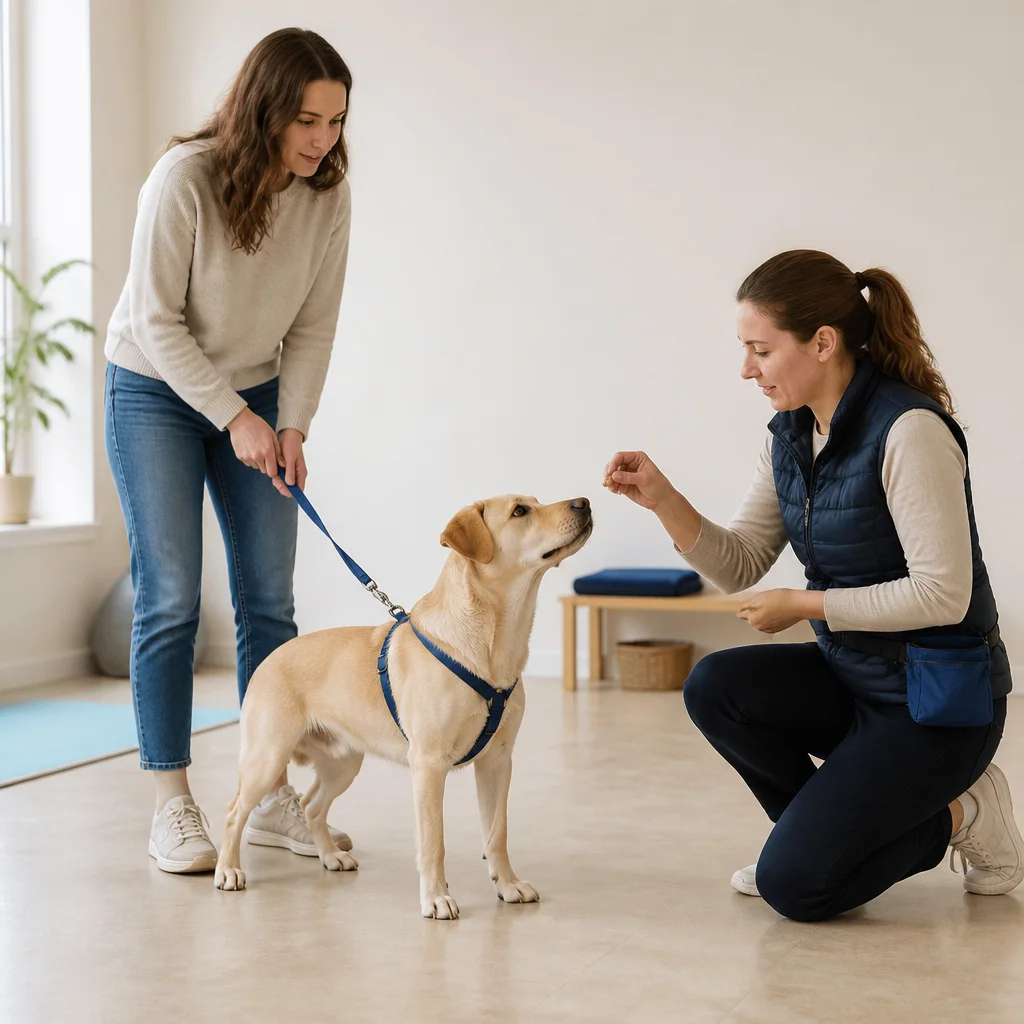
The right format lets your dog learn while giving you a routine you can repeat. When you're looking at group, private, home, remote, or trainer-led programs, don't just count the number of sessions. Look at the actual work being delivered.
Screen method and equipment first
Before you even look at the price tag or how convenient a location is, rule out anything that uses methods or equipment you wouldn't be comfortable with. The BC SPCA recommends humane, reward-based training and advises against using fear, pain, leash corrections, shock, prong, or choke collars. You should ask every provider exactly what happens when a dog can't perform a specific exercise and what kind of tools they use. A "cheap" or "convenient" option isn't a good option if the training method fails this first screen.
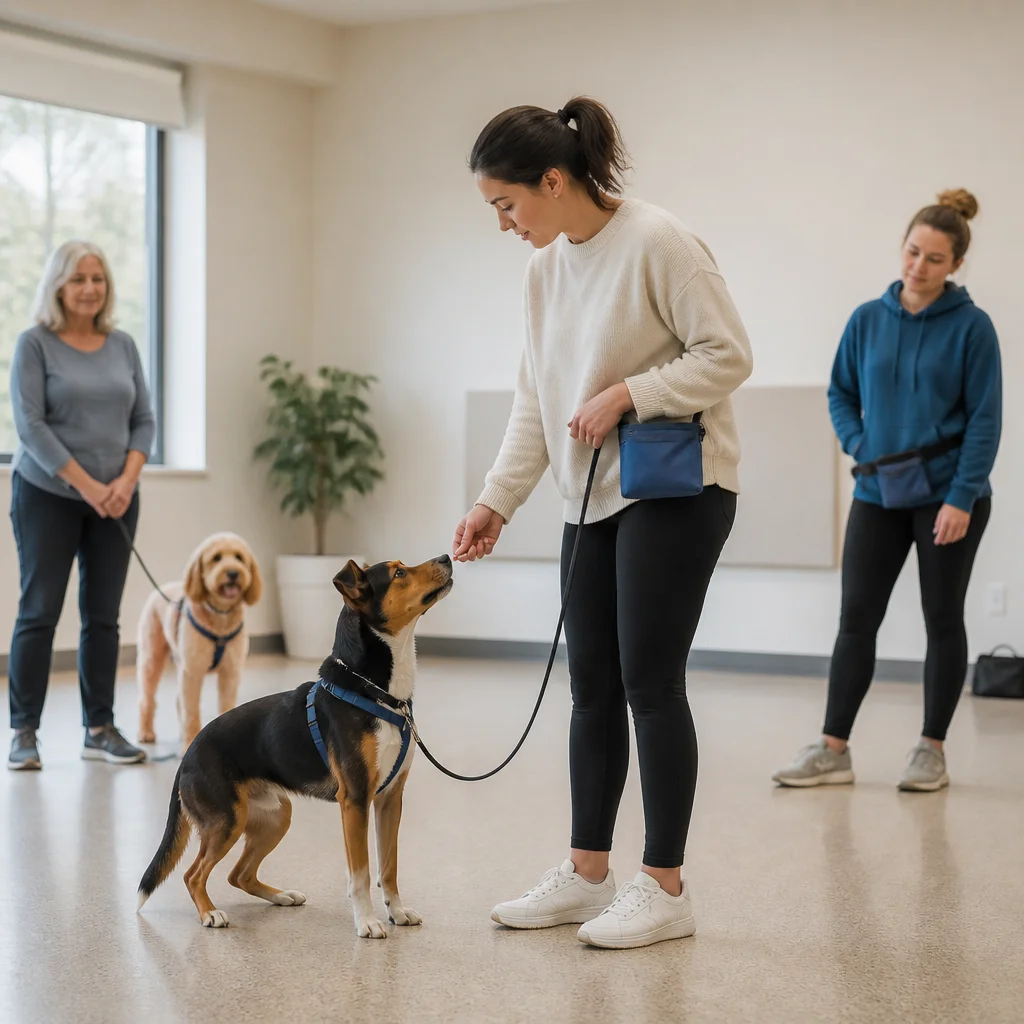
Group class
Group classes give you a structured curriculum and a regular schedule, all while practicing around controlled distractions. They fit a dog that can still eat, respond and recover with other dogs present. When looking at these, ask how many dogs are in the instructor's group, how they separate the working spaces, and what the plan is if one dog needs more distance from others.
The downside here is the lack of individual time. An instructor might explain how to handle a front-door issue, but they aren't seeing your actual hallway at home. You also need to check the rules for missed classes, since the course usually keeps moving regardless.
One local Langley provider, Keltie R. Lang, is currently advertising five-week beginner classes. Because their page mentions balanced methods, consequences, and equipment restrictions, you'll need to make sure their specific method fits your preferences separately from their schedule or price.
Private coaching
One-to-one lessons can focus on one dog, handler and goal. If you meet at a facility, the trainer can control the environment. If you meet at home, the trainer can see your actual doorway, fence line, or the specific route you take in the neighborhood.
Just remember that "private" doesn't mean the trainer should be holding the leash for the whole session. You should ask how much the owner is expected to practice, what kind of follow-up support is available, and if the method changes if the dog is struggling.
Moxie Dog Training offers private programs as well as in-home or public-space work. Their site notes that training tools may be used, so you'll want to confirm the exact equipment and process before deciding if the format is right for you.
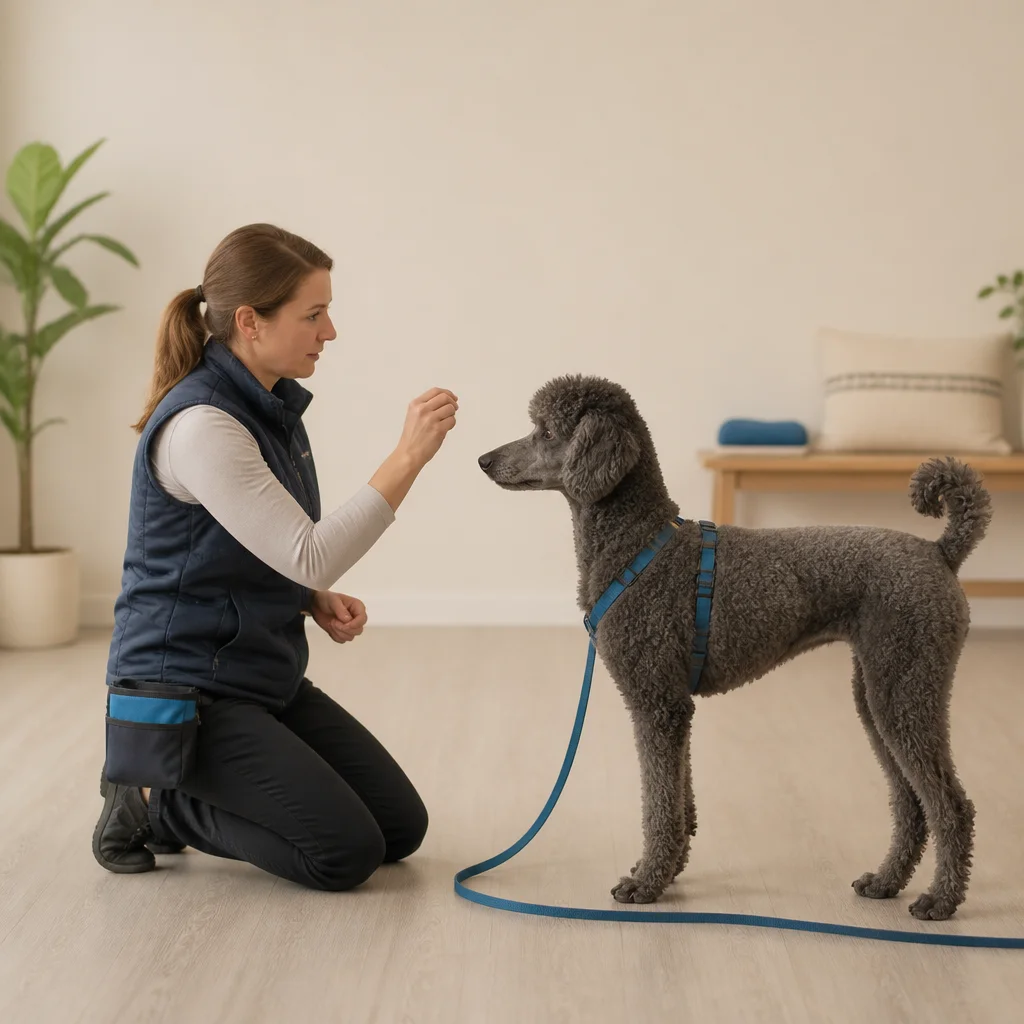
Remote coaching
Video sessions can save you travel time and allow a trainer to see your daily household routine without a stranger being present to change the dog's behavior. This works best for problems that can be observed through a camera without creating a safety risk, provided you have a stable connection and a way to film safely. Ask if you can send video clips in advance and at what point the trainer would require an in-person visit or a vet's help.
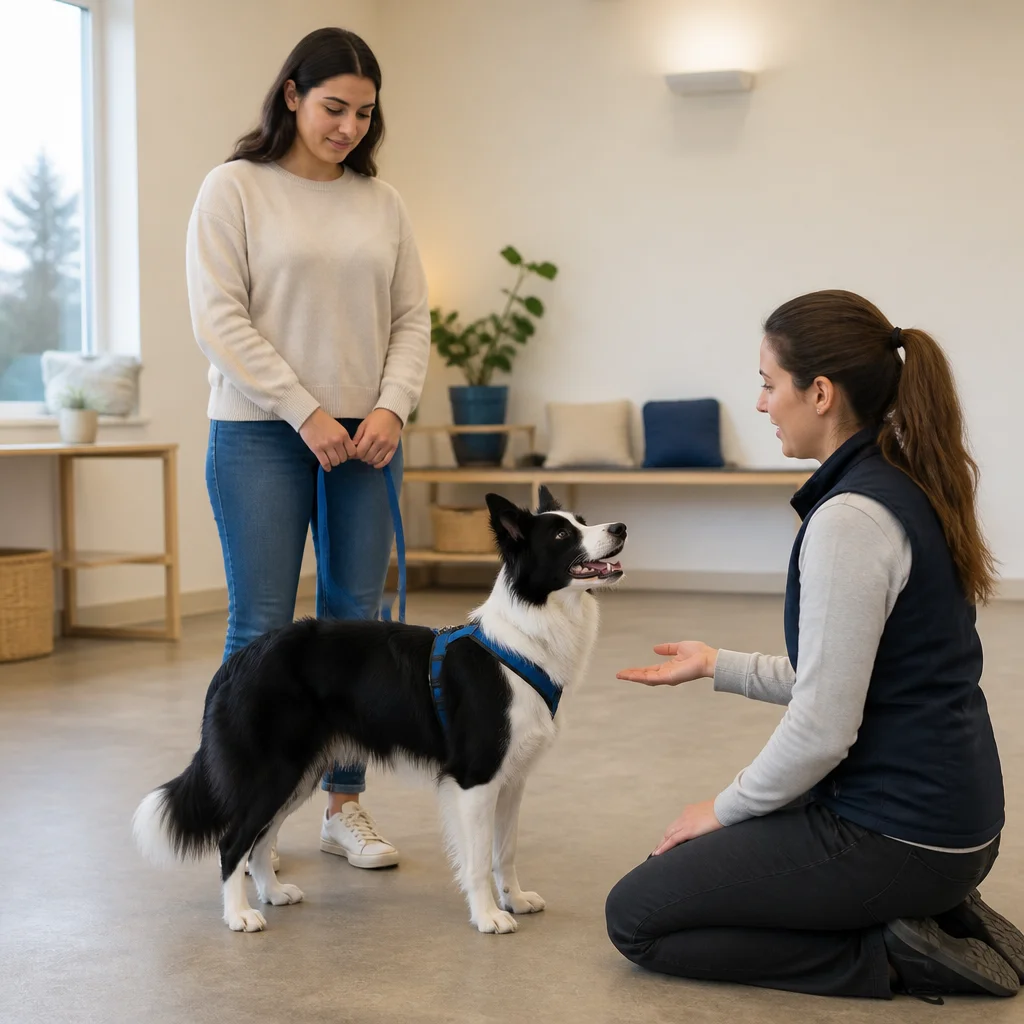
Trainer-led programs
Day training or board-and-train programs can provide a lot of professional repetitions, but you still need a solid plan for how the skills transfer back to your home. You should ask where the dog will be staying, who is handling them, what tools are being used, if you are allowed to observe the sessions, and how you will learn to maintain the work once the dog comes home. Keep in mind that a trainer being secretive about their process is not proof of expertise.
Compare one ordinary week
Let's look at two different scenarios:
- Keltie R. Lang's advertised five-week group class at $200 plus GST (which is $210 at the current 5% GST rate), requiring a 25-minute drive each way; or
- two Moxie private hours at the advertised starting rate of $150 per hour, which is $300 before tax and travel.
The group course adds four hours and ten minutes of driving across five return trips. It may provide useful practice around other dogs. Two private hours provide fewer meetings but more individual time and may target the real environment. These are published starting totals, not equivalent methods: Keltie describes balanced training with consequences, while Moxie says training tools may be used. Confirm exact equipment, current tax, travel and the complete quote before treating either as suitable.
You also have to consider Langley geography. A search result for "Langley" could mean Langley City, the Township, or a nearby area. Check the exact venue before you calculate your travel time. While the Carvolth Exchange might help if you are traveling regionally, it won't help you get to a rural or South Langley venue.
Use one comparison row per option
Create a list with a row for each option and track: method and equipment, total package cost, what that cost covers, instructor time, class size, venue, how much the owner practices, travel, homework, support between sessions, the policy for missed sessions, and the smallest commitment required. Always rule out any method or safety issue before you start ranking them by price.
You can use the Langley training results to find candidates and the Langley cost guide to help compare prices once you have found formats that are actually comparable.