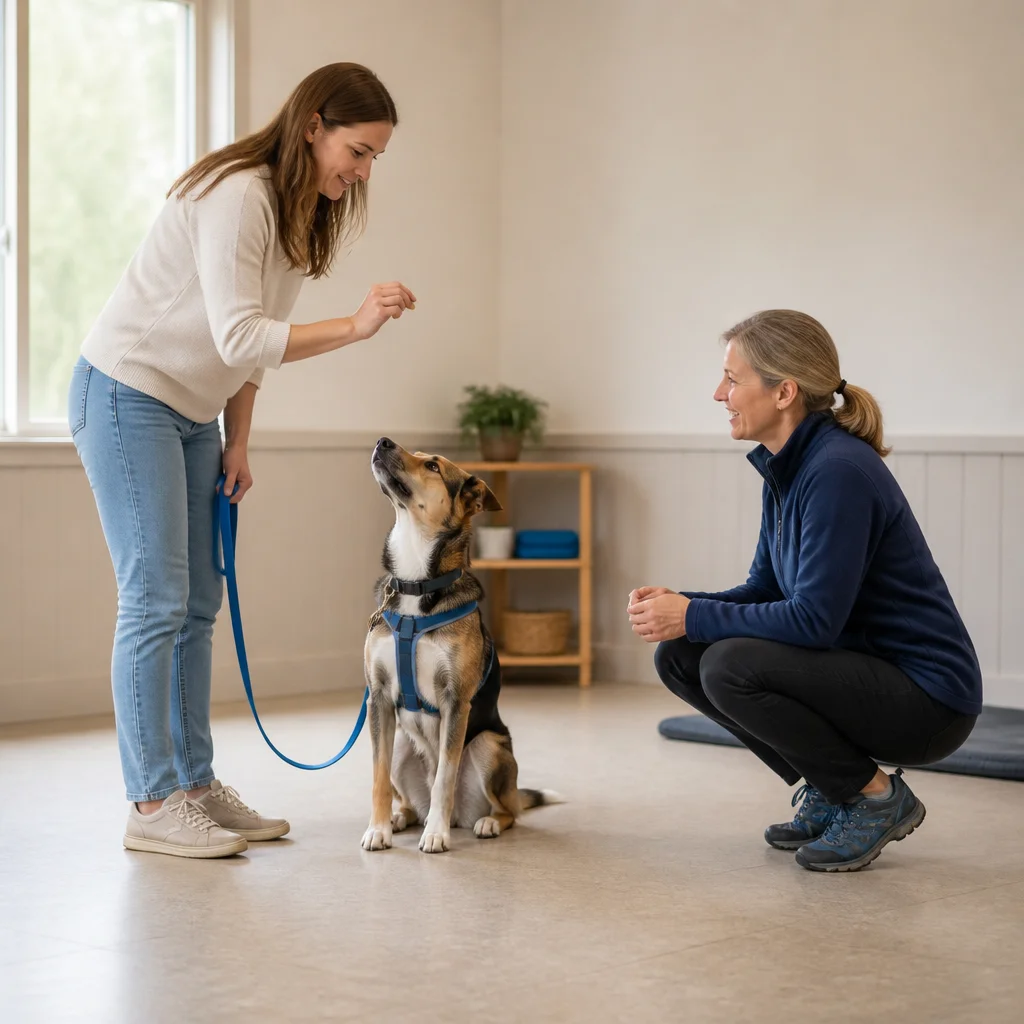
A useful first session should help the trainer understand the dog and help you perform one or two exercises correctly. It is an assessment and teaching appointment, not a test your dog must pass.
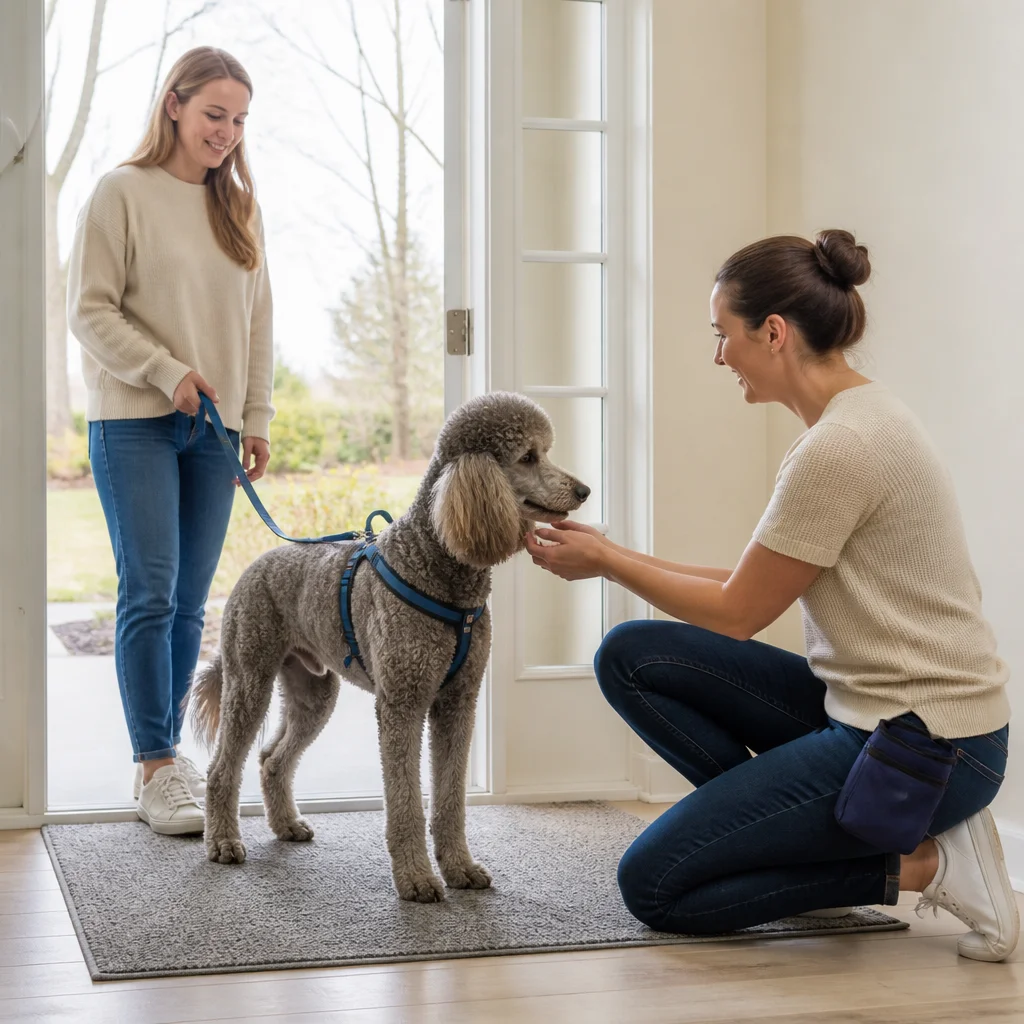
Before the dog starts working
The trainer may review your intake form, ask what happens before the behaviour and clarify safety history. Be candid about growling, bites, escape attempts, guarding and handling sensitivities. Also mention recent health changes or veterinary restrictions.
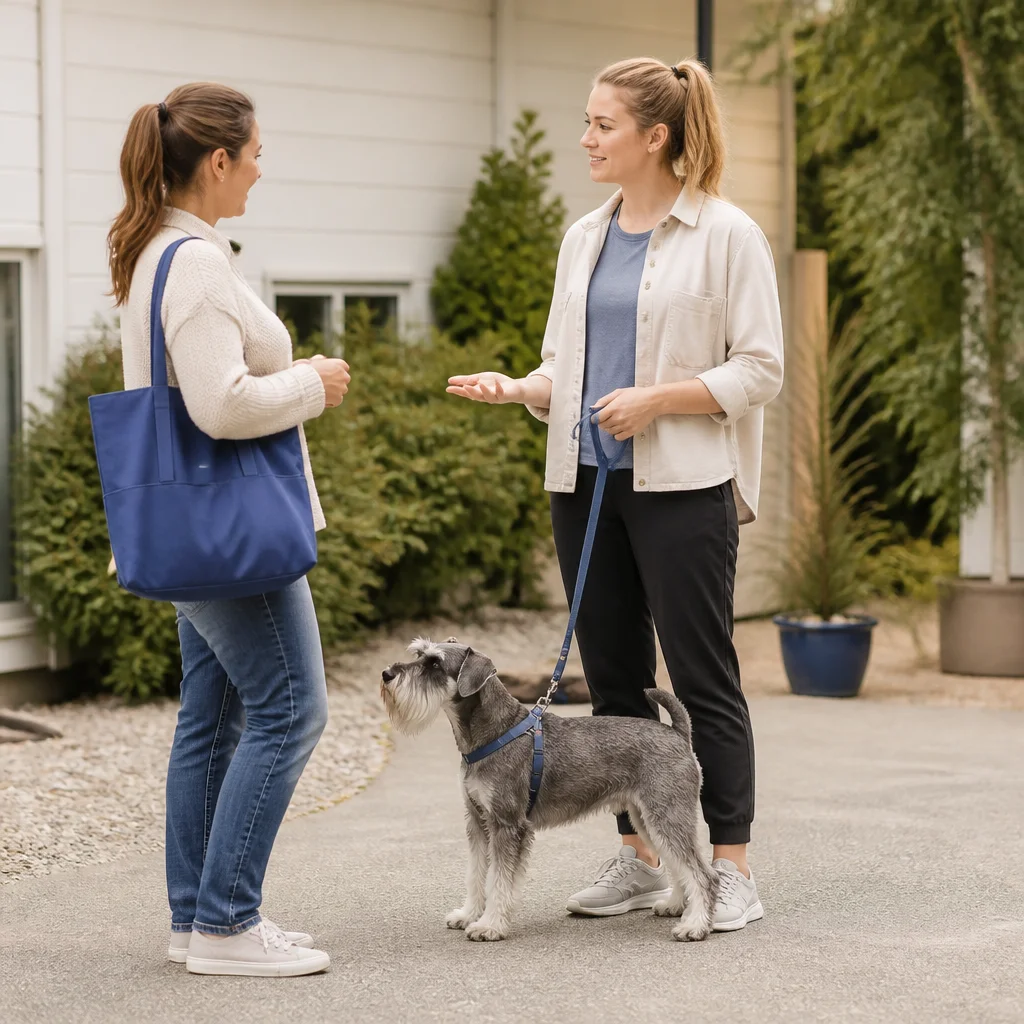
Expect a plan for entering the space. In a group venue, dogs should not be forced into nose-to-nose greetings at the doorway. If your dog needs distance, the trainer may ask you to wait outside or enter through another route.
Observation comes before advice
The trainer should watch the dog’s body language, what draws their attention and which rewards matter. They may ask you to demonstrate an ordinary piece of the routine. This is not about blaming your timing; it shows what both members of the team currently understand.
A reward-based trainer changes the setup when the dog cannot succeed. The BC SPCA’s guidance recommends rewards such as food and play, guardian participation and explanations of behaviour. It warns against punishment, pain and fear.
You practise during the lesson
The trainer may demonstrate briefly, then return the leash to you. Expect small attempts: one step of a loose-leash exercise, a hand target, settling on a mat or moving farther from a distraction. Good coaching tells you what to look for, when to reward and when to make the task easier.
The dog may not display the problem in a new place. That does not make the appointment useless. Video from home, a written sequence and a planned follow-up in the real environment can be more informative than provoking the behaviour for a demonstration.
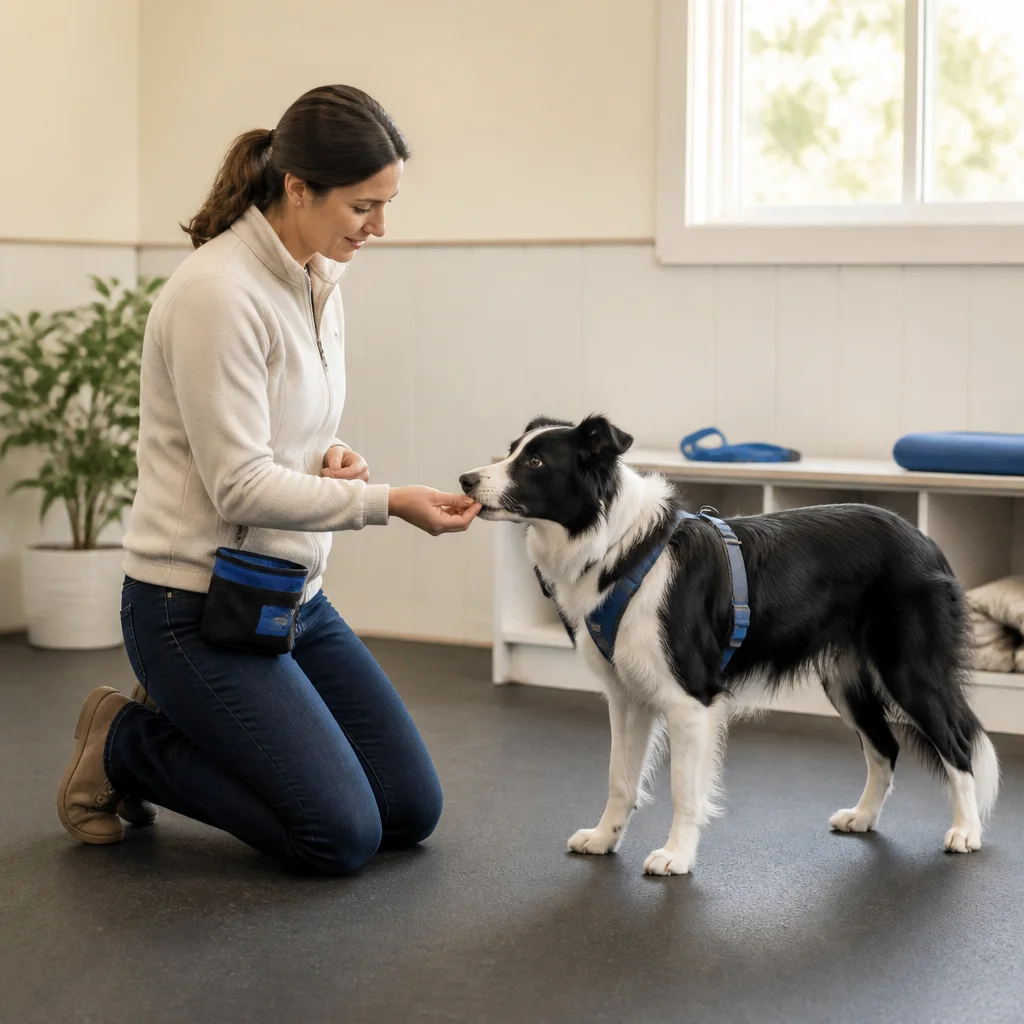
You leave with boundaries as well as homework
Before the session ends, repeat the plan back:
- where to practise;
- what equipment and reward to use;
- how many brief attempts to make;
- what progress will look like; and
- what sign means stop and contact the trainer.
Ask how to send an update and whether the next session is actually needed now. For a concern outside training scope, a professional may suggest veterinary assessment or another qualified specialist rather than improvising.
The trip home matters. Give the dog time to settle and do not turn the day into a long series of extra training errands. Later, write down what you could repeat confidently and what remained unclear. That note is a better measure of the first appointment than whether the dog looked perfect in the room.
Check the exact venue and arrival instructions when browsing Langley options or training services.