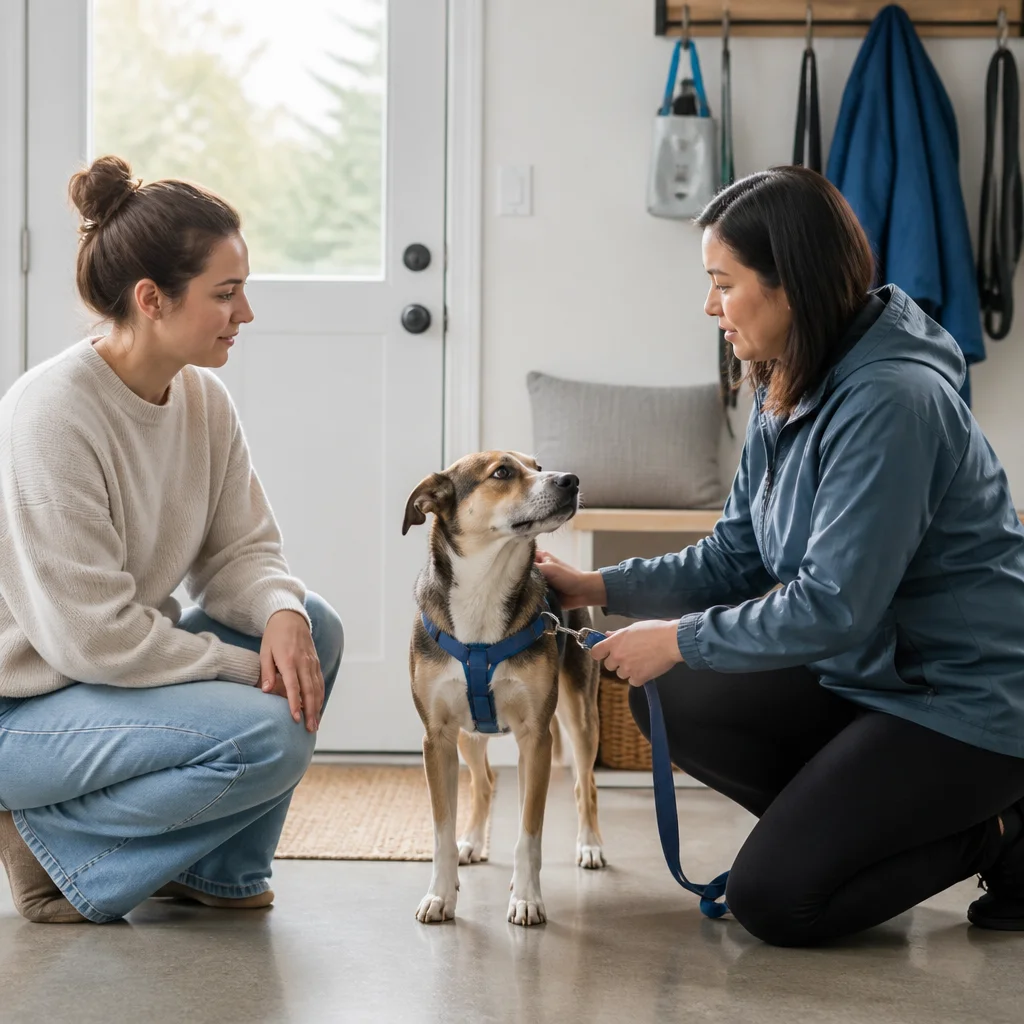
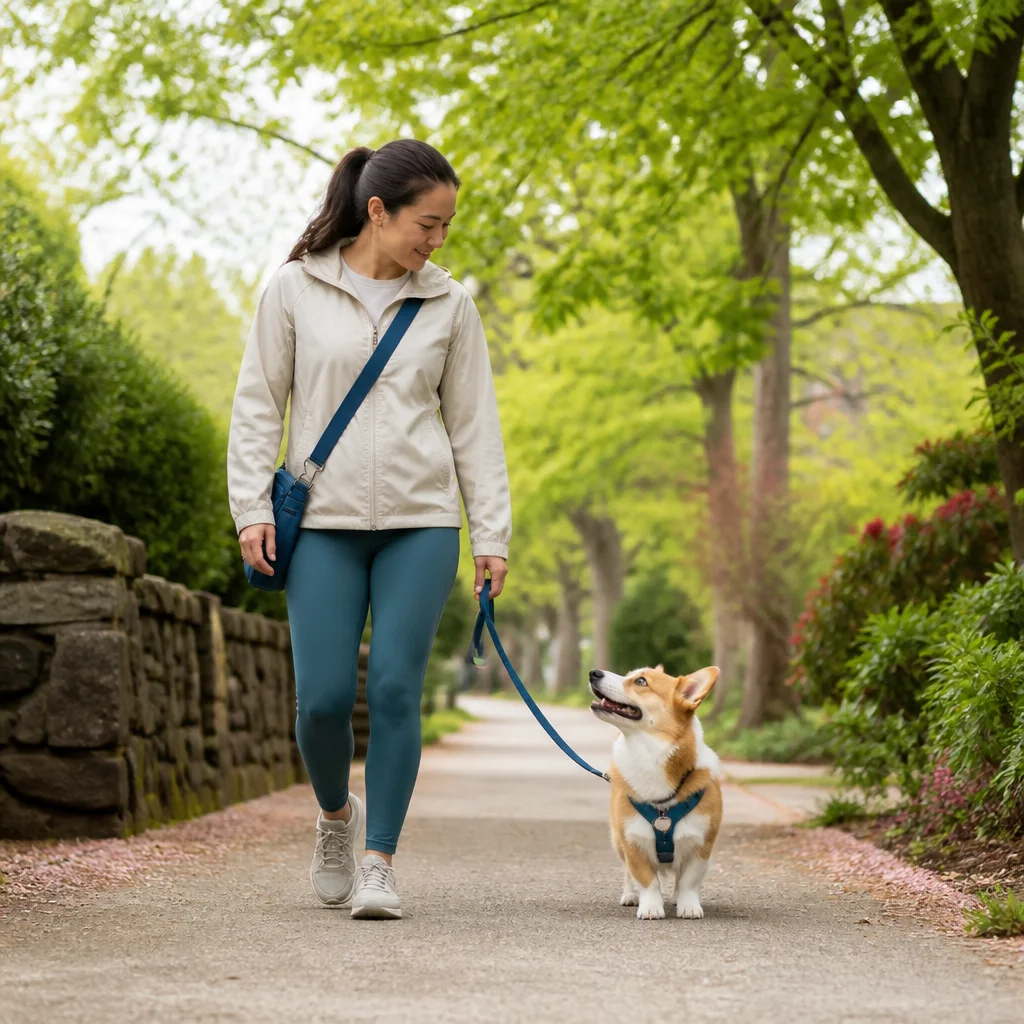
Start with the barrier, not the word “accessible.” Name what the owner needs at the handoff and what the dog needs during care. Useful details include stairs, heavy doors, reaching a lockbox, managing a leash while using mobility equipment, a dog that cannot walk far, or a dog that startles in a noisy lobby. Ask the provider to describe the exact transfer rather than offer a general yes.
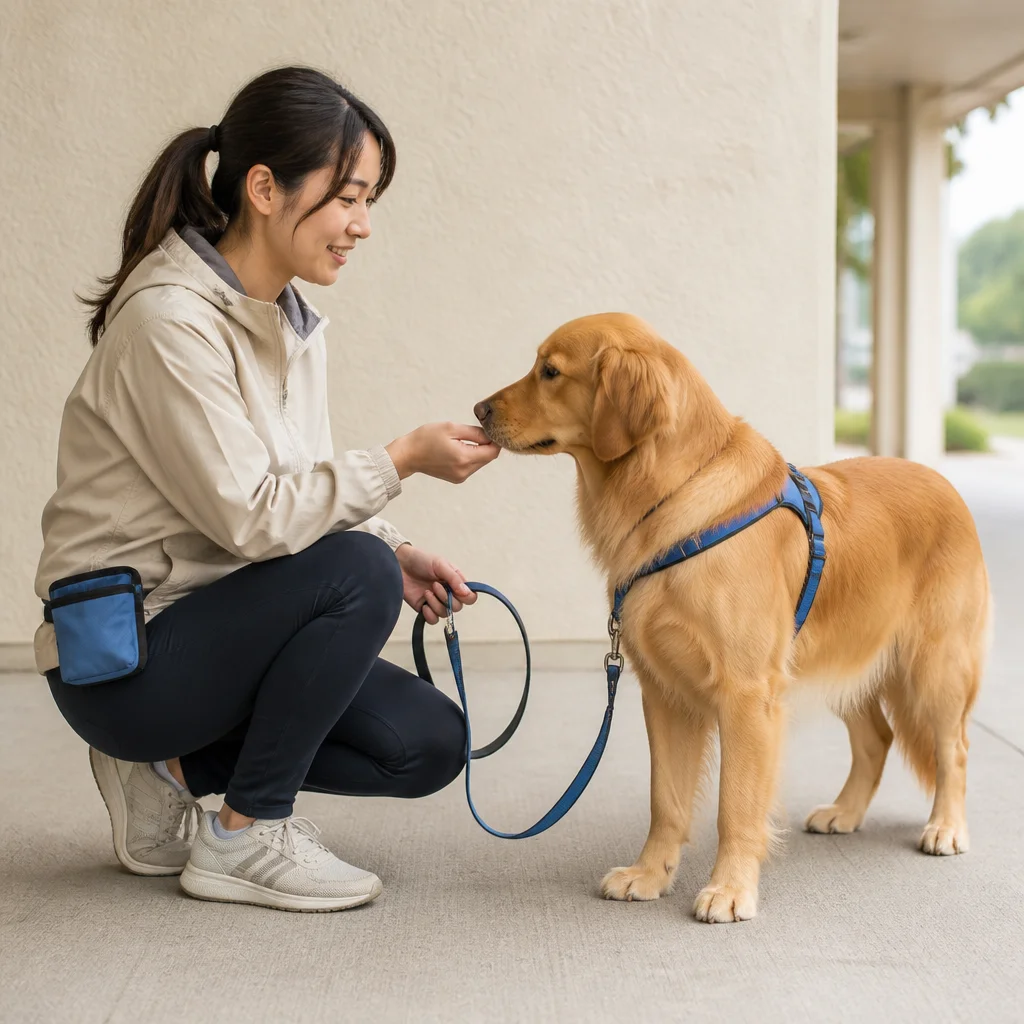
Test the difficult moment
Walk through the hardest five minutes. Who opens the building door? Where does the leash change hands? Can instructions be given in writing? What happens if the dog refuses the elevator or needs to return early? A provider who gives limits and a fallback is more helpful than one who promises to manage anything.
A short paid trial while the owner is nearby can test entry, communication and the pet’s response. Record what worked, then change only the part that did not.
Match the route to the dog
A flat 20-minute sniff walk may be more useful than a promised hour that the dog cannot manage. Ask where the walker would turn back, how rest is handled and what indoor care replaces unused time. In a busy Vancouver building, test the lobby and elevator when other dogs are likely to appear.
Build the service around a real handoff
Consider an owner who uses a walker in a fob-controlled apartment building. The dog can manage a gentle 20-minute outing but becomes tense when another dog enters the elevator. “We offer accessible pickup” does not explain the visit. A workable plan might have the walker call from outside, enter with their own authorized fob, clip the dog’s familiar harness inside the unit, wait for an empty elevator and send a message once they have cleared the lobby. The owner should not have to hold doors and manage the leash to make the service function.
Test that plan at the same time of day as the paid walk. A quiet Sunday lobby may tell you little about a weekday lunch rush. If the elevator is busy, decide whether the walker waits, uses another exit or replaces part of the outing with indoor enrichment.
Price the accommodation clearly
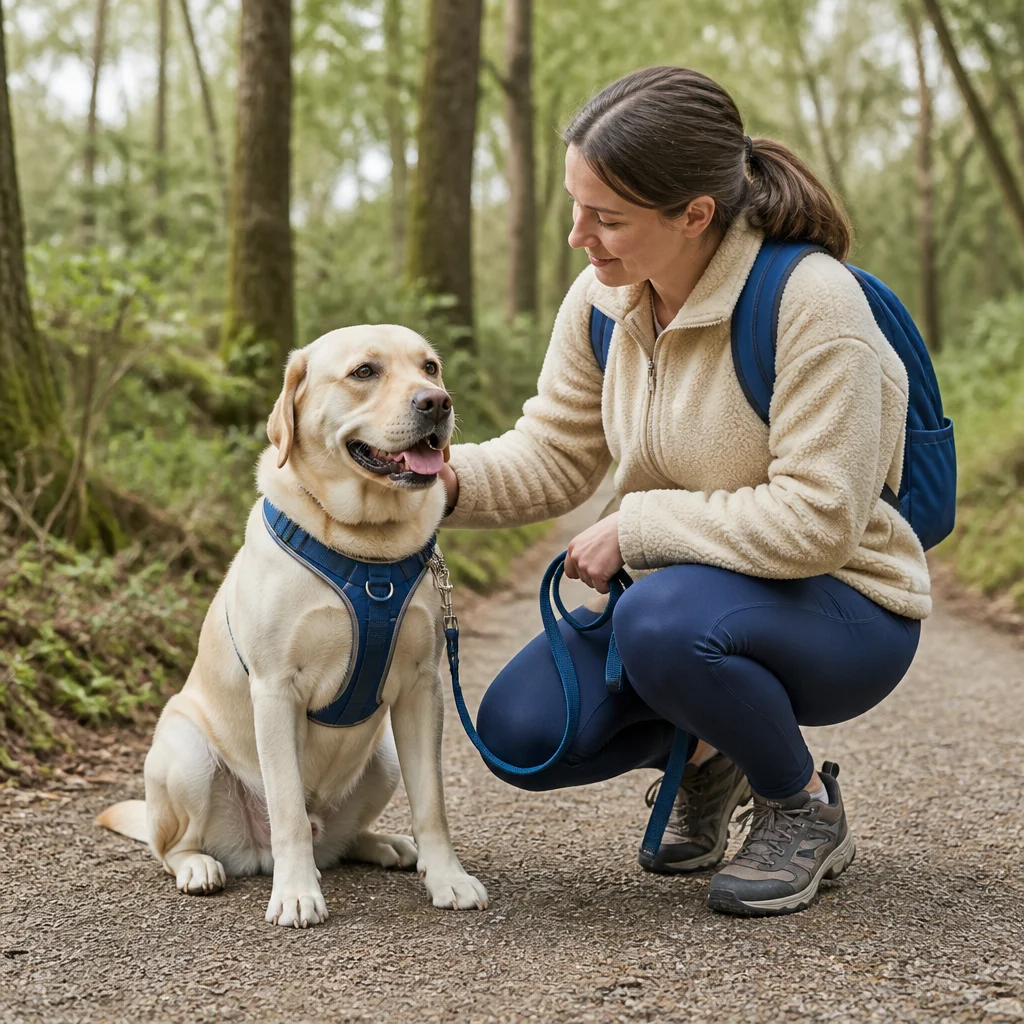
Ask whether extra handoff time sits inside the walking clock. If a 30-minute booking includes ten minutes navigating the building in each direction, the dog may receive only ten minutes outdoors. That might still be the correct service, but it should be named accurately. Another provider may offer a longer booking or start the clock after leaving the building. Compare the actual outdoor and care time.
For mobility limits, agree on distance, pace, surfaces and a turn-back point. “Let the dog decide” is too vague when fatigue can appear halfway home. Ask what the walker does with unused time if the dog returns early: water, a calm sniff in the courtyard or another agreed activity. Share veterinary instructions that affect exercise, while leaving diagnosis and treatment with the veterinarian.
Judge the first walk by evidence
Ask for a report that includes entry, approximate route, outdoor time, toileting, any difficult transition and secure return. A cheerful photo does not show whether the walker struggled with the fob or rushed the dog through the lobby. After the trial, change one part of the plan at a time. The goal is a repeatable ordinary day, not a heroic one-off.
Questions that uncover hidden work
Ask, “What part of this handoff would still require me to be present?” and “If the elevator or main door cannot be used, what is the alternative?” For the dog, ask which signs would shorten the route and what the walker does with the remaining booking. Clear answers let the owner arrange help only where it is truly needed. Vague answers such as “we always figure it out” leave the same barriers for appointment day.
Browse Vancouver dog-care listings or BC dog walkers, then ask shortlisted providers to price the same route and time.