

Get the facility’s admission requirements before booking daycare or boarding, then review them with your veterinarian. It is important to remember that the provider decides which records they accept for their services, while your veterinarian is the one who advises you on your dog's specific health and vaccination plan. One does not replace the other.

Ask for the branch's current rule before paying
You need to get the exact policy for the specific location and the dates you are looking at. Ask them exactly which documents the staff needs, how they want those documents sent, when they need to review them, and if there is a mandatory waiting period between a vaccination and attending daycare.
Don't rely on what a different branch does or assume a vaccine name is the same everywhere. If the requirements are confusing, ask for the written wording so your vet can interpret it correctly. Also, ask the provider to explain their admission steps instead of asking them to prescribe medical treatment.
Current Vancouver policies show why you need to be specific. Embarkadero requires a minimum age of 14 weeks, current vaccination records, and an introduction session before daycare can start. Meanwhile, Adventure Den's FAQ lists their own puppy vaccine requirements alongside a separate assessment requirement. These are business-specific admission policies, not a universal BC vaccination schedule.

Give the veterinarian the planned care environment
Tell your vet exactly what the care setup involves, whether it is group daycare, boarding, individual care, transport, or off-site walks, and give them your proposed dates. You should bring the provider's written policy with you to the appointment.
The BC SPCA's vaccination guidance tells owners to consult their veterinarian and notes that schedules change based on the individual animal's circumstances. Ask your clinic what specific records they can provide and if anything in your upcoming booking needs to be reconsidered based on your dog's health.
If what the provider requires doesn't match what your vet advises, fix that discrepancy before you pay for non-refundable care. Find out what documentation the provider will actually accept and ask if a different type of care or a different date would solve the issue. Don't just schedule an extra medical treatment just to satisfy a requirement you haven't fully understood.
Close the paperwork loop
Use whatever method the provider prefers, whether that is a private upload, email, or a clinic-to-provider process. Double-check that your dog's identity and your own contact details match the booking, and only send the specific information required for admission.
Once sent, ask for explicit acceptance. Getting an automatic delivery receipt or seeing that a file was uploaded only proves you sent the info; it doesn't prove the staff has actually reviewed it or approved the booking.
Keep the facility's policy, the record you sent, the date you sent it, and the confirmation of acceptance all in one place. If someone else is dropping your dog off, give them the booking confirmation and contact details, but don't hand them unnecessary medical history.
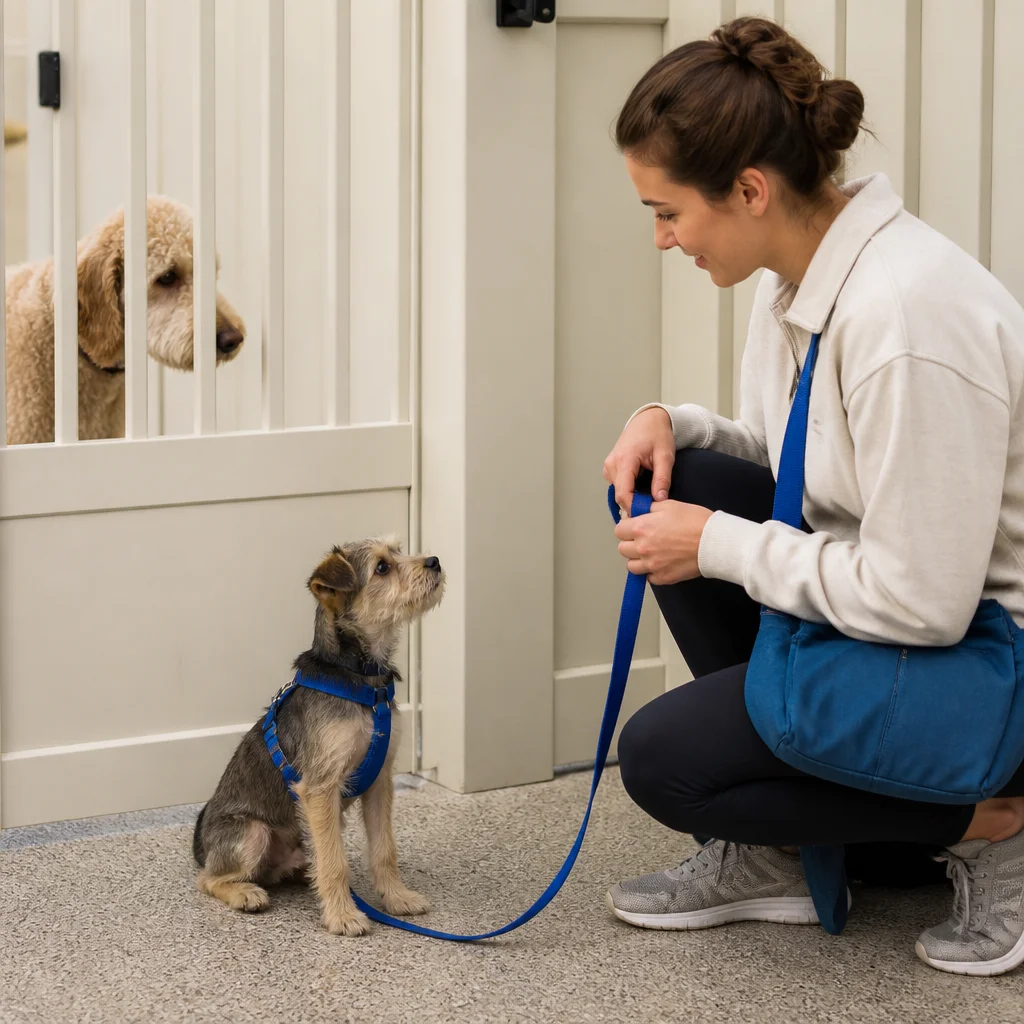
Separate an assessment from the stay
Vaccination records might only be part of the process. For example, Adventure Den requires that a new assessment cannot be followed by a first daycare or boarding stay on the same day. Finishing your paperwork doesn't automatically skip that scheduling requirement.
Ask the provider what else is required after the documents are accepted: Do they need an introduction, a behavioral assessment, a signed agreement, a deposit, or a confirmed arrival slot? Make sure to put all those steps on your calendar before the day you leave.
Report changes before arrival
Ask the provider what they need to know if your dog gets sick, visits the vet, or has any other significant changes after their records have been accepted. Your veterinarian provides health advice, but the provider is the one who decides if the booking can still move forward and how their cancellation or rescheduling rules apply.
The process is finished once you have a written policy, a discussion with your vet where necessary, accepted records, and a confirmed admission. Browse daycare or boarding by the care you need, then complete that process with the actual branch.