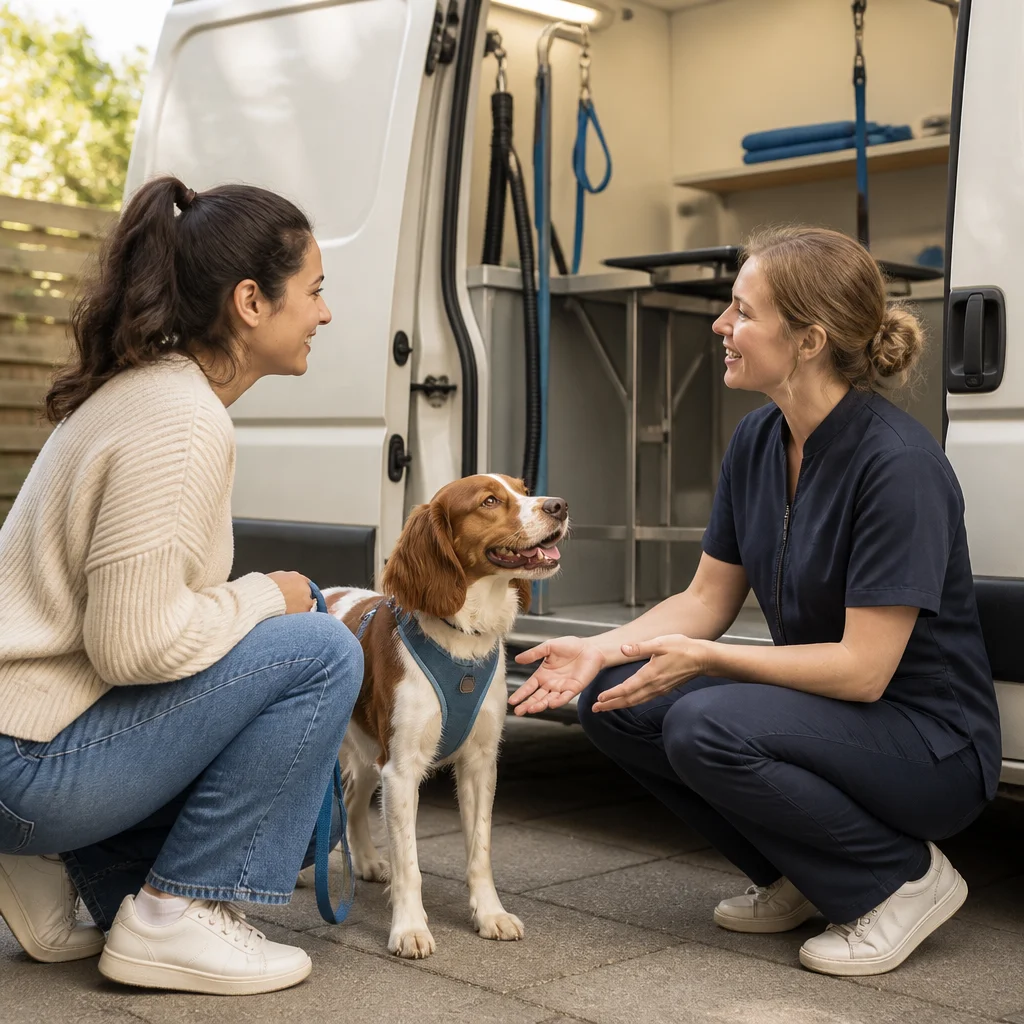
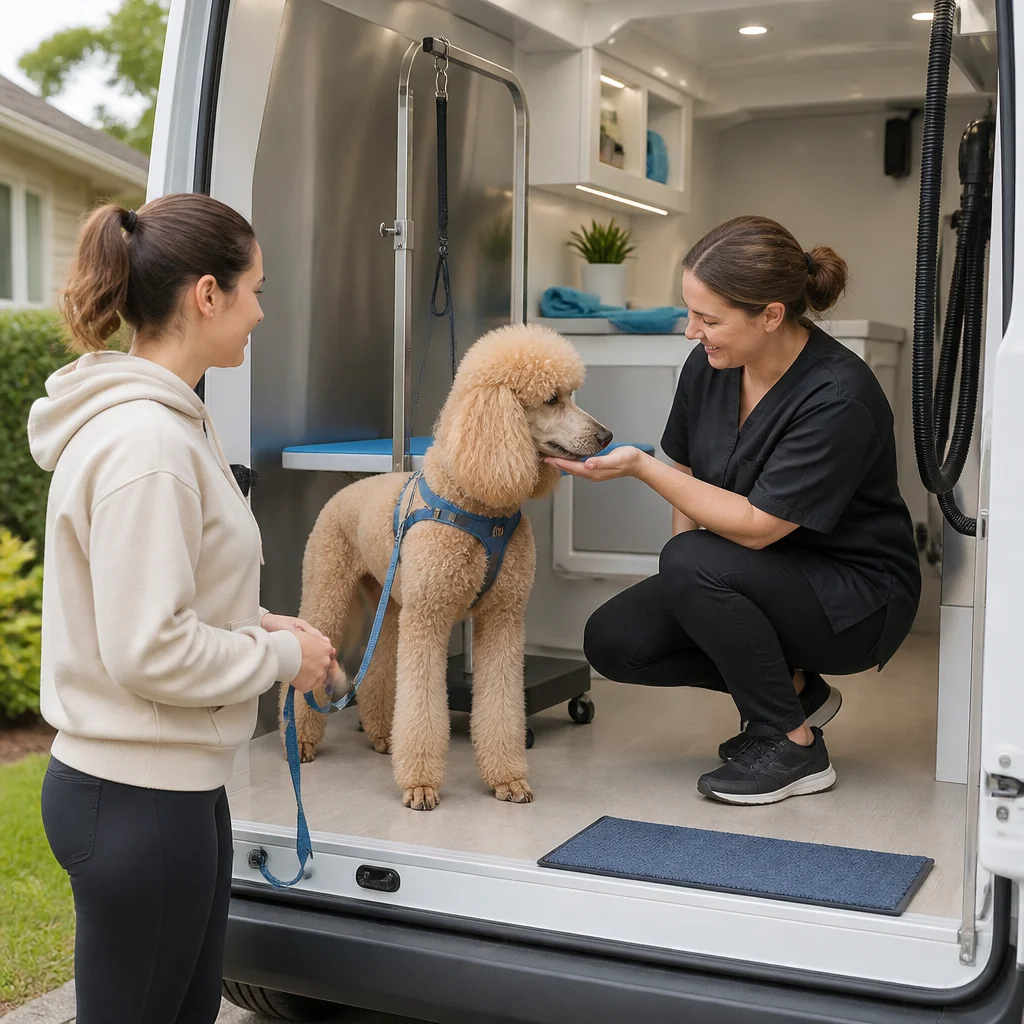
Choose a mobile groomer by starting at your front door, not with a haircut gallery. The service has to reach your address, stop in a workable place, transfer your dog safely and operate in a setting the dog can tolerate. In Vancouver, a provider may serve your postal code but still be unable to use the loading area outside your building.
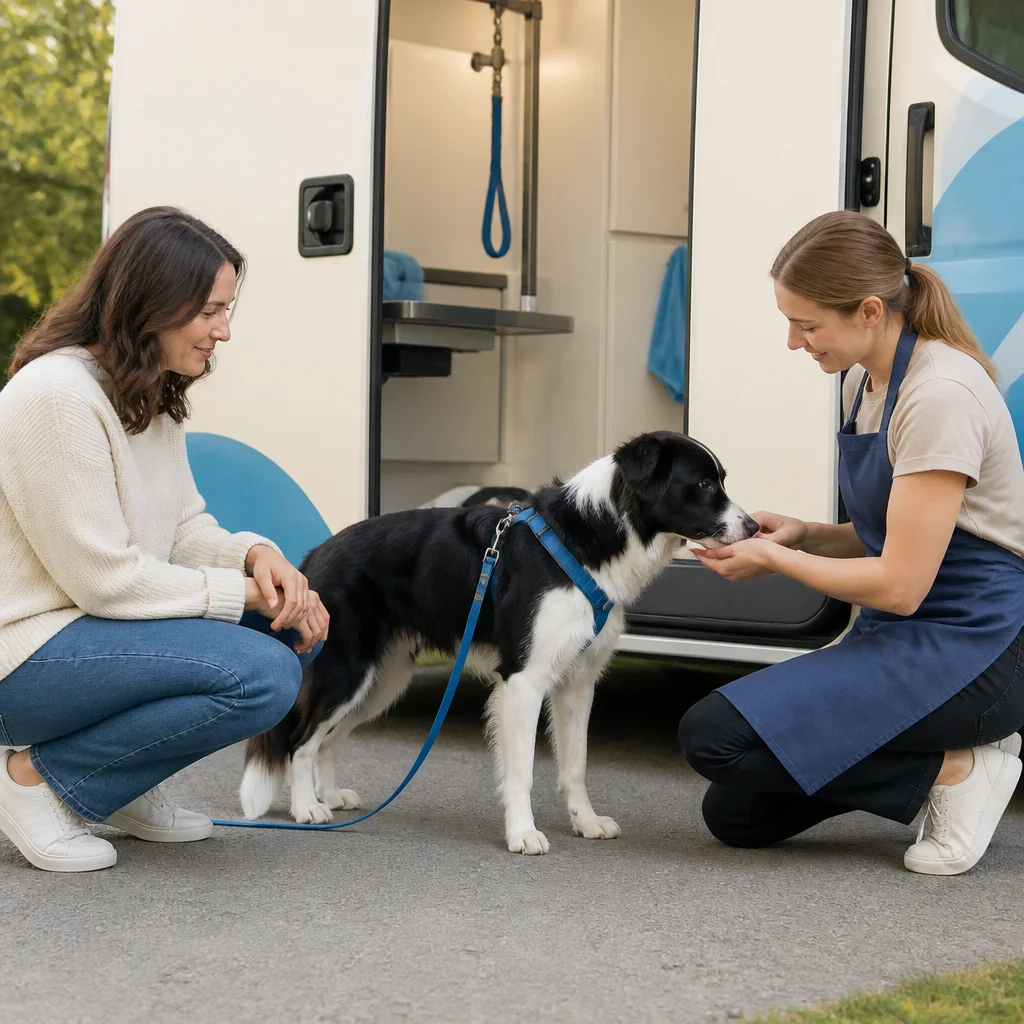
The best candidate is the one who can explain both an ordinary appointment and what happens when the curb, elevator, weather, vehicle or dog changes the plan.
First identify what “mobile” means
Ask where the grooming actually happens. The answer usually falls into one of three arrangements:
- Self-contained grooming vehicle: The work happens in a van or trailer parked near the home. Ask about the vehicle’s dimensions, stopping requirements and whether it carries its own water and power.
- In-home grooming: The groomer brings equipment into a room in the client’s home. Ask what space, surfaces, water, electrical access and cleanup are required.
- Pickup and return: The provider transports the dog to another grooming location. Ask how the dog is secured, how long the dog may be away and whether other animals travel at the same time.
These models solve different problems. A van avoids work inside a condo but still requires a curb transfer. In-home service removes that transfer but may not suit a small apartment or a building that restricts commercial work. Pickup service can simplify the owner’s travel while adding transport and time away from home.
Do not continue comparing prices until every candidate has named the model being quoted.
Walk the route from home to workspace
For a house, look at the curb, driveway slope, overhead branches and the distance from the door. For an apartment, trace the unit door, corridor, elevator, lobby, exterior door and loading area. Check building rules with the strata, landlord or manager where necessary; the groomer cannot promise access on the building’s behalf.
Ask the provider where the vehicle needs to stop and what happens if that space is occupied. Vancouver’s parking signs and restrictions apply to the actual stopping place, so “there is usually room out front” is not a plan. The City of Vancouver provides current parking information, but the provider still needs to assess the location and obey the posted rules on the appointment day.
Now consider the dog’s transfer. Can the dog step into the vehicle? Will a ramp fit? Who holds the leash while doors open? If the owner has limited mobility, can the groomer meet the dog at the unit or building entrance? A reassuring answer describes the handoff without assuming that the owner or groomer can lift the dog.
Ask how the workspace fits this dog
Share the same facts you would give a salon: size, coat condition, desired finish, grooming history, mobility limits, known fears and handling sensitivities. Then add the parts that matter in a vehicle or home. Does the dog react to engines, generators, traffic noise or confined spaces? Does the dog guard the doorway or become distressed when separated from the owner?
The BC SPCA AnimalKind pet-care checklist suggests asking groomers about introductory visits, non-slip surfaces, continuously supervised cage dryers and reward-based responses to fear. It also recommends asking about health intake and emergency plans. These are useful questions for any workspace. AnimalKind’s standards are voluntary, so ask the provider to describe their own practice rather than treating the checklist as automatic approval.
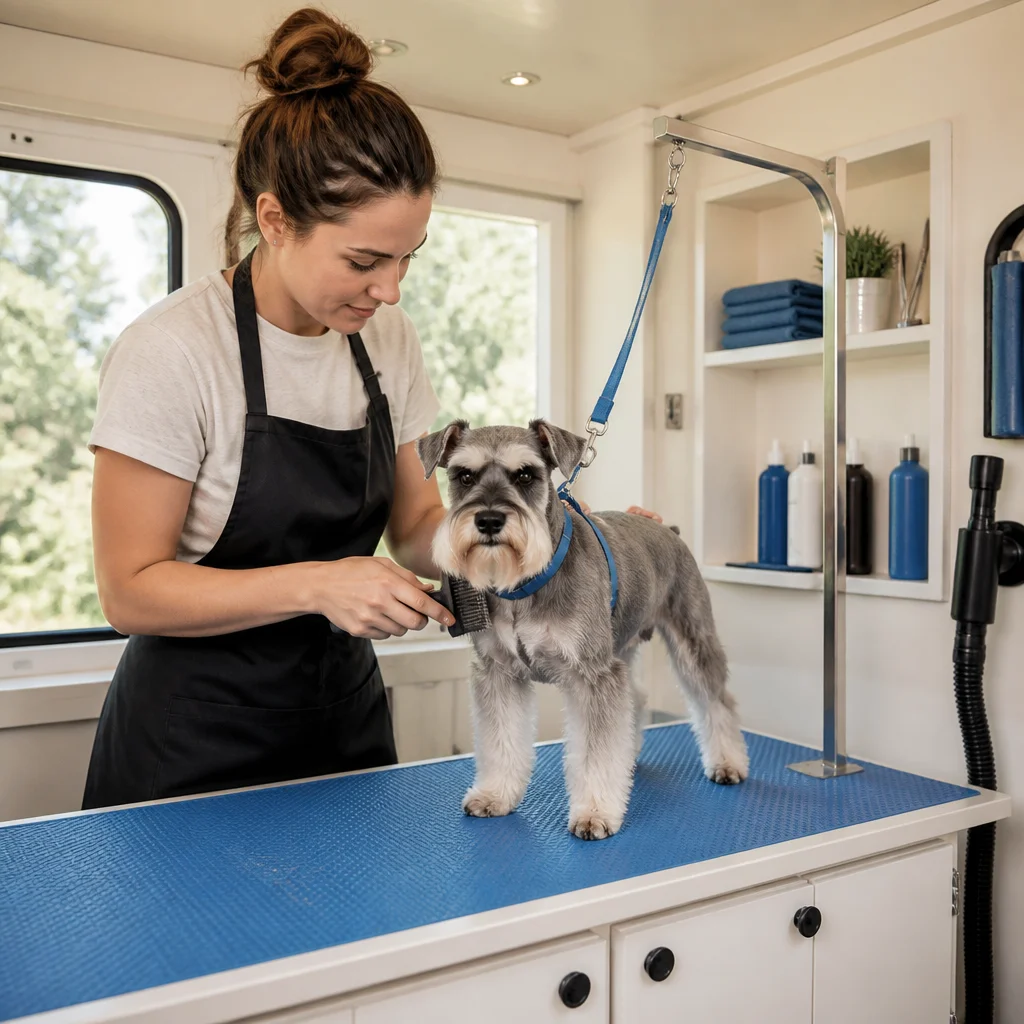
Listen for a sequence: how the groomer introduces equipment, what signs cause a pause, what alternatives are available and when the appointment ends. “We specialize in anxious dogs” is less useful than “we start with a short introduction, reduce intensity, use rewards approved by the owner and stop if the dog cannot recover after a break.” A provider can be skilled and still decide that a particular dog or location is not suitable.
Compare one ordinary day
Use a specific scenario. You live in a condo near Commercial Drive, work from home until 2 p.m. and can reserve the loading space only in one-hour blocks. Provider A offers a 10 a.m.–noon arrival window and needs the curb for 90 minutes after arrival. Provider B offers an 11 a.m. appointment but works inside the unit for two hours. Provider A may have the preferred workspace, yet the building reservation cannot cover the latest possible finish. Provider B may fit the day only if the room and building rules work.
This example is illustrative, but it shows why an arrival window is part of the service. Ask:
- when you must be present;
- how arrival delays are communicated;
- how long setup, grooming and return usually take;
- whether you must remain on site; and
- who may receive the dog if you become unavailable.
Then request a complete estimate for the same dog and finish. Include the groom, travel zone, parking or access charges, taxes if applicable and possible coat or handling adjustments. Ask before booking whether waiting at a buzzer or loading area can create a fee.
Make the fallback part of the choice
Mobile operations can be disrupted by traffic, unsafe weather, power failure, mechanical trouble or unavailable access. Your building can have an elevator outage or last-minute loading conflict. Ask who cancels in each case, what is charged and how rebooking priority works.
Also separate access failure from a groom stopped for the dog’s welfare. In the first case, work may never begin because the provider cannot reach the workspace. In the second, some agreed work has been completed. The payment and follow-up terms may differ.
Before choosing, ask one final question: “What are the most common reasons you cannot complete an appointment at an address like mine?” A candid answer can reveal more than a promise of convenience.
For the first booking, avoid committing to a package. Record actual arrival, finish, total price, access problems and how the dog handled the setting. Choose a repeat arrangement only when the provider’s care, property fit and fallback all worked in practice.
Browse Vancouver dog-care listings or BC grooming providers, then confirm the service boundary and setup directly with each candidate.