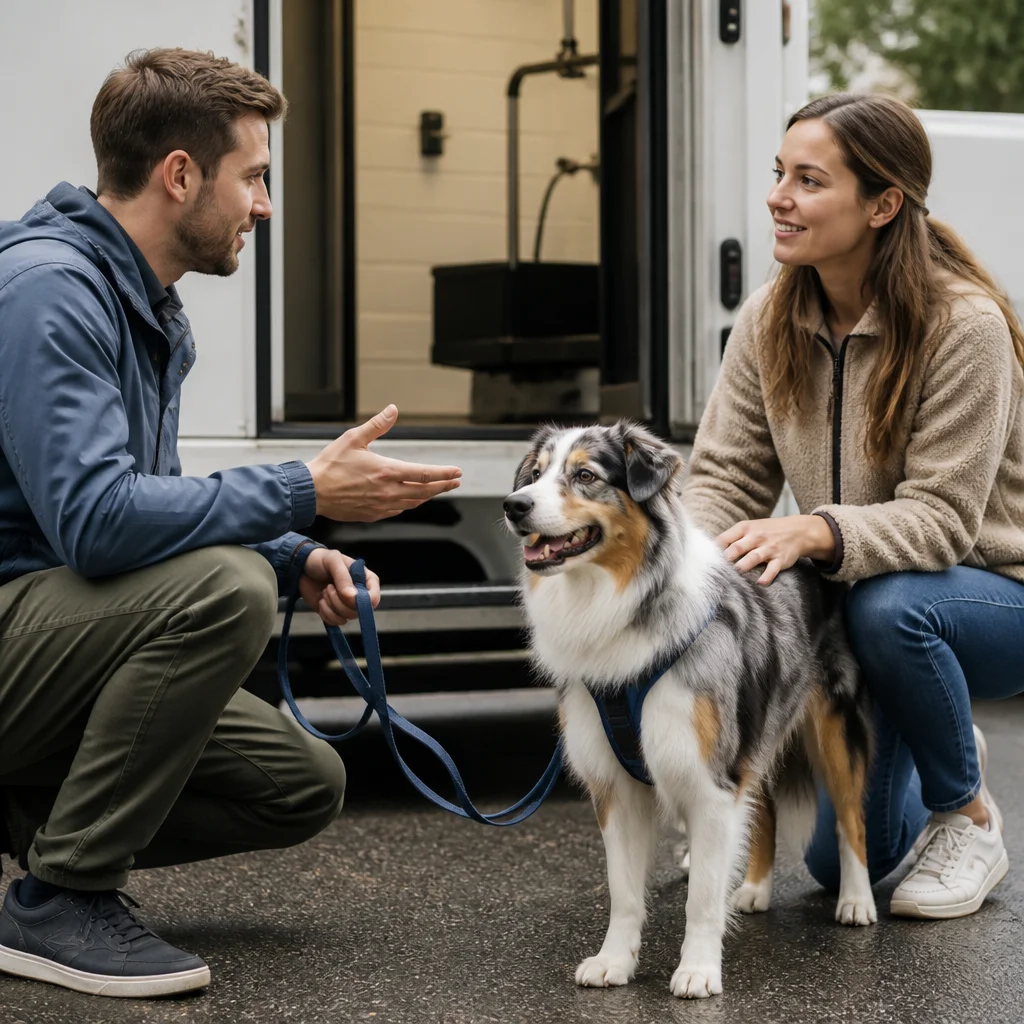
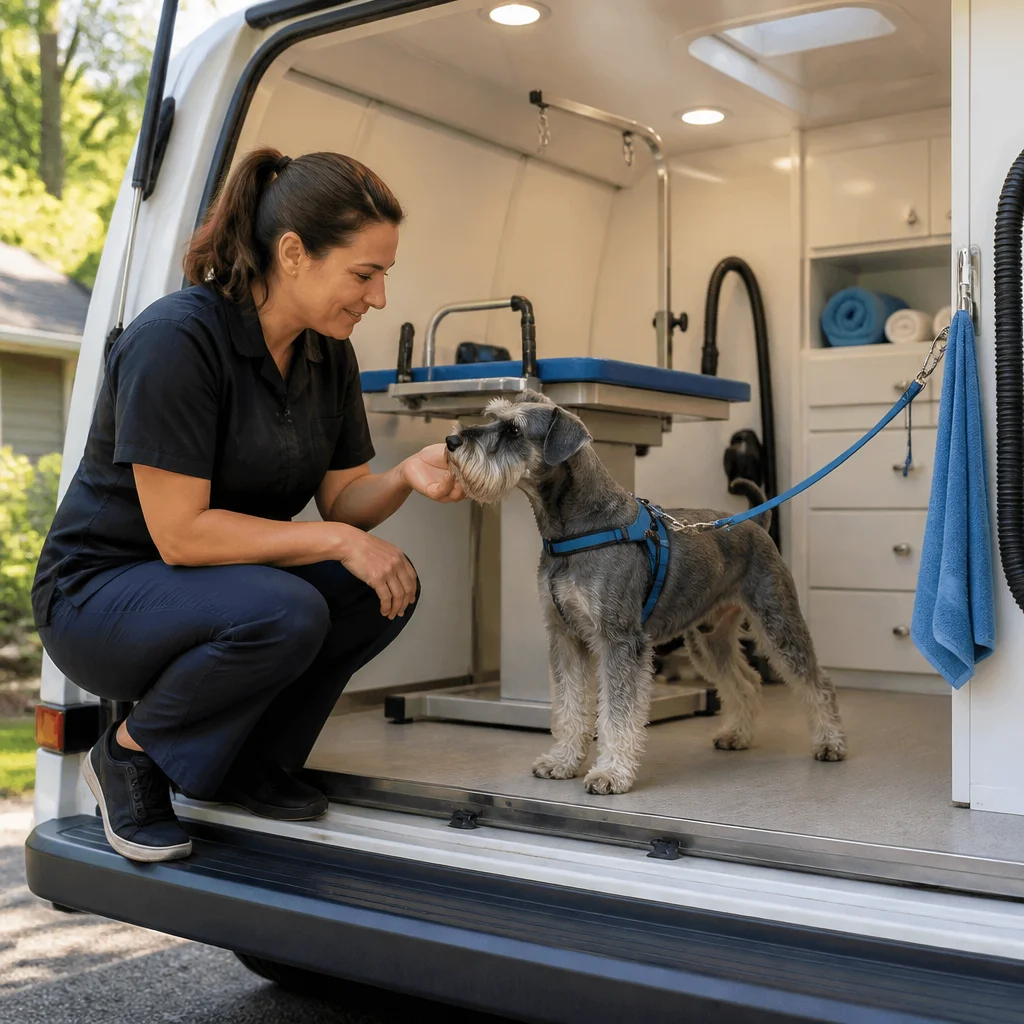
A mobile groom begins with an access check, not with clippers. The provider must be able to stop the vehicle or enter the home as agreed, set up safely and transfer the dog without improvising at an open door. After that, expect the same core decisions as salon grooming: intake, coat assessment, service, owner approval for changes and a secure return.
Prepare for the arrival window
Mobile providers may give a window because traffic and earlier appointments can move the route. Keep the phone available, but keep the dog securely indoors until the groomer says the workspace is ready. In a condo, confirm the loading reservation, buzzer and elevator instructions. For in-home work, secure other pets and clear only the space the provider requested.
If the van cannot use the planned curb or the building denies access, ask the provider to apply the agreed fallback. Do not direct a large vehicle to another spot without the provider confirming it is lawful and workable.
Complete intake at the handoff
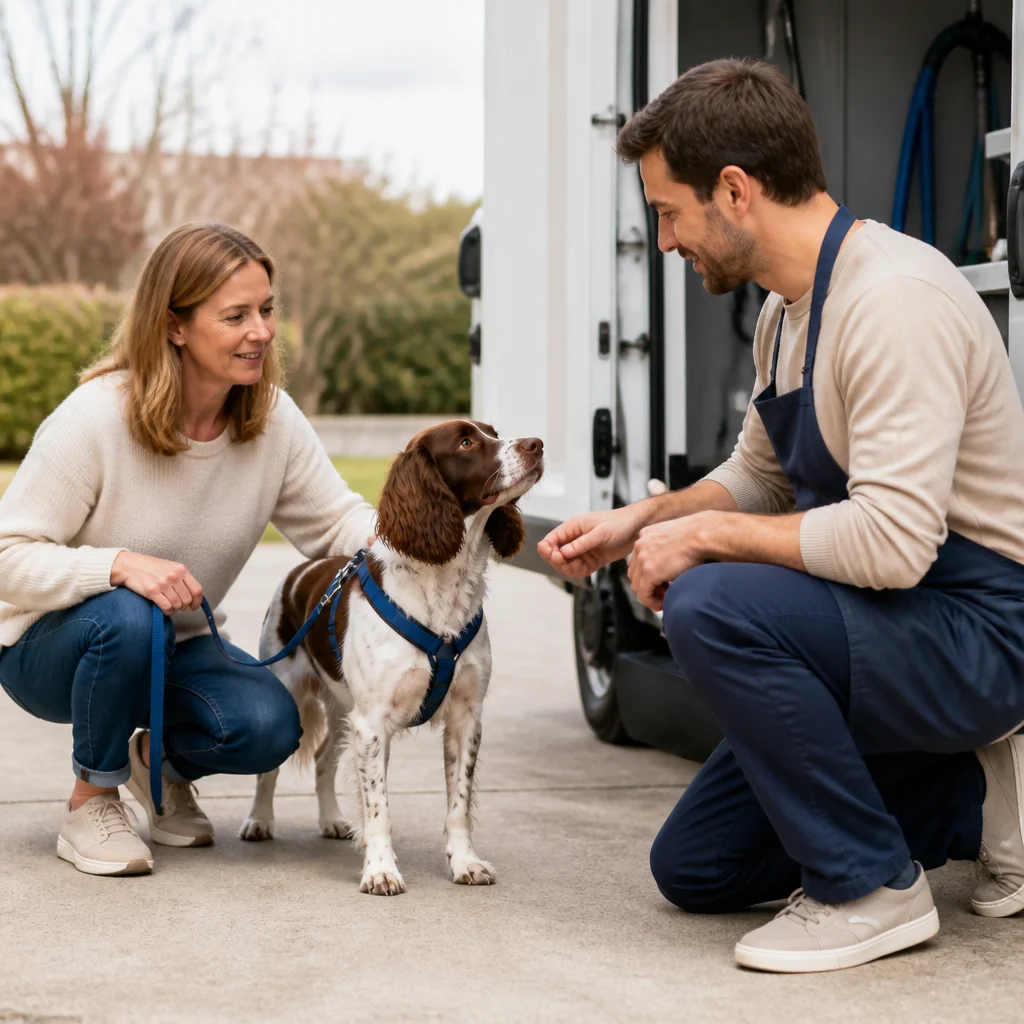
Verify the groomer and vehicle before transferring the dog. Repeat the desired finish, important handling limits and any change since booking. The groomer may revise a photo-based estimate after seeing the coat, so confirm which price or service change requires a call.
Make the physical transfer explicit. Decide who holds the leash, who opens each door and whether the dog uses a ramp. An owner who cannot lift and a groomer who does not lift need a route that works without either person attempting it at the curb.
Know what contact means during the groom
Nearby does not mean observable. In a van, the owner may not be present; during in-home grooming, hovering can make handling harder. Ask where you should wait and remain reachable for decisions.
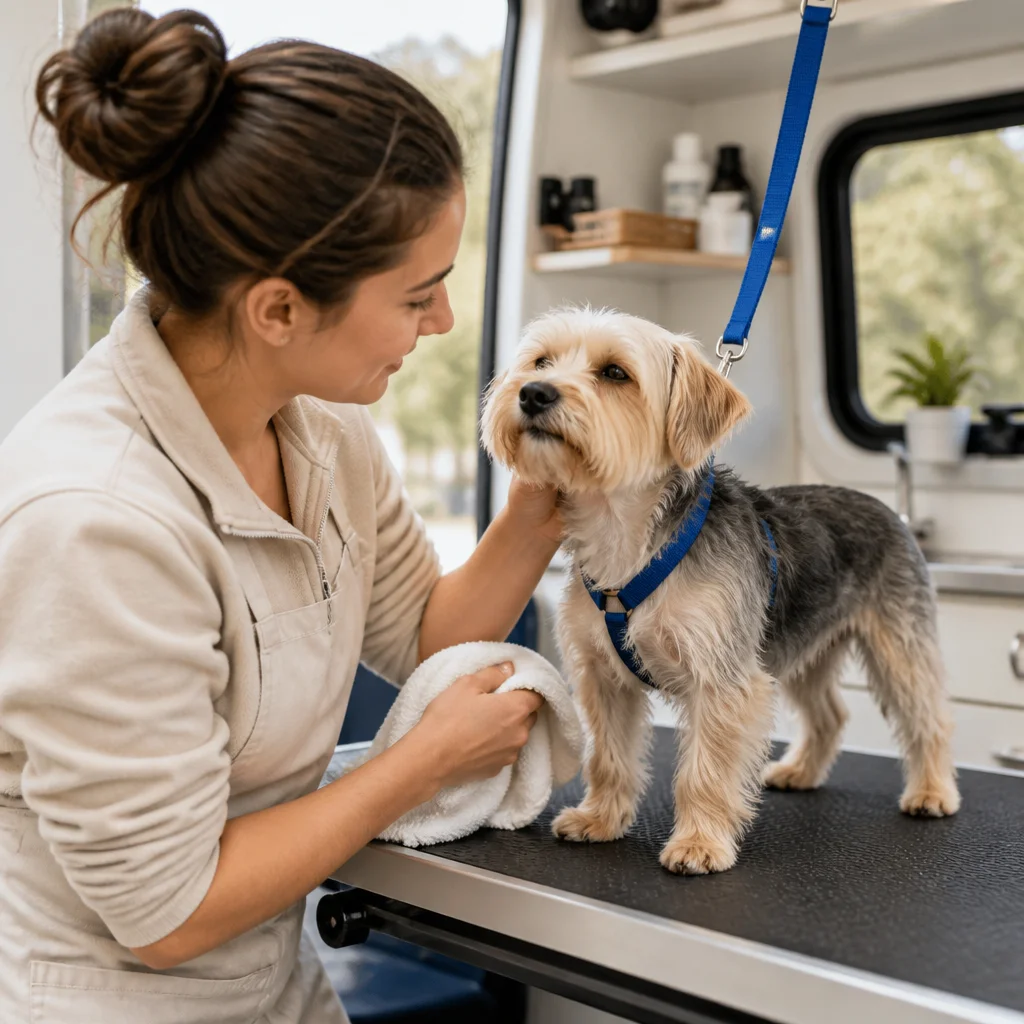
Suppose the dog accepts bathing but cannot settle for high-velocity drying. The call should explain what has been completed, the lower-intensity option if one exists, any change to finish or price and whether stopping is safer. Decide in advance who may answer if you cannot. Silence should not become permission for unagreed work.
Expect timing to move for a reason
Setup, coat condition, breaks and access can alter the finish time. A useful update distinguishes a route delay before arrival from added grooming time after assessment. If you need to leave for work, identify an authorized receiver rather than asking the provider to return the dog to an empty or unsecured place.
Close the appointment securely
Meet at the agreed point and reconnect the dog’s leash within a secure boundary where possible. Ask what was completed, which stage was difficult and whether the vehicle, transfer or in-home setup affected the service. Review cleanup expectations for in-home work and compare the invoice with the approved scope.
Record actual arrival, finish, total and any access problem. For example, a good groom that repeatedly overruns a one-hour loading reservation may not be a repeatable arrangement. The first visit tests both the grooming and the address; use evidence from both when deciding whether to rebook.