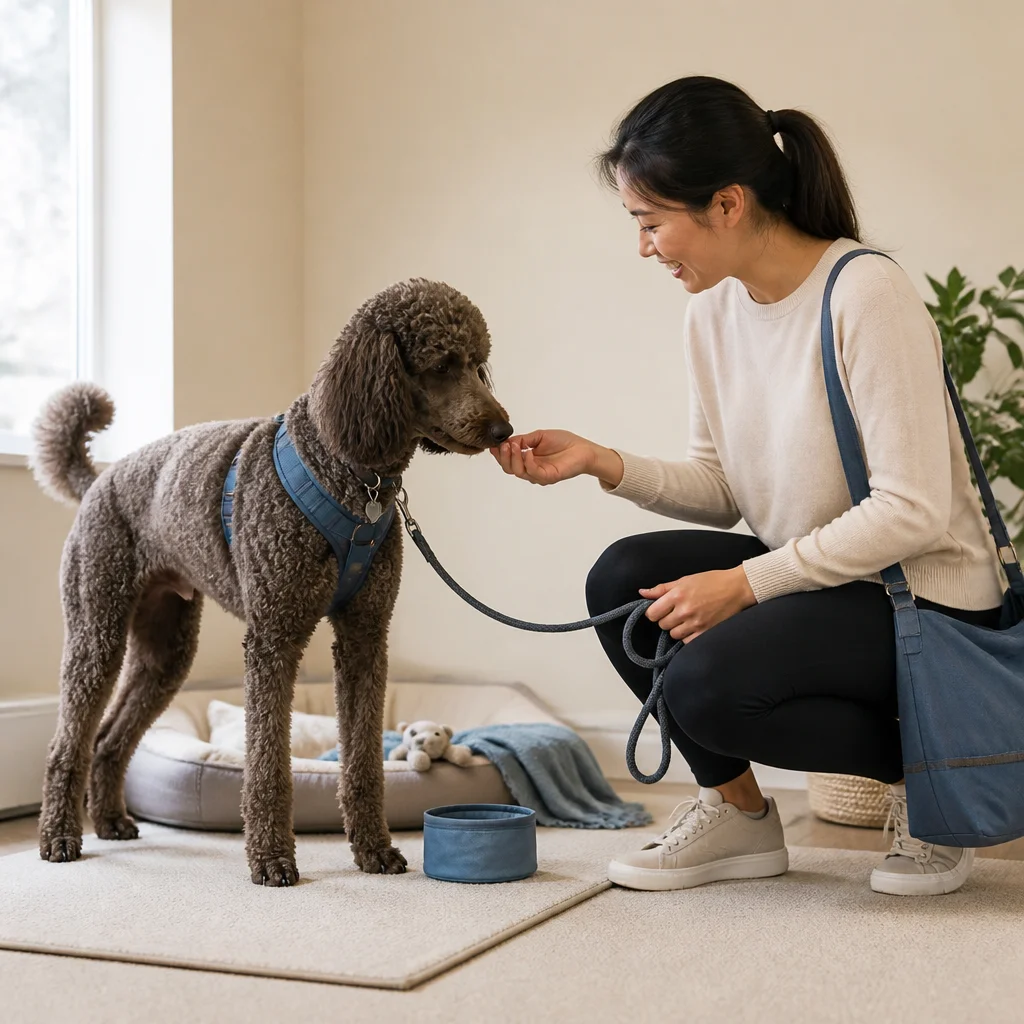
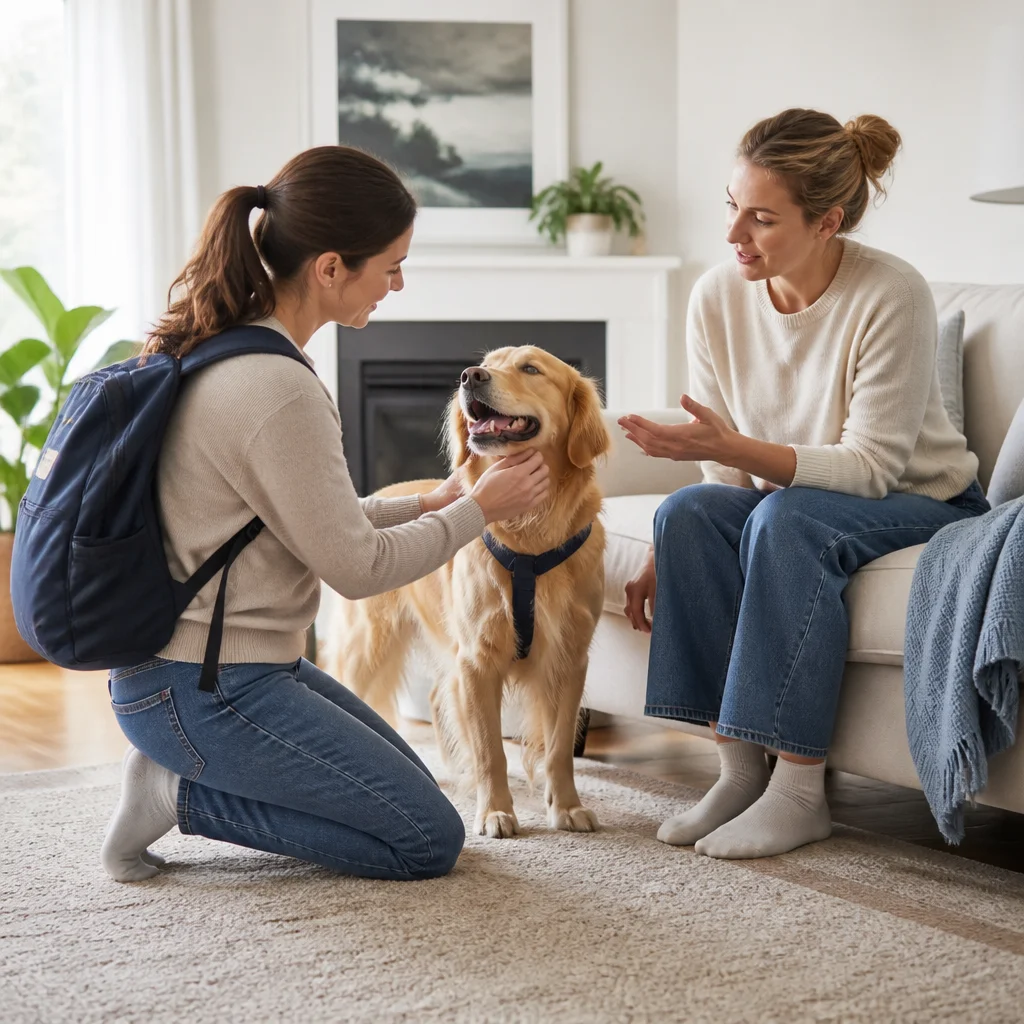
A first pet-sitting checklist should let the assigned sitter enter safely, provide the promised care and know when to call. Start with the care format, because a drop-in, overnight and live-in booking cover different hours.
Write the hours before the tasks
Record the sitter’s arrival window, departure, longest planned absence and number of visits. “Overnight” might mean 9 p.m.–7 a.m., while “live-in” can still allow the sitter to leave for other clients. Put the actual hours beside feeding, medication, toilet and companionship needs.
If the pet cannot be alone for the sitter’s longest absence, change the booking now. Adding tasks to a short visit will not fill the hours between visits.
Make one care sheet the source of truth
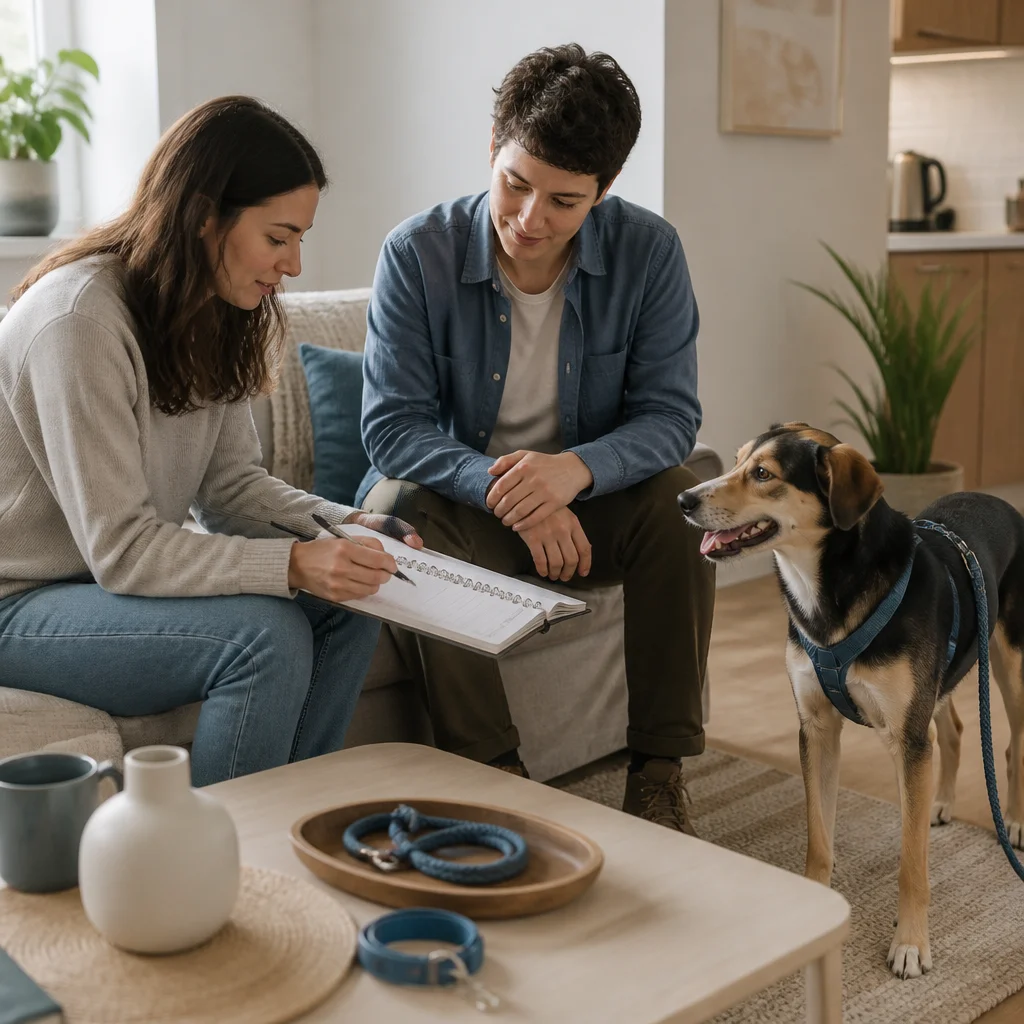
For each pet, list food amount and location, water, toilet or litter routine, medication instructions from the veterinarian, walking equipment, hiding places, fears and handling limits. Put escape risks, allergies and urgent health information at the top. Label pets and supplies clearly when descriptions could be confused.
Add the regular veterinarian, emergency clinic, owner contact and a backup who can make decisions. State the spending or treatment authority the clinic has if the owner cannot be reached. The BC SPCA pet-sitter guidance recommends detailed notes, a meet-and-greet, backup and an emergency plan; convert those topics into names, numbers and actions.
Remove obsolete notes. A printed sheet that says one cup while a text says three-quarters leaves the sitter guessing.
Rehearse home access
Have the assigned sitter unlock the door, disarm the alarm, find supplies and lock up while you watch. Test the buzzer, fob and elevator. Record every key and decide who may hold or copy it. Do not label a key with the full address.
Disclose cameras and agree on private areas before booking. Tell the sitter whether anyone else may enter the home. Unexpected cleaners, relatives or contractors create confusion about doors, alarms and responsibility.
Time the routine
Run through a realistic visit: entry, greeting, feeding, medication, litter or yard care, dog walk, cleanup, update and lock-up. If the tasks take 45 minutes without rushing, do not buy a 30-minute visit. For several pets, identify which tasks happen separately and which animal must be secured before a door opens.
Prepare the home without over-preparing
Leave enough food, litter, medication and cleaning supplies for the booking plus a sensible delay, but do not create several unlabeled backup piles. Tell the sitter which rooms are closed and where the pet may hide. Remove unsafe food, loose garbage and items that block the normal care route.
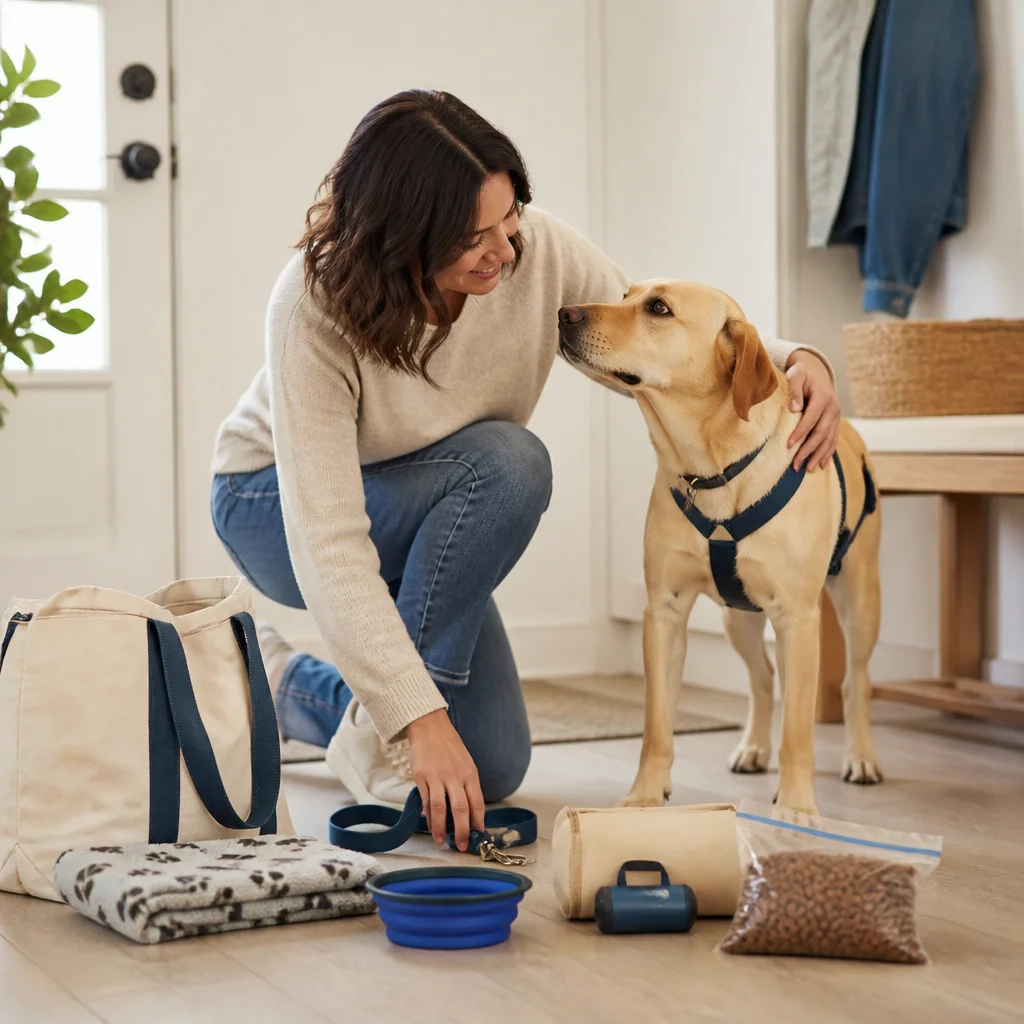
For travel, place carriers where the sitter can reach them and write which pet uses which carrier. If a dog must leave through a shared lobby, keep the fitted harness and leash together. The sitter should not have to search the home while an animal needs urgent transport.
Final check before departure
Final check before departure
Confirm dates, assigned sitter, price, cancellation rule, update method and first arrival window. Put enough supplies in the agreed place and leave carriers accessible. Make sure the sitter knows water and utility shut-offs only if they may need them.
After the first visit, check more than the photo. Did entry work? Were all pets seen or accounted for? Were the tasks completed? Did the sitter report changes and secure the home? Update the checklist immediately so the next visit uses evidence from the real booking.