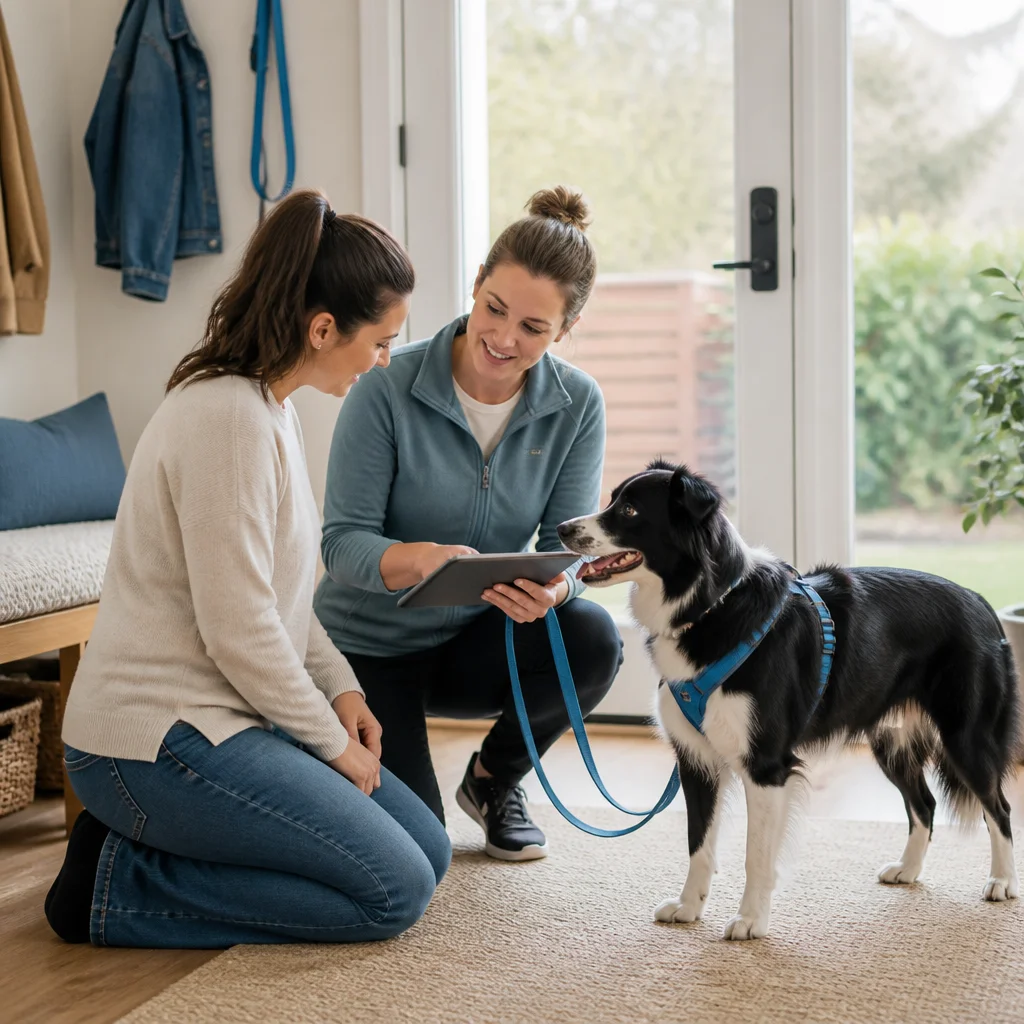
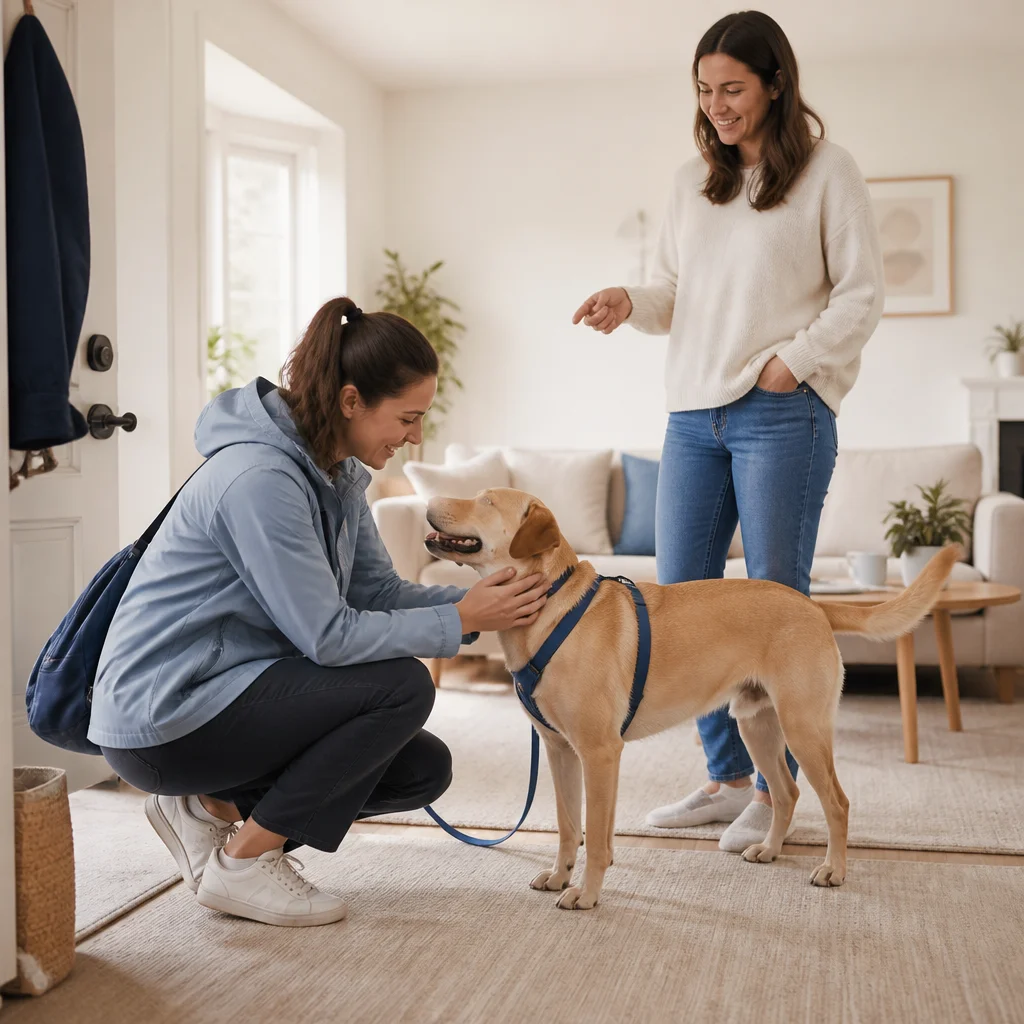
Choose a pet sitter by matching the assigned person and their actual hours to your pet’s day. “Drop-in,” “overnight” and “live-in” are useful labels only after the provider gives you arrival, departure and absence times. If the service format is still unclear, compare daycare and in-home sitting against the full day.
Put the pet’s needs on a timeline
Write when you leave and return, then mark meals, veterinarian-directed medication, toilet breaks, walks and the longest time the pet can comfortably be alone. Ask each sitter to place their care on that same timeline.
For example, a sitter may describe an overnight as 9 p.m. to 7 a.m. That covers late evening and breakfast but leaves the afternoon open. Another may offer live-in care while leaving for four hours to see other clients. The second option offers more presence, but neither solves a 2 p.m. toilet break unless it appears in the schedule.
If the sitter uses flexible arrival windows, decide whether the end of the window still meets a time-sensitive need. Share veterinary instructions as written. The sitter should follow them and report problems rather than diagnose or change treatment.
Meet the person who will enter
Ask whether the person at the consultation is the assigned sitter. If a company uses a team, find out who can access your home and whether you meet each possible caregiver. A backup plan is valuable only if you understand when it begins and can approve the substitute before keys or codes are shared.
The BC SPCA’s pet-sitter questions suggest discussing time present, a meet-and-greet, handling, backup and emergencies. Turn those topics into actions: who calls if the sitter is ill, who attends instead and where that person finds the current care sheet.
Watch one small interaction
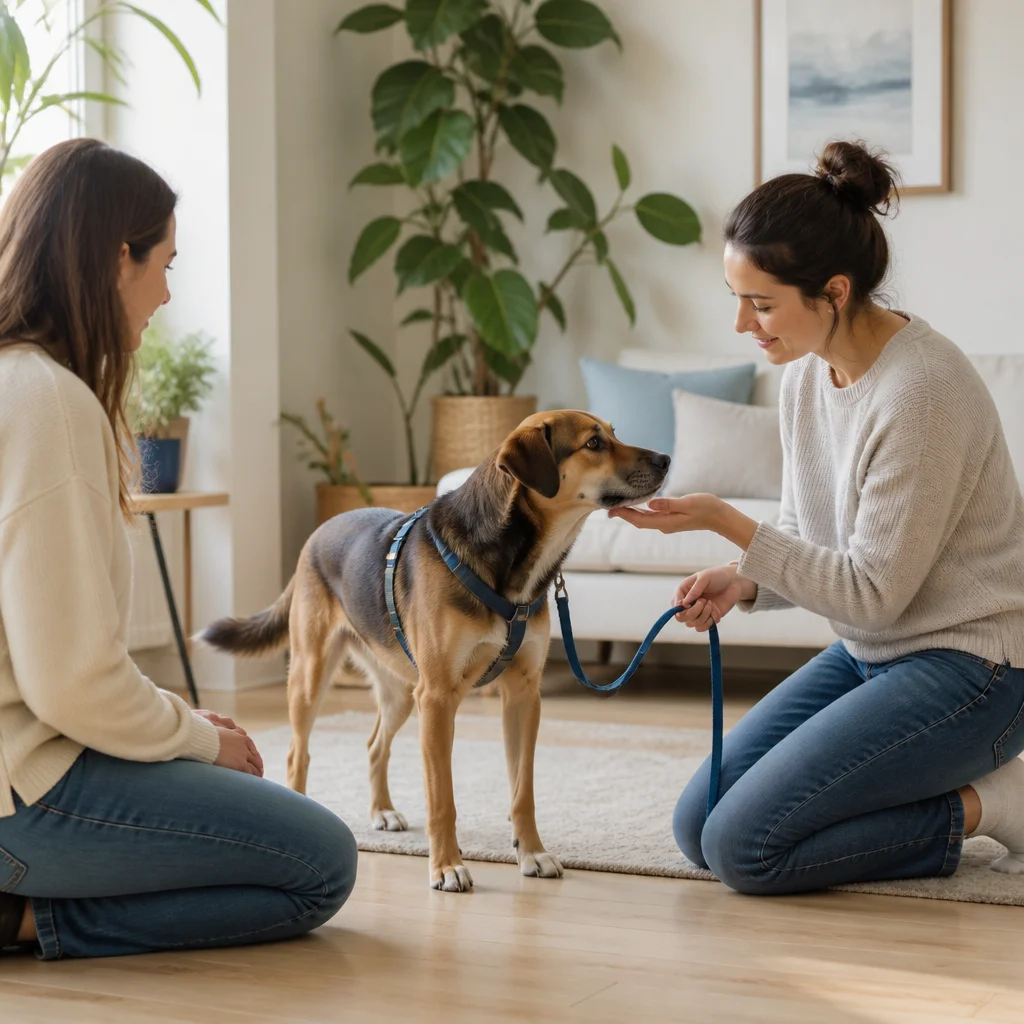
During the meeting, let the sitter approach at the pet’s pace. Ask how they would handle a cat who stays hidden, a dog who refuses the harness or a pet guarding food. A useful answer includes distance, time, a familiar routine and a call to the owner when care cannot be completed. “Animals always love me” does not show a process.
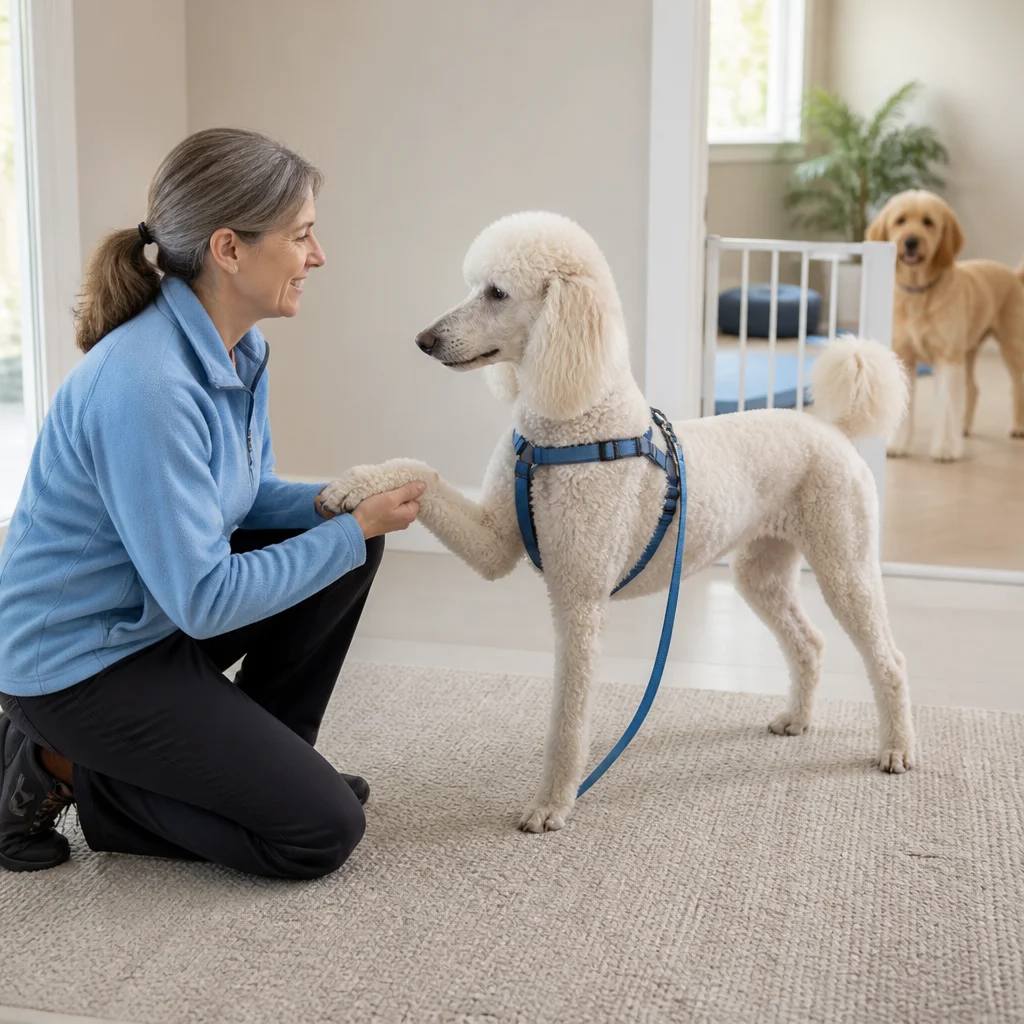
Rehearse the home entry. The sitter should unlock the door, manage the alarm, locate supplies and secure the home without help. If a dog rushes the doorway, practise the agreed barrier before travel.
Compare reporting and emergencies
Ask what a routine report includes. Useful facts are arrival and departure, food, water, toileting or litter, medication completed, walks and anything different. A photo is welcome but cannot show that every task happened.
For emergencies, give veterinarian and backup contacts plus written authority for transport and spending. Ask how the sitter decides to call you, your backup or a clinic. The answer should describe observation and handoff, not medical judgment.
Check fit with the home as well as the pet
Ask what household tasks are included. Bringing in mail, opening curtains or watering one plant may fit the visit; snow clearing, guest coordination or extensive cleaning may not. If a task matters to home security, name it and confirm it in the quote.
Discuss cameras and visitors openly. The sitter should know which devices record and which rooms are private. Tell them whether a cleaner, neighbour or family member may enter. The assigned sitter cannot take clear responsibility for a door left open by an unexpected visitor.
Use a trial before a long absence
Book a short visit or single overnight while you can return if needed. Review entry, time present, care completed, pet response, report and lock-up. A warm meeting matters, but the choice should rest on whether the whole routine worked.