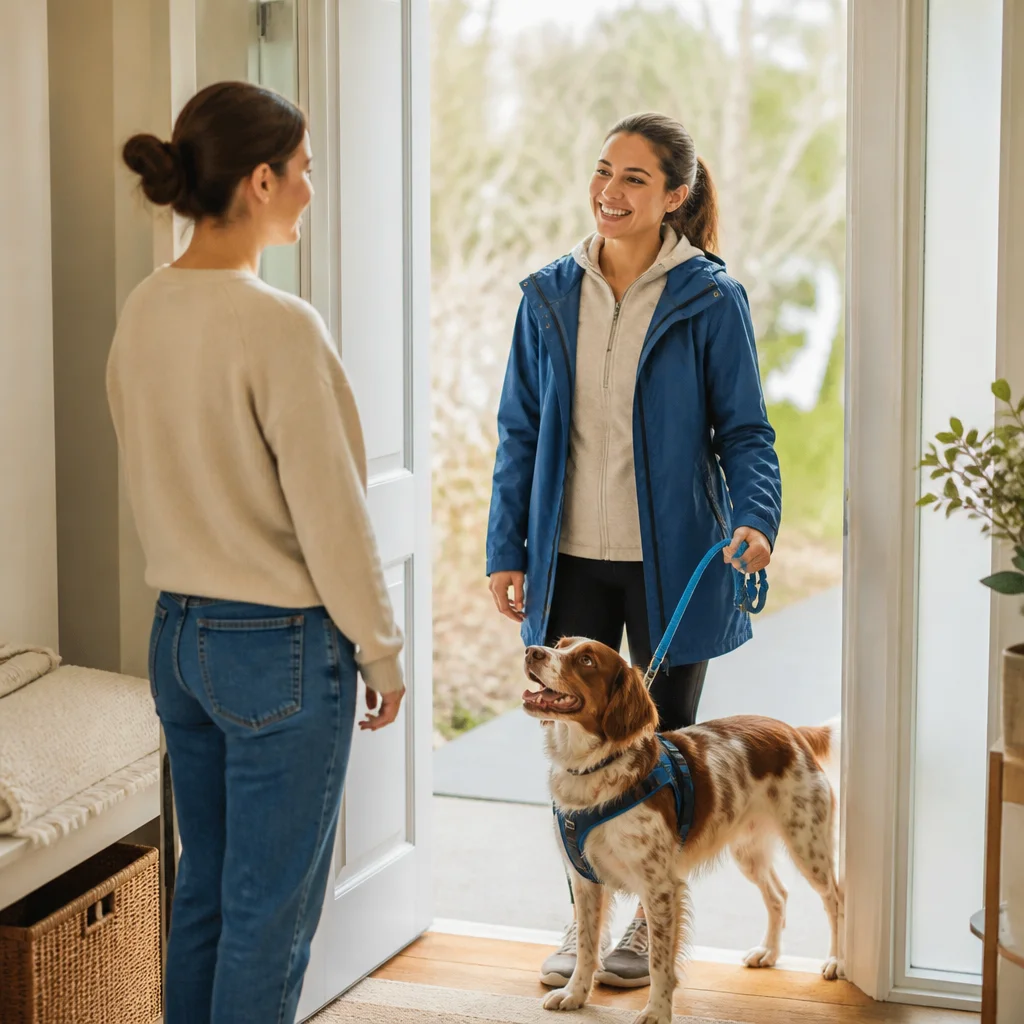
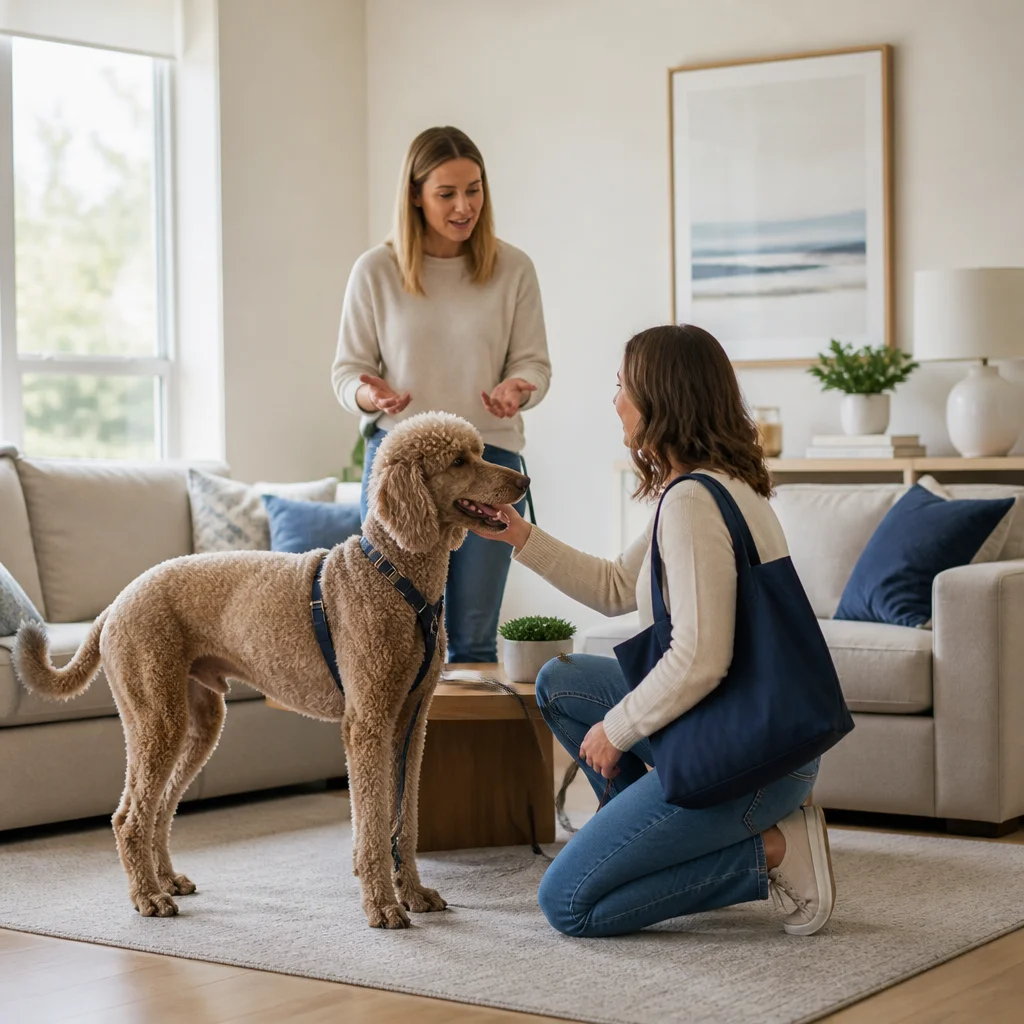
A pet-sitting booking should move through a clear sequence: meeting, access test, first entry, care, updates and final handoff. The details change between visits and overnights, but the owner should always know who is responsible and when.
Before you leave
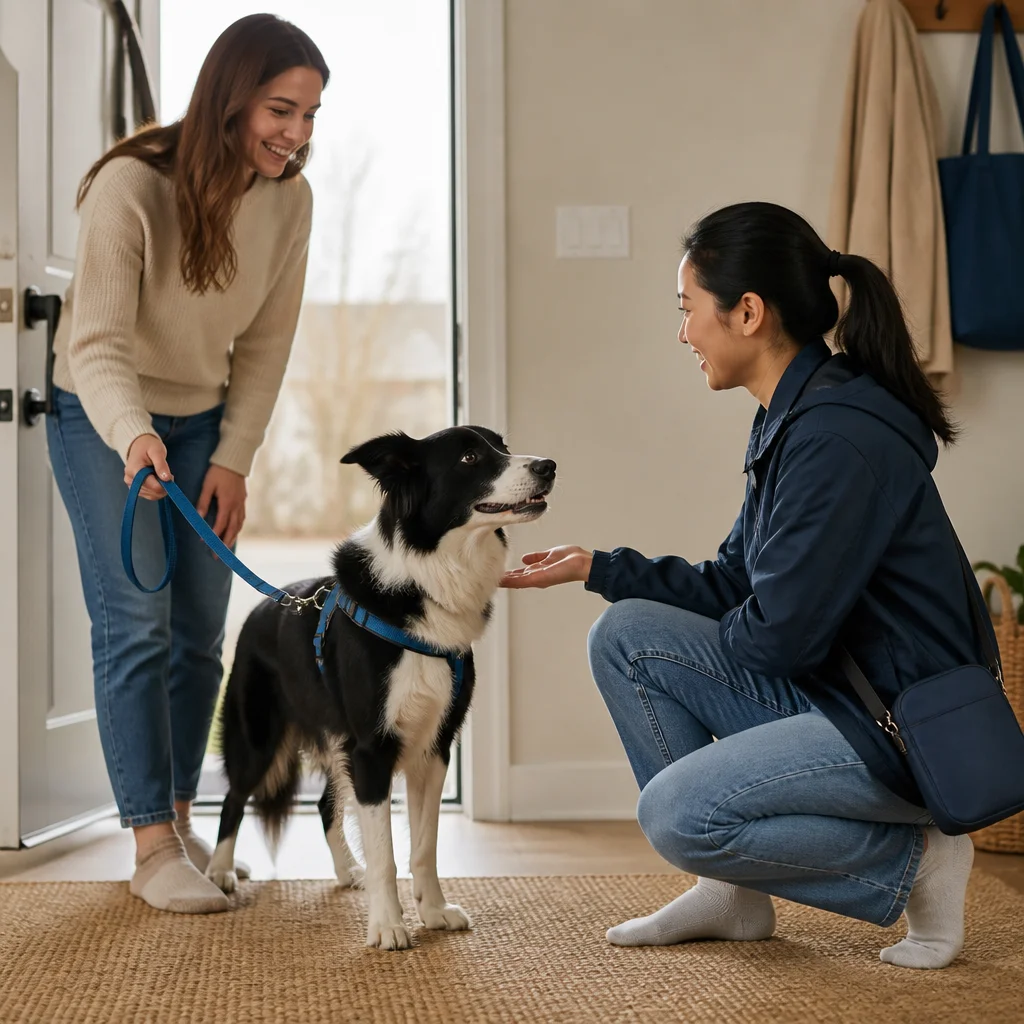
Meet the assigned sitter with the pet. Review the care sheet, veterinarian and emergency contacts, handling limits and home access. Have the sitter unlock the door, use the alarm and lock up while you watch. Show carriers, walking equipment and supplies rather than describing where they are.
Confirm the dates and actual hours. For drop-ins, record the arrival window and time inside. For an overnight, record when the sitter arrives, leaves and may be away during the day. “Staying at the house” is not enough to plan feeding or toilet breaks.
The first entry
Expect a message after the sitter has entered safely. If the key or fob fails, the sitter follows the contact and wait-time plan. They should not force a lock, leave a door unsecured or ask an unknown neighbour for entry.
The sitter checks the pets and home before starting tasks. If a pet cannot be found, food has been untouched or something in the home has changed, the update should come promptly. The sitter reports what they observe and follows written veterinary instructions; they do not diagnose or alter treatment.
During each visit or day
A useful report gives arrival and departure, food and water, litter or toileting, medication completed, walks or play and any unusual behaviour. A photo can help show the pet was seen, but it should not replace the task record.
For a cat who hides, agree what counts as being accounted for: direct sight, movement on an disclosed camera, food or litter evidence, or a call after a set search. For a dog, ask the sitter to report shortened walks or equipment trouble rather than presenting every visit as normal.
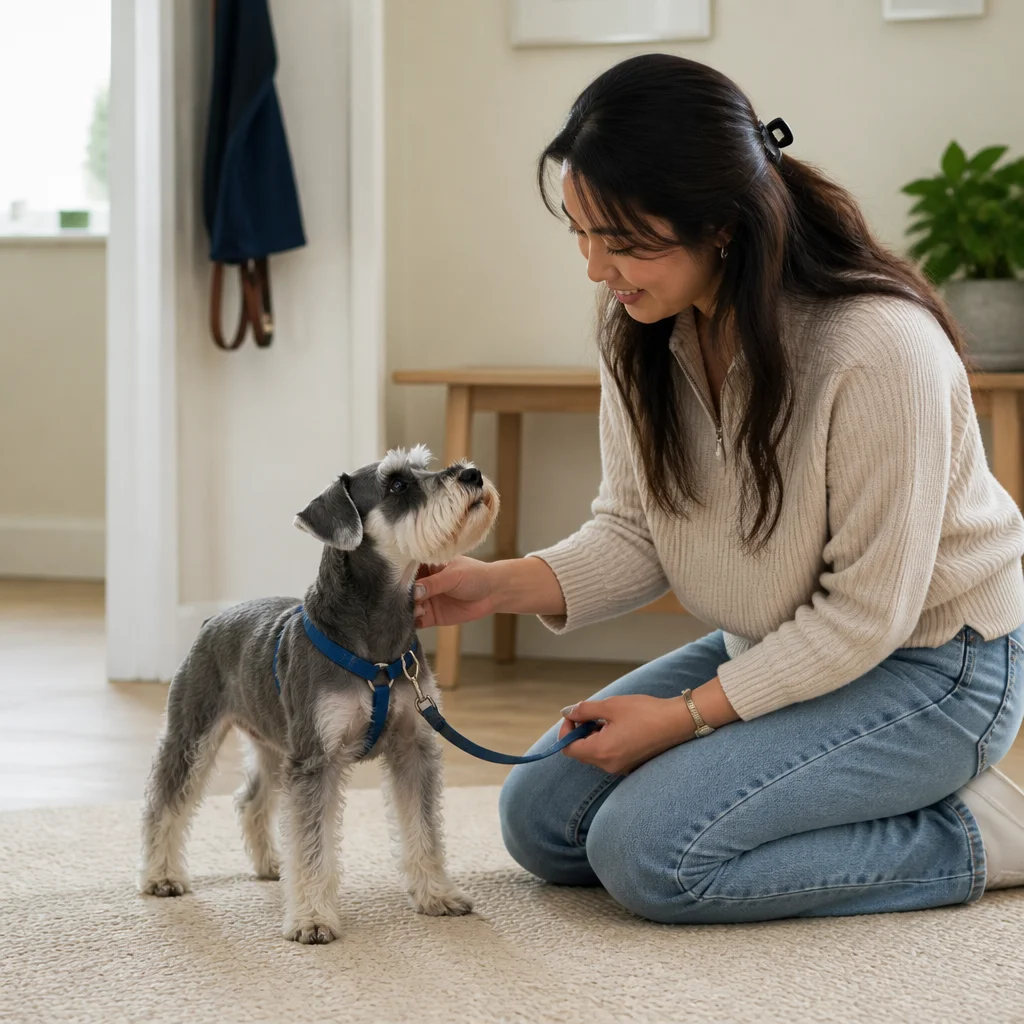
The BC SPCA pet-sitter guidance highlights time present, meet-and-greet, backup and emergency planning. If the assigned sitter becomes ill, expect contact before a substitute receives access.
What should happen between reports
For an overnight or live-in booking, ask how the sitter records departures and returns. The owner may not need a message every time, but they should know the longest absence and whether it changed. If another person is permitted in the home, agree who they are and why they attend.
The sitter should keep doors, food and household hazards managed for the specific pets. That may mean separating animals for meals, checking that a cat is not inside an appliance before use, or securing one dog before opening an exterior door. Put unusual household risks in the care sheet instead of assuming common sense covers them.
When the plan changes
If the owner’s return is delayed, the sitter should confirm whether they can extend, the new price and the next care time. If the sitter must leave early, backup starts under the agreed process. For urgent veterinary care, the sitter contacts the owner or backup and uses the written transport and payment authority.
The final handoff
Expect the pet in the agreed area, food and medication notes complete, waste removed as arranged, windows and doors secured and keys handled according to the plan. Review the first short booking before depending on the service for a long trip. The most useful question is whether every handoff worked without the owner having to repair it from a distance.