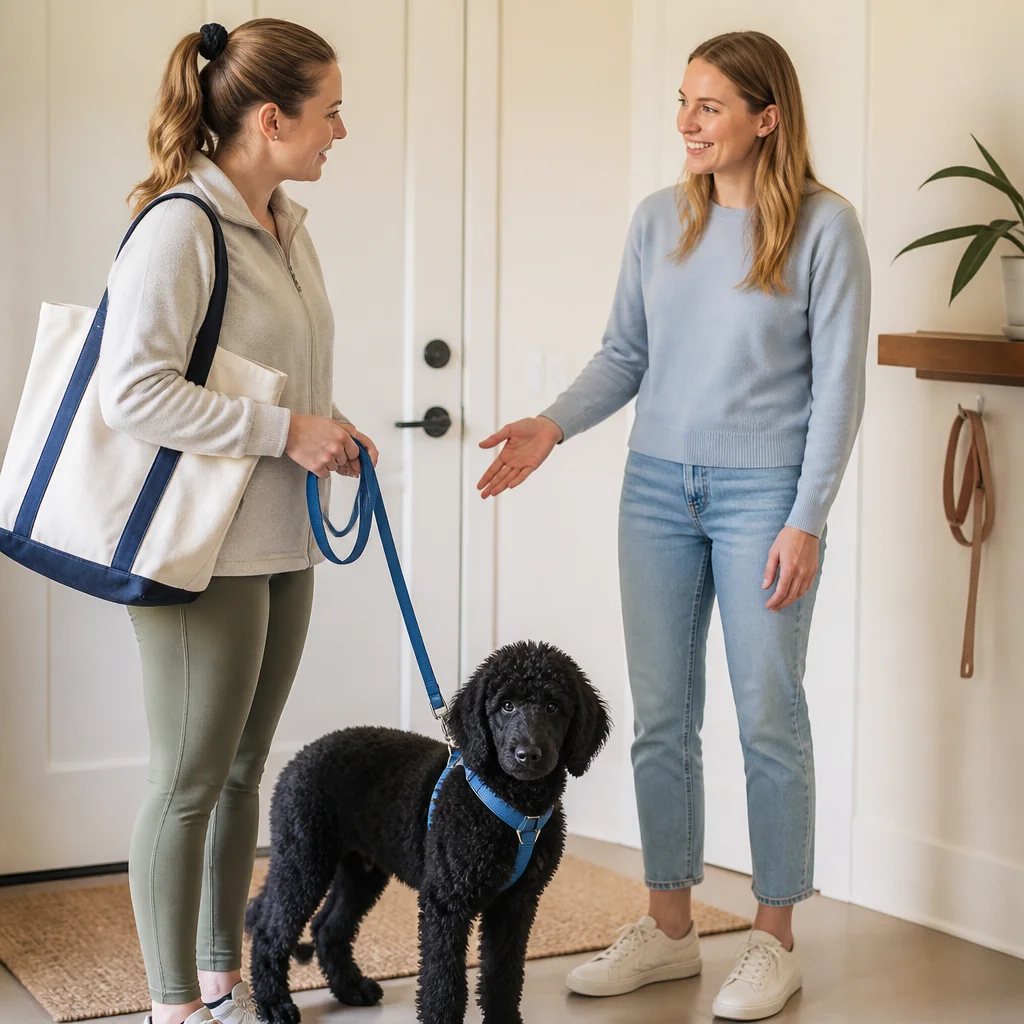
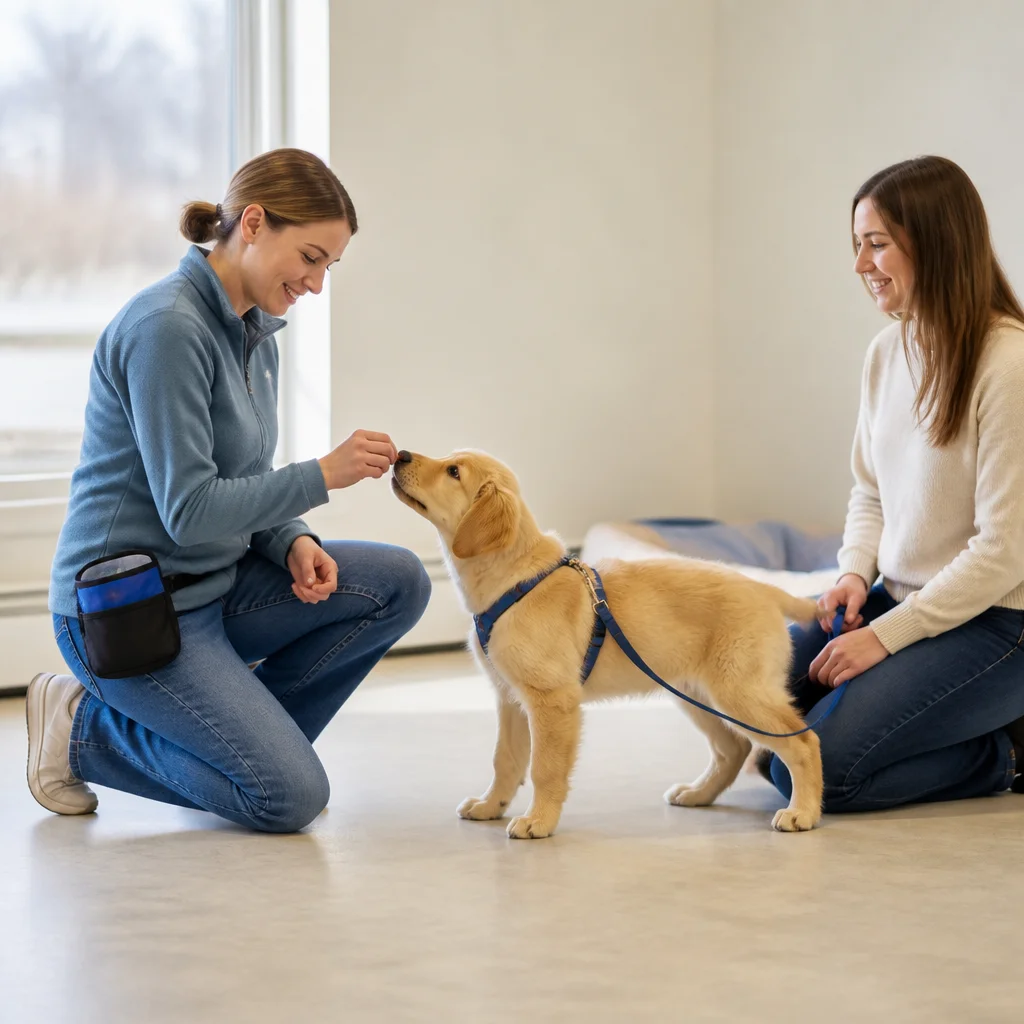
A first puppy session should feel modest. The instructor learns how the puppy responds, you practise a few skills and everyone leaves before fatigue turns the lesson into survival.
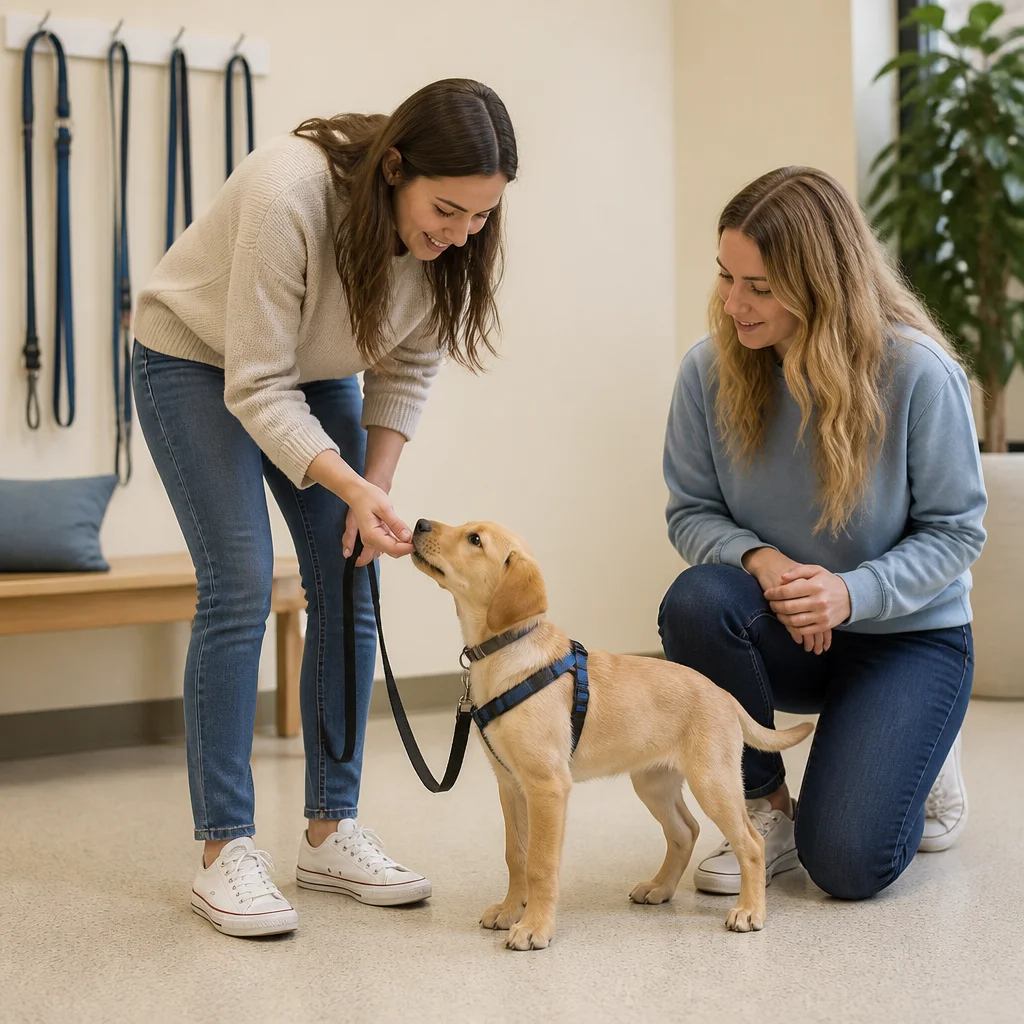
Arrival
Follow the provider’s entrance plan rather than allowing greetings in the doorway. The instructor may place teams apart, use barriers or ask one puppy to enter later. Tell them if the trip affected the puppy and point out any health or safety change since intake.
Observation
Expect questions about sleep, toileting, food, handling and what the puppy has already encountered. The instructor should watch body language and identify rewards the puppy values. A puppy who will not eat or explore may need less intensity, not stronger pressure.
Short teaching turns
The trainer may demonstrate, then coach you through name response, a hand target, mat settling, handling or leash movement. The BC SPCA recommends reward-based instruction with guardian participation. You should learn when to reward and when to pause.
Other puppies may be present without direct play. The BC SPCA’s socialization guidance emphasizes positive experiences and choice. An instructor should be willing to skip a greeting when either puppy is uncomfortable.
Rest and departure
Good classes build in quiet time. Your puppy may settle on a mat, move behind a barrier or leave an activity. Before going home, confirm one or two exercises, where to practise, how to make them easier and what question should go to a veterinarian rather than the trainer.
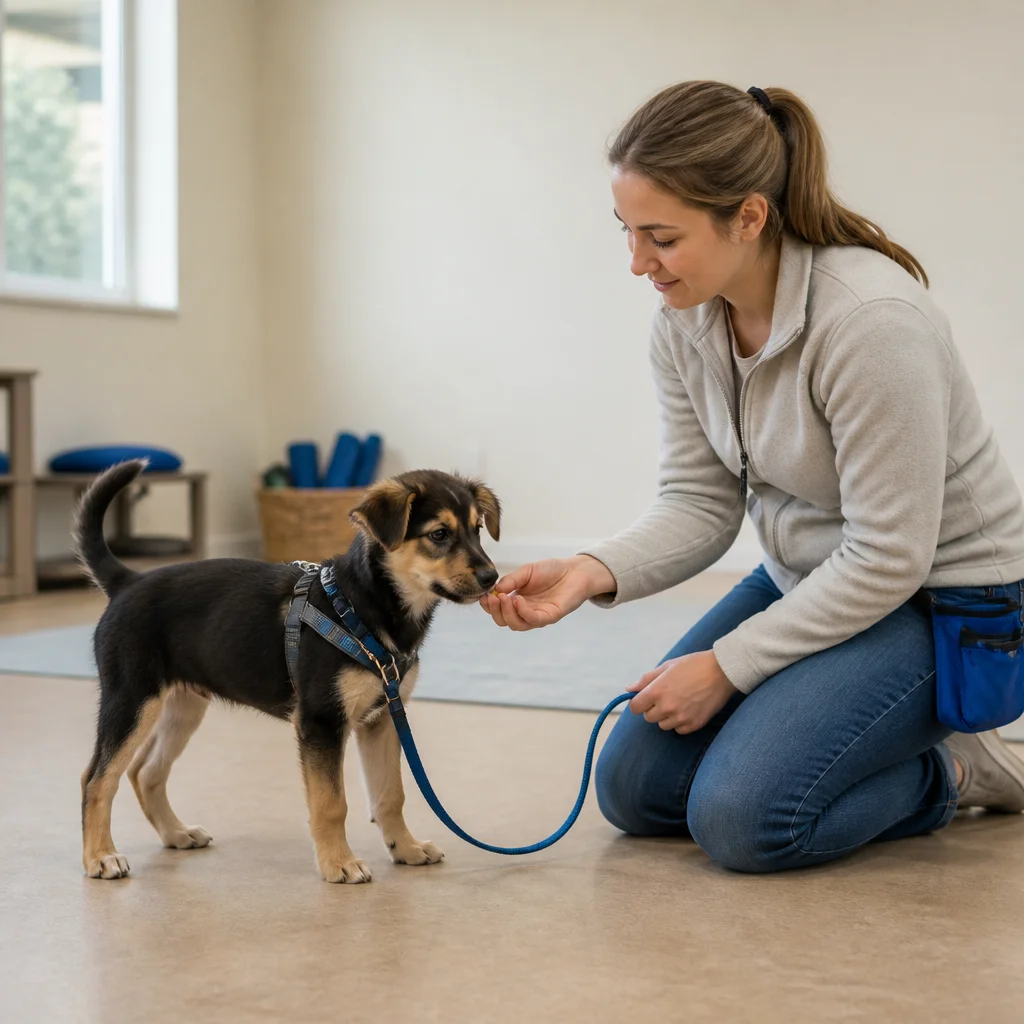
Let the puppy sleep after class instead of testing every new skill at once. Later, note whether the puppy recovered, whether you understood the coaching and what needs clarification. That tells you more than a perfect sit in the classroom.
Confirm arrival details through Langley listings or the training category before the first trip.
When the planned activity does not fit
Suppose the class moves to puppy greetings and yours retreats behind your legs. The instructor should not drag the puppy forward or treat avoidance as bad manners. A useful alternative is watching from farther away while receiving rewards, practising a simple familiar skill, or resting outside the activity.
That moment shows the quality of the class. Ask what the instructor noticed and what should happen next time. You may be asked to arrive earlier, work behind a screen or book a private session. The change is not a demotion; it is an attempt to keep the experience within the puppy’s capacity.
If you leave with instructions that depend on reproducing a situation the puppy found frightening, ask for another plan. Homework should be safe enough to practise without the instructor present.