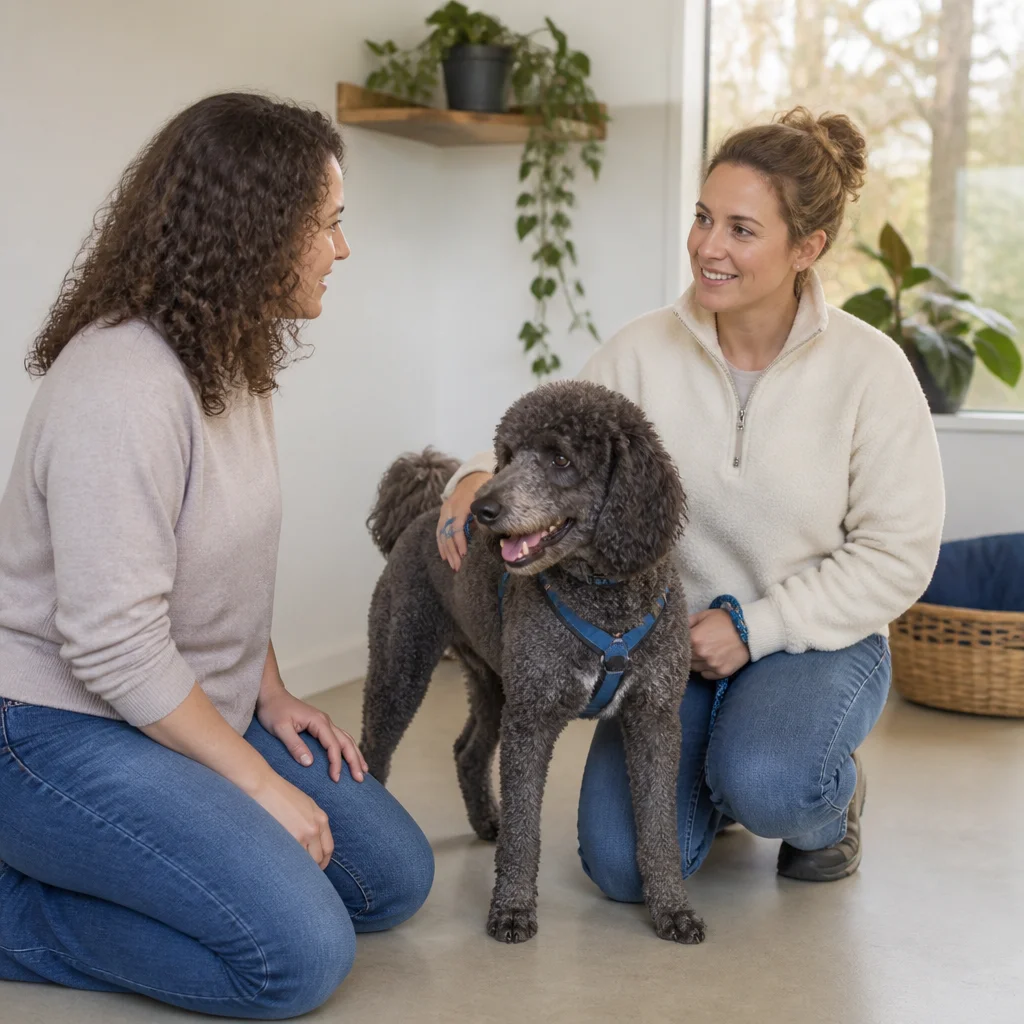
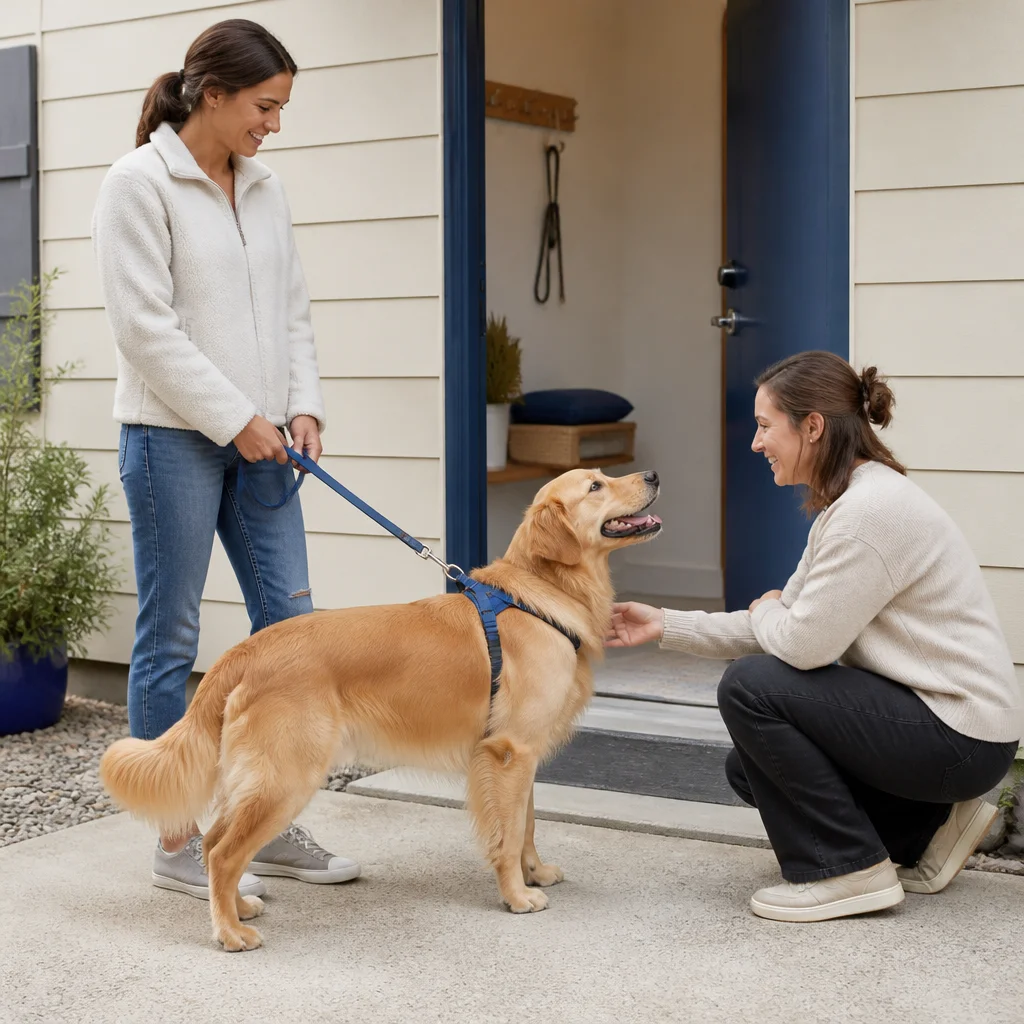
A trial visit should reduce uncertainty before a longer commitment. Decide which parts of the real booking it must test, use the normal route and equipment, and stay available to collect the dog.
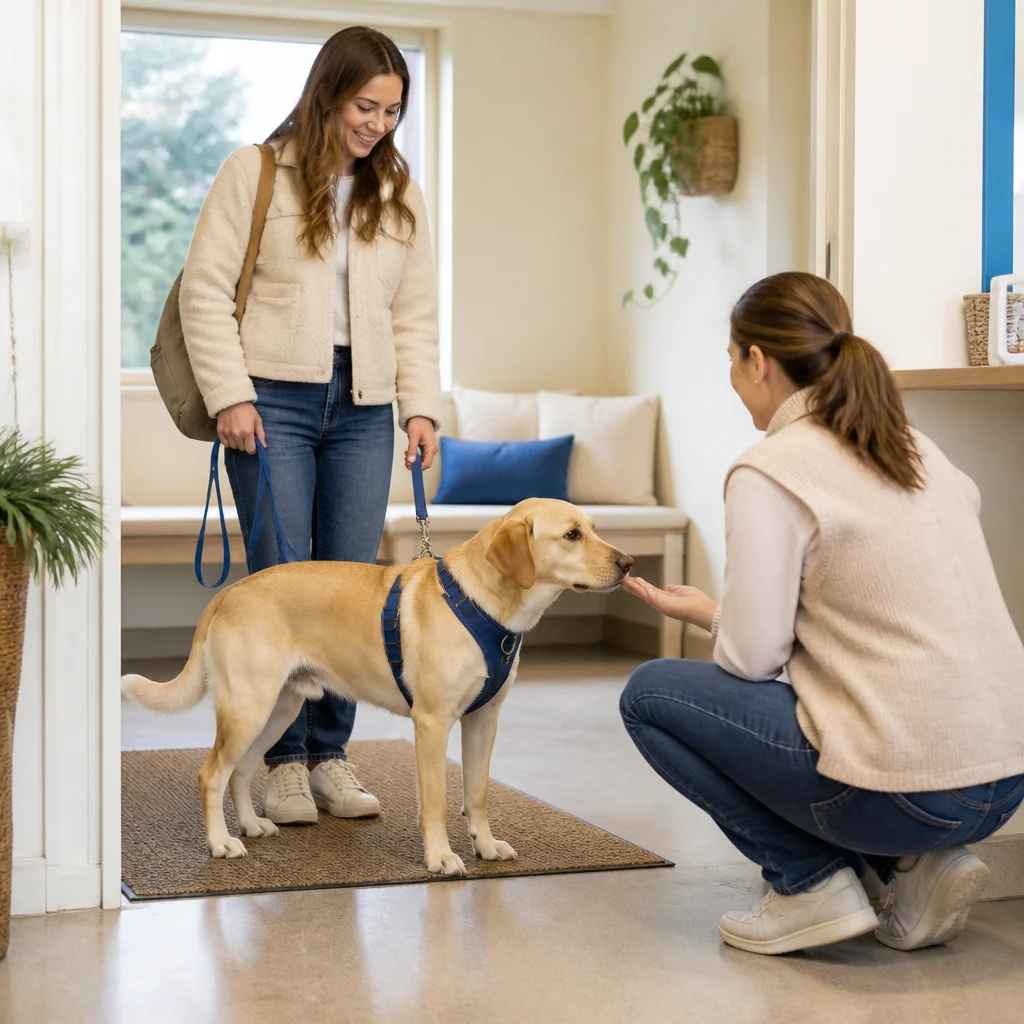
Use the real route and equipment
Arrive through the normal entrance at a realistic time. Bring the leash, harness and approved belongings that will be used later. If the full booking involves a commuter handoff, do not test only on an empty Sunday afternoon.
Ask what “trial” includes. It might be a short assessment, several hours of daycare or an overnight stay. Learn who observes, which environments the dog enters, what could stop the visit and whether the trial fee is credited later.
The AnimalKind pet-care guidance offers voluntary questions about handling, caregiver load, rest, stress and monitoring. Choose the questions that match the uncertainty you are testing.
Stay reachable
Name a person who can collect promptly. Agree on the call point and avoid treating an early pickup as failure. It may be the clearest result the trial can produce.
Decide what would count as a useful result
A trial does not need to prove that every future stay will succeed. It should reduce uncertainty. Beforehand, choose two or three questions: Can the dog enter without being rushed? Will the dog rest away from activity? Can staff follow the agreed handling cue? Will the provider call when the stated threshold is reached? A trial that answers those questions is useful even if the answer is that the service is not a fit.
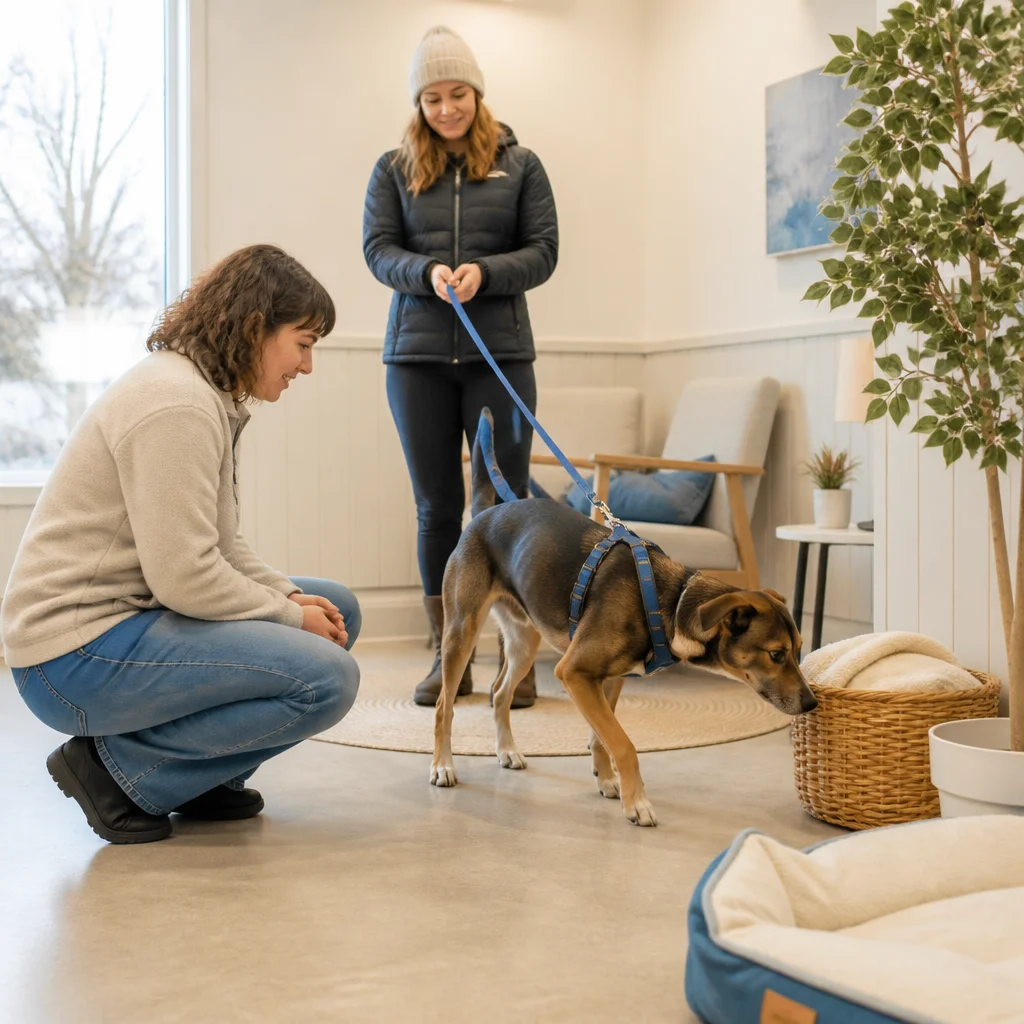
Avoid manufacturing a perfect test. Use the same entrance, equipment and likely time of day as the real booking. Give accurate information and remain reachable, but do not hover in a way that changes the provider’s normal process. If pickup must occur early, treat that as evidence about fit rather than a failure to complete the planned hours.
Afterward, separate observation from interpretation. “She stayed in the quiet area for 40 minutes, drank water and then approached one dog” is evidence. “She loved it” is a conclusion. Ask what staff saw before, during and after transitions, and what they would change next time.
Choose the smallest sensible next commitment. That may be another short day, one overnight stay before a long trip, individual rather than group care, or a different provider. Do not let a package discount turn one promising visit into more care than you have evaluated.
Record the result
Write the useful facts while they are fresh: what the dog did at entry, during activity, at rest and around handling; what staff changed; and what remains unknown. “Passed” or “loved it” cannot support the next decision. The record should also name what would stop another visit, especially when a different staff member may handle the real booking.