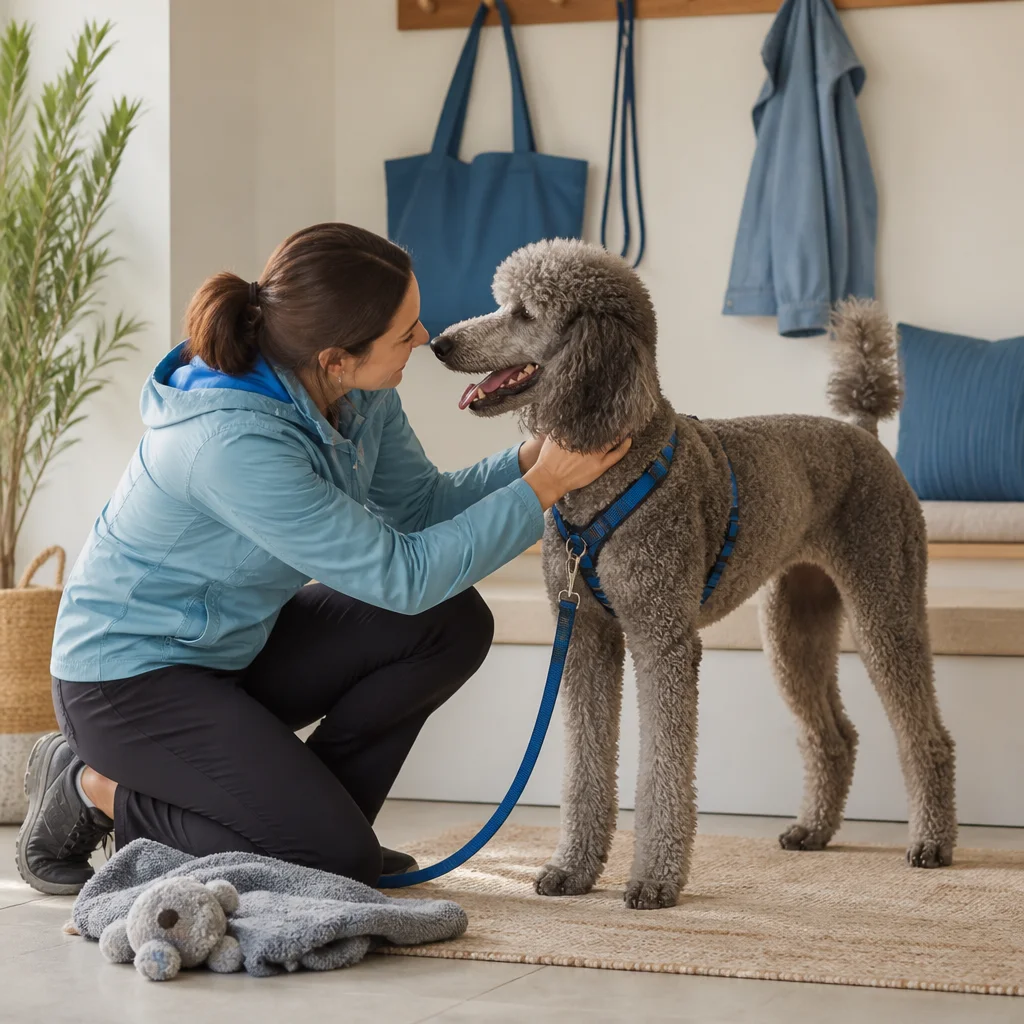
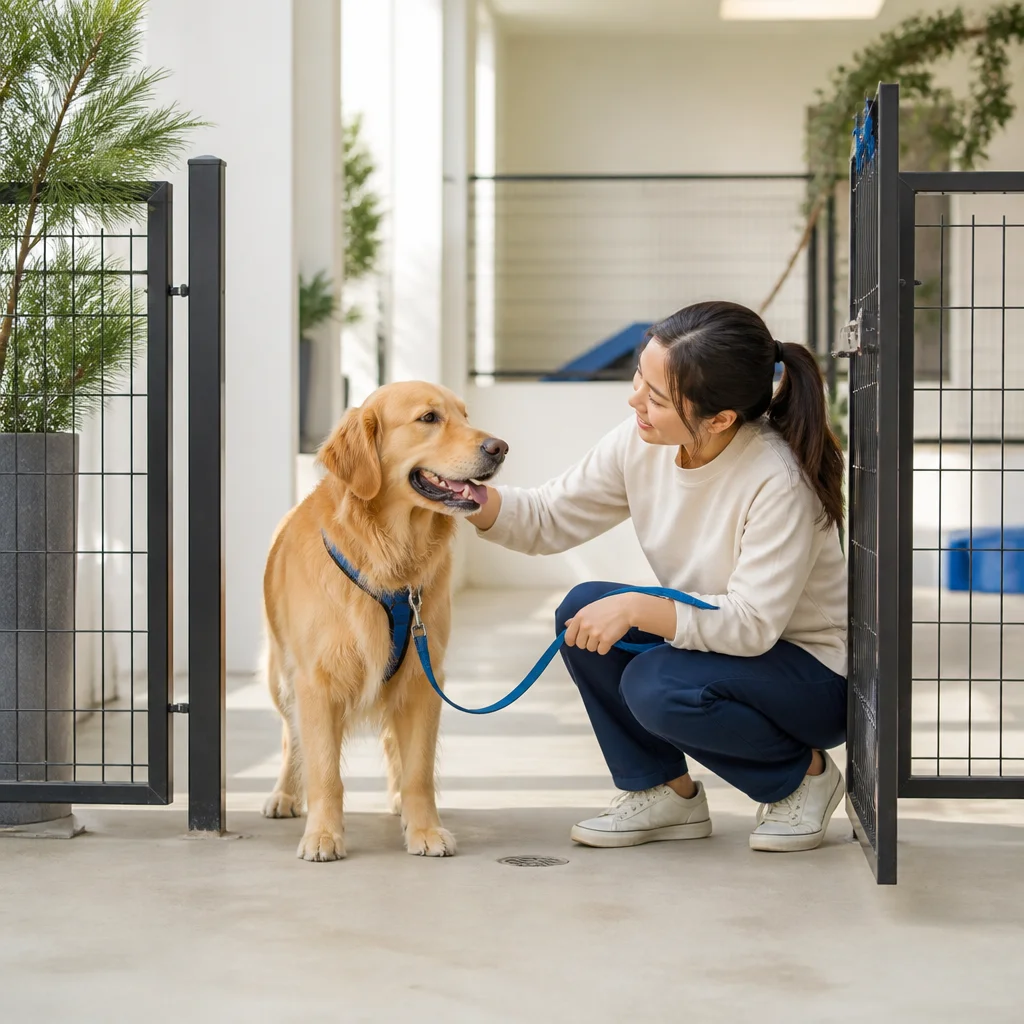
The first daycare day should test fit, not endurance. Keep it short enough that staff can observe the dog and you can collect if the group or environment is too much.
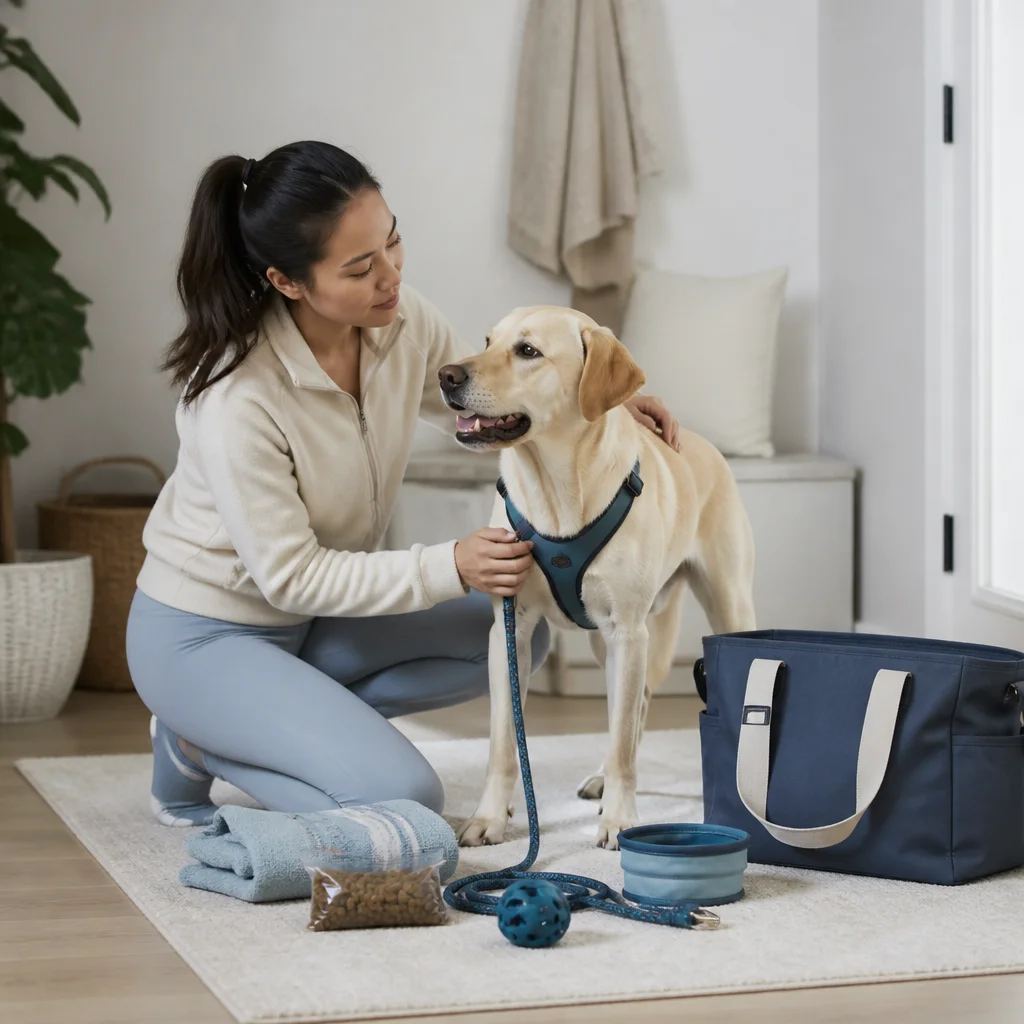
Before leaving home
Check for schedule or behaviour changes and bring only approved, labelled items. Put essential care and contact information in one short note. Do not rely on the staff member at reception to remember a long verbal history.
Build pickup margin into the route. A closing time equal to the end of a work shift is not a workable plan.
Set up the first day in three packets
For intake: provide current behaviour around dogs and people, play style, handling sensitivities, escape history, rest habits, health concerns, contacts and any provider-requested records. Mention recent changes. The goal is an accurate placement decision, not a perfect application.
For staff that day: provide a short labelled care note, accepted equipment and any meal or medication instructions already approved by the provider. Keep the essential trigger prominent: “Call if…” Avoid burying it in a long biography.
For yourself: save the exact address, arrival and pickup windows, late contact, approved pickup names and the action that confirms the booking. Add travel margin. A daycare that closes at 6 p.m. is not workable if your normal commute reaches it at 6:05.
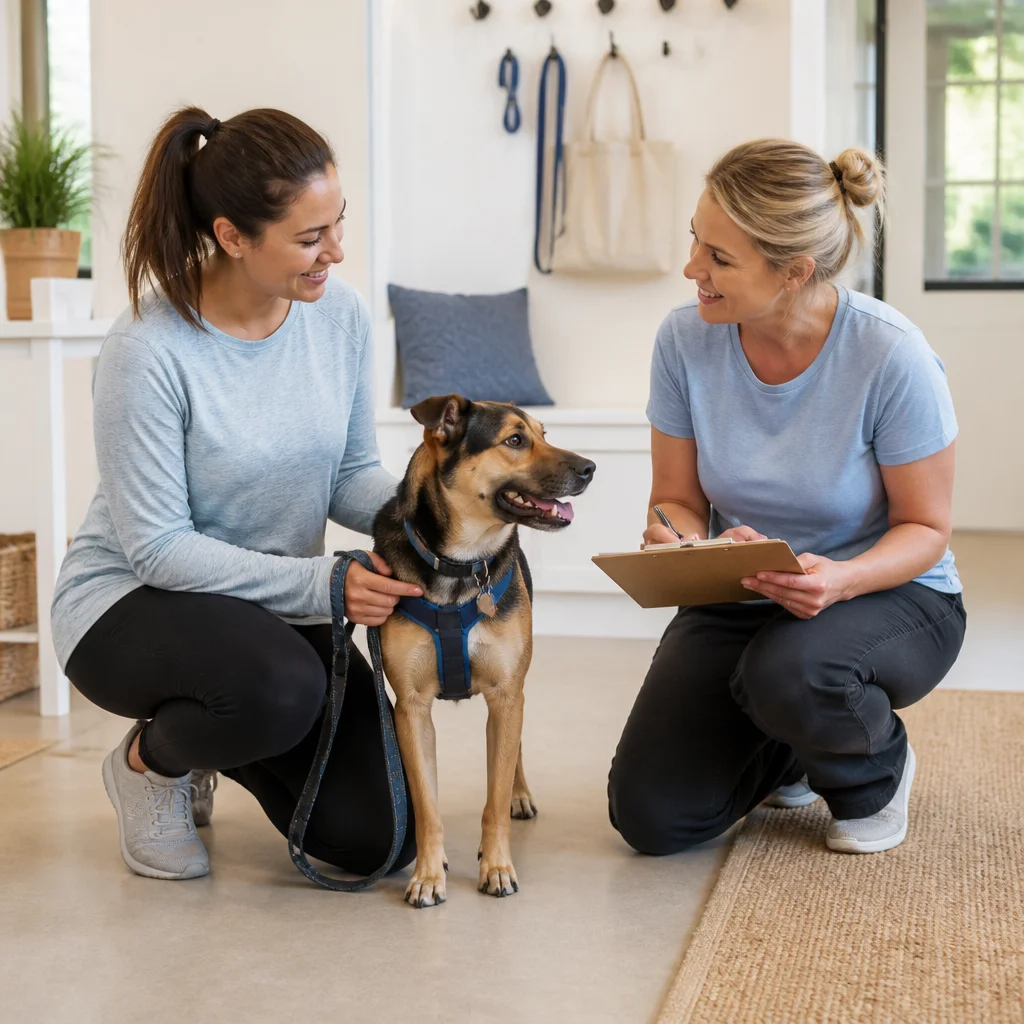
At handoff, state any change since assessment and let staff follow the agreed entry routine. At pickup, ask about group comfort, rest, water, toileting and handling, plus any moment the dog was removed from activity. Check for an incident report before leaving if staff mention a concern.
Use the first report to update the checklist. Perhaps the dog needs a shorter day, a quieter arrival, different equipment or no group play. The checklist should become more accurate after each booking rather than staying a generic packing list.
Add a weekday backup
Record who can leave work and collect the dog if daycare calls. That person needs authorization, identification details, transport and the provider’s closing time. If no one can arrive promptly, discuss that honestly during intake and consider a service with a different support plan. Emergency pickup is a logistics requirement, not a phone number added for appearances.
At pickup
Ask whether the dog approached or avoided the group, rested, drank, toileted and accepted handling. Learn whether staff changed groups or removed the dog from activity. Check for an incident report before leaving if a concern is mentioned. At home, note recovery and appetite without turning one tired evening into a diagnosis. Share relevant observations before the next booking and shorten the next day if the first was too long.